_1773179633783-DiqUK4T2.png)
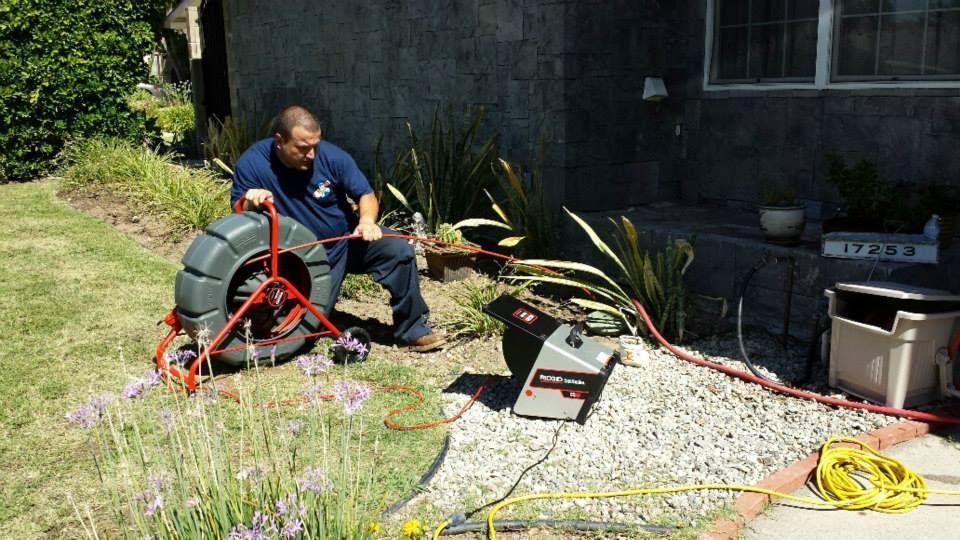
BBC Rooter & Plumbing is a Northridge-based sewer and underground pipe contractor, and Glendale is one of the adjacent markets we drive to most often. We want to be straight about that up front: there is no Glendale storefront with our name on it. There is a licensed crew, a camera truck and a jetter that come over the hill to Brand Boulevard and Glenoaks and Verdugo Road because Glendale property has the kind of sewer problems we are built to solve.
What follows is not a brochure. It is what we have learned about the pipe under this particular city — who owns which part of it, how the housing eras stack up, and why a Glendale drain that keeps clogging is almost never a mystery once a camera goes down it. If your line is backing up right now, the number is 818-280-9135.
Glendale Runs Its Own Sewer System, and That Changes Your Repair
This is the single most useful thing a Glendale homeowner can know, and almost nobody mentions it. Glendale is not a Los Angeles neighborhood. It incorporated as its own city in 1906 and has run its own municipal services ever since. The sewer mains under Glendale streets are maintained by the City of Glendale, not by LA Sanitation. Glendale Building and Safety issues the plumbing permits. Glendale Public Works issues the excavation and encroachment permits that any work in the street or parkway requires.
Why should you care? Because it determines who you call, who inspects the work, and how a contractor has to sequence a job. A plumber who works mostly in the City of Los Angeles will file with the wrong agency, quote the wrong lead time and occasionally start digging in a right-of-way without the correct permit in hand. A repair that touches the connection at the main in Glendale is a Glendale process from start to finish. We plan the job that way, and we tell you which portion of it needs a city inspector before backfill.
It also affects the boundary of your own liability, which is worth a section of its own.
Where the City's Pipe Ends and Yours Begins
The general rule in Glendale, as in most California cities, is that the municipality maintains the sewer main running down the center of the street and the property owner owns and maintains the building sewer — the lateral — from the house out to the point where it joins that main. That means the section of pipe under your lawn, under your driveway, under the sidewalk and often under a strip of the street itself is yours to keep working.
Most Glendale owners discover this the hard way, on the day of a backup, when the city crew arrives, checks the main, finds it flowing, and leaves. That is not the city being unhelpful. It is the ownership line doing exactly what it is written to do. Because responsibility programs and cost-sharing policies do change from time to time, we always suggest confirming the current specifics with Glendale Public Works on a large job rather than taking a contractor's word for it, including ours.
What we can settle on the spot is the physical question. A camera inspection counts footage as it travels, so when the picture stops at a root mass or a broken joint we can tell you it is 58 feet out, which places it under the front walk, or 96 feet out, which puts it past the property line. That number is what determines whether the next phone call is to us or to the city.
Drain Backing Up in Glendale? Call Before It Reaches the Floor.
Same-day rooter response. Camera inspection included with any repair.
Call 818-280-9135A Century of Housing Stock Inside One City
Glendale grew faster in the 1920s than almost any city in the country, jumping from a modest town of a few thousand at the start of the decade to a city of more than sixty thousand by 1930. That decade left a permanent mark underground. The Craftsman bungalows and Spanish Revival houses around downtown, Adams Hill, Rossmoyne and the streets off Kenneth Road went in with vitrified clay laterals and cast iron inside the building envelope. Clay does not rot and it does not rust, which is why so much of it is still in service a hundred years later. What it does is shift. Every bell-and-spigot joint is a seam, and a century of seasonal soil movement, tree growth and traffic loading opens those seams a fraction at a time.
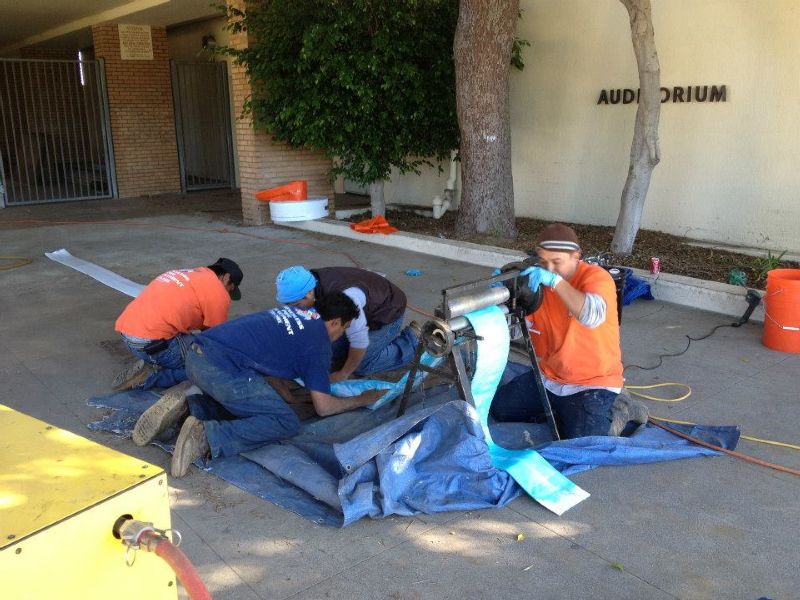
Three eras, three different conversations
Pre-1940 Glendale means clay outside and cast iron inside, and the cast iron is the part that surprises owners — sixty to ninety years of scale can narrow a four-inch drain to two.
Postwar Glendale, including the tracts in the northwest of the city and around Sparr Heights, still means clay outside but with newer fittings and shallower depth. From roughly the 1970s onward, ABS plastic takes over.
The mixed vintage is why a blanket answer to "what is my sewer made of" is useless in Glendale. Two houses four blocks apart can have nothing in common below grade. It is also why we refuse to quote a sewer repair over the phone here. The camera is not a sales step, it is the only way to know what problem you actually have.
Verdugo Hillsides: Steep Laterals, Coarse Soil and Grade
A large share of Glendale climbs. Chevy Chase Canyon, Glenoaks Canyon, Verdugo Woodlands, Whiting Woods and the streets rising toward the Verdugo Mountains put houses on benched pads well above or below the roadway, and the sewer lateral has to negotiate that difference.
Downhill lots are the harder case. When the house sits below the street, the lateral may need a long run at shallow fall to reach a main that is uphill of it, or the property may depend on an ejector arrangement. Uphill lots produce the opposite problem: a lateral that drops steeply enough that liquid outruns solids, leaving deposits at the first flattening. Neither is a defect in the pipe. Both produce repeat blockages that cabling clears and then clears again.
The soil compounds it. The Verdugo foothills are decomposed granite and coarse alluvium washed down over millennia, not the fine silt of the valley floor. That material drains fast, moves under saturation, and does a poor job of holding a trench in the shape it was compacted into. Bellies in hillside Glendale laterals are common enough that we look for them specifically.
Why Drain Cleaning in Glendale Often Has to Be Done Twice
Here is the pattern we see constantly. A homeowner has a slow main line. Someone comes out, cables it, water runs, everyone is satisfied. Four months later it happens again.
Cabling with a rooter is a channel-opening tool. The blade shears through whatever is blocking the pipe and leaves the rest of the obstruction bonded to the wall. Against a root mat the cut lasts exactly as long as it takes the tree to regrow. Against a grease shelf the cut lasts until the next cold night. Against hardened scale in old cast iron it barely helps at all.
Hydrojetting is the different tool: 3,000 to 4,000 psi of water on a reverse-thrust nozzle that scours the pipe wall back toward the access point and flushes the debris out rather than past it. Done on a sound pipe it restores original diameter. Done on a broken pipe it makes a mess, which is why we camera first every single time and will decline to jet a line the camera says cannot take it.
And when the root entry is structural — an open joint, a hairline crack, a bad tap — the permanent fix is not cleaning at all. It is lining or replacing the affected run so there is no opening to grow into. Glendale's mature street trees, the liquidambar, ficus, camphor and sycamore lining older residential blocks, are not going anywhere. The pipe is the part you can control.
Restaurants on Brand and Honolulu: Grease Is Its Own Animal
Glendale has a serious commercial food scene, from the restaurant rows around Brand Boulevard and the Americana to the Montrose Shopping Park on Honolulu Avenue and the older storefronts in Kenneth Village. Every one of those kitchens sends fats, oils and grease down a line that was sized decades ago.
Grease does not clog a pipe the way a root does. It cools, congeals on the wall, and narrows the bore evenly until one busy Friday the line simply cannot carry the volume. Health inspections, interior flooding and an emergency closure follow in short order. We handle grease line maintenance and commercial sewer rehabilitation for food-service properties on a scheduled interval, because with grease the only cheap version of the job is the one done before the failure.
What We Do Under Glendale Streets and Driveways
Outside our scope
We do sewers and buried pipe, full stop. Water heaters and tankless systems, faucets, toilets, sinks and disposals, copper repiping and pinhole leaks, water filtration, gas lines and new construction plumbing are all outside what we take on. If your Glendale problem turns out to be one of those, we will say so rather than improvise.
Signals That Point at the Main Line Rather Than a Fixture
- More than one fixture misbehaving at once. A single slow sink is a fixture problem. A slow sink plus a gurgling tub plus a sluggish toilet is the lateral.
- Water appearing at the lowest opening. Basements, garage drains and downstairs showers take the overflow first.
- Wastewater in the wrong fixture. Running the laundry and watching the shower fill is a definitive main line sign.
- A cleanout cap that is weeping or under pressure. Do not open it without a bucket and a plan.
- Odor at the curb or the parkway after rain, which can mean the lateral is leaking into saturated soil.
- A repair history. If a previous owner replaced a section, ask what was left in the ground. Partial replacements are common in older Glendale.
Getting to Glendale From Our Northridge Shop
We cross the Valley on the 118 and 210 and reach most Glendale addresses in roughly 45 to 75 minutes. We cover the whole city: downtown and the Brand corridor, Adams Hill, Rossmoyne, Verdugo Woodlands, Glenoaks Canyon, Chevy Chase Canyon, Sparr Heights and Montrose, plus the commercial buildings along Colorado Street and San Fernando Road.
Glendale Drain and Sewer FAQ
Is Glendale part of the City of Los Angeles sewer system?
No. Glendale incorporated in 1906 and has stayed an independent city ever since. Its Public Works department operates and maintains the sewer collection mains under Glendale streets, and Glendale issues its own plumbing and excavation permits. If you have called the City of Los Angeles about a Glendale sewer problem, you called the wrong agency. It matters for repairs too, because the permit path, the inspection and the right-of-way rules are Glendale's, not LA's.
Who is responsible for the sewer lateral at my Glendale house?
In practice the property owner owns and maintains the building sewer from the house to the point where it connects to the city main, and the city maintains the main itself. That is the standard arrangement in Glendale and in most California cities. Since the exact responsibility line and any current city program can change, we recommend confirming with Glendale Public Works before a large job. What we can tell you immediately is where the blockage physically sits, because the camera counts the footage as it goes.
Why does my drain clog again a few months after it gets snaked?
Because cabling cuts a hole through the obstruction rather than removing it. A rooter blade opens enough channel for water to pass, which is the correct emergency response, but the root mat, grease shelf or scale ring is still on the pipe wall. Full-diameter cleaning with a hydrojet, or lining the pipe so roots have nowhere to enter, is what stops the cycle. If a Glendale drain has needed clearing more than once in a year, the next step is a camera, not another cable.
My house is on a steep street in Adams Hill. Does that change anything?
Yes, in two ways. A steep lateral can run so fast that water separates from solids and the solids settle where the grade flattens near the street, which produces blockages that have nothing to do with roots or cracks. And hillside soil in the Verdugo foothills is coarse and mobile, so a trench that was compacted correctly decades ago can still have shifted. Grade problems show up clearly on camera as standing water where none should be.
Can you reline a clay sewer pipe instead of digging up my parkway?
Usually yes. Cured-in-place lining pulls a resin-saturated tube through the old clay, inflates it and cures it into a seamless pipe within the pipe, which seals every joint the roots were using. The requirement is that the host pipe still holds its shape. If the camera shows a collapsed section or joints offset far enough to block the liner, we switch to pipe bursting, which needs two small pits instead of a full trench. Either approach leaves most of the yard and hardscape alone.
How long does it take you to reach Glendale from Northridge?
We are based on Yolanda Avenue in Northridge and dispatch across the 118 and 210 corridor into Glendale regularly. Typical arrival is 45 to 75 minutes depending on the time of day, faster on weekends. We do not keep an office in Glendale and we will not pretend otherwise. What we bring is a fully equipped truck, cameras, a jetter and a licensed crew, seven days a week from 6am to 6pm with an emergency line answered after hours.
Other Cities on Our Route
Glendale is one of several communities outside the Valley proper that we serve from Northridge. Here is the rest of the list:
Book a Glendale Sewer Camera Inspection
BBC Rooter & Plumbing — CSLB #720343. Licensed, insured, seven days a week.
Call 818-280-9135