_1773179633783-DiqUK4T2.png)
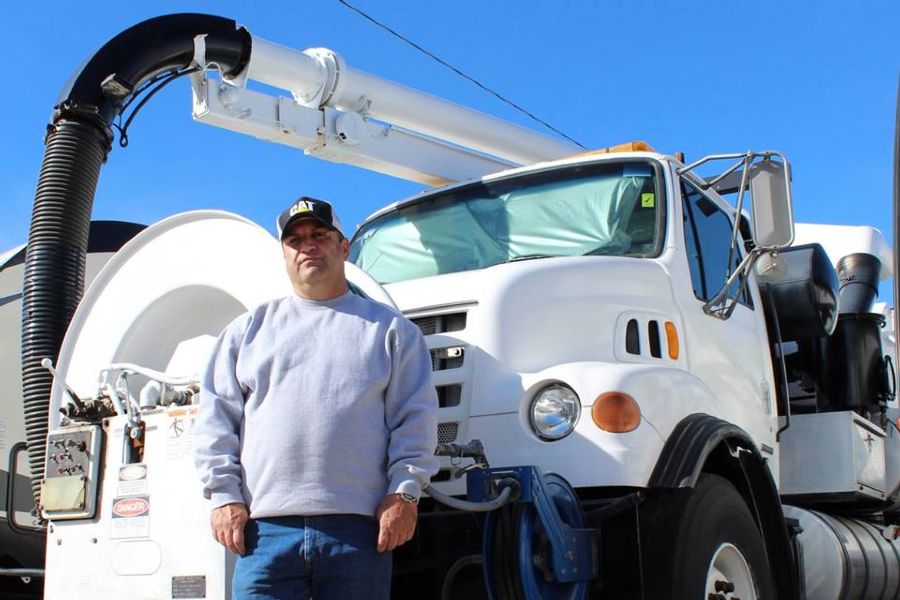
Pacoima was laid out as a townsite in 1887, which makes it one of the oldest communities in the San Fernando Valley by a wide margin. Neighborhoods that old do not have one generation of sewer pipe in the ground. They have four or five, stacked and spliced together, and a fair amount of the earliest material is still down there doing the job it was installed to do more than a century ago. That is the reality our crews work with at almost every 91331 address.
BBC Rooter & Plumbing is a sewer and underground-pipe contractor, CSLB #720343, based in Northridge. What we do is buried pipe: sewer laterals, main drains, and the excavation, lining and replacement that go with them. What we do not do, and will not pretend to do, is fixture work. No water heaters, no toilets or faucets, no sinks or disposals, no supply repiping, no gas lines. If your line is backing up right now, the number is 818-280-9135 and we answer it.
An 1887 Townsite Still Running on Some of Its Original Pipe
Pacoima came out of the Southern California land boom of the 1880s, decades ahead of the suburban subdivision that filled in the rest of the Valley, and it was annexed to Los Angeles in 1915. Van Nuys Boulevard was and remains the community's main street. Because Pacoima was one of the few Valley communities where Black and Latino families were able to buy homes during the decades when racially restrictive covenants shut them out of most of Los Angeles, it developed early, densely, and with a housing stock built to be affordable rather than lavish. Many of those homes are still in the same families.
Long tenure is good for a neighborhood and hard on sewer pipe, because nothing forces the issue. A house that has never changed hands has never had a buyer's inspector look at the lateral. The line just keeps working, marginally, until the day it does not. A large share of our Pacoima calls are first-time sewer inspections on properties that are seventy, eighty or ninety years old. We cover the whole community: the older blocks off Van Nuys Boulevard, the Glenoaks Boulevard and Laurel Canyon Boulevard corridors, Paxton Street, Osborne, Terra Bella, Filmore, Herrick, and out toward Hansen Dam at the eastern edge.
Pre-1950 Vitrified Clay Under Small Pacoima Lots
The dominant pipe material under the older half of Pacoima is vitrified clay: fired ceramic sewer pipe laid in short lengths, each one socketed into the next and sealed with mortar. It was the standard for residential building sewers from the nineteenth century until plastics took over, and as a material it is nearly indestructible. It does not corrode, it does not rust, and we regularly pull sections out of the ground in fine condition.
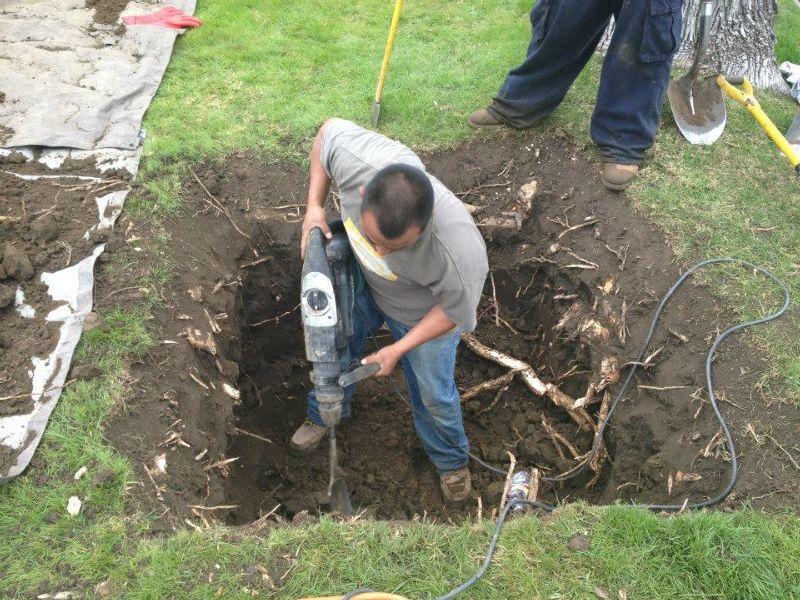
Everything fails at the seam
What ages is not the clay but the joint between lengths. Mortar shrinks and crumbles, the ground shifts a little each season, and a gap opens where two sections meet. On a pre-1950 line there may be a joint every two or three feet, which is a great many opportunities.
Every open joint is a root entry point and a place for soil to work its way in. A camera run that grades joint condition along the whole length is what tells you whether you are looking at a spot repair or a full lining.
Shallow burial makes it worse. Older Pacoima laterals were often set at modest depth by hand, and decades later a driveway got poured, a slab was added, or heavy vehicles started parking where nobody expected them. Point loading on shallow clay produces a cracked crown, and a cracked crown produces exactly the slow, intermittent, hard-to-pin-down drainage complaints that get blamed on everything else first.
Orangeburg, the Tar-Paper Sewer Pipe Under Some Post-War Blocks
Between roughly 1945 and the early 1970s, with metal in short supply after the war, a lot of American residential sewer laterals were installed using bituminized fiber conduit, known almost universally by the trade name Orangeburg. It is wood pulp bound with hot coal-tar pitch: light, cheap, easy to cut, and fundamentally a paper product. It was code-approved at the time and installed widely in fast-growing postwar neighborhoods, including blocks in Pacoima and across the north and east Valley.
Orangeburg does not crack the way clay does. It deforms. Over decades the round bore squashes into an oval under soil load, the layers begin to delaminate, and blisters of soft material peel inward and obstruct flow. On camera it is unmistakable once you have seen it: a dark, fibrous, out-of-round tube that looks more like a collapsed cardboard tube than a pipe. Its practical service life is usually reckoned in decades, not lifetimes, and every remaining installation is now well past that.
Why cabling makes it worse
Running a cutting head through deformed Orangeburg can tear the soft inner layers rather than clear them. If the camera shows Orangeburg, aggressive mechanical clearing is the wrong tool and we will say so before touching it.
Why lining often is not an option
A cured-in-place liner needs a reasonably round, structurally intact host pipe to form against. Badly ovalized Orangeburg does not provide one. Where the deformation is severe, replacement is the honest recommendation, not a liner sold as a cheaper fix.
Pipe bursting as the usual answer
Because the material is soft, pipe bursting works well on Orangeburg. A bursting head pulls a new HDPE line through the path of the old one, fragmenting it outward, with excavation limited to a pit at each end instead of a trench down the yard.
Van Nuys Boulevard, Glenoaks and the Trees Over Your Lateral
Pacoima has mature street trees on a great many residential blocks and along the commercial corridors, planted long enough ago that their root systems are fully developed and well past the parkway. Ficus on commercial frontage is the worst offender, with a shallow, spreading root plate that lifts sidewalks and follows moisture without limit. Older residential blocks carry pepper trees, Chinese elm and eucalyptus, and there are cottonwoods and willows along the Pacoima Wash and toward the Hansen Dam basin at the eastern edge.
None of those roots break into sound pipe. They exploit what is already open. On a hundred-year-old clay lateral with a joint every few feet, there is no shortage of invitation. The sequence is always the same: a hairline root finds vapor escaping from a gap, threads through, then thickens season after season until it fills the bore. Cabling with a rooter machine restores flow immediately and is the right emergency response. Hydrojetting cuts the mass back to bare pipe wall and buys substantially more time. Neither seals the joint, which is the case for lining a line that has been cabled repeatedly.
Small Lots, Back Houses and One Overloaded Lateral
Residential parcels in Pacoima are compact, and the community has a long tradition of adding on: converted garages, rear units, second kitchens, extended families sharing a property. Those additions are almost always tied into the single original building sewer, a pipe sized in the 1920s, 1930s or 1940s for one modest household.
Two things follow. First, hydraulic load goes up substantially while pipe capacity stays the same, so a partial restriction that would be tolerable on a lightly used line produces backups. Second, the tie-ins themselves are frequently the defect. We find rear-unit connections made at ninety degrees against the flow, saddle fittings cut into old clay, and sections of a different material spliced in with a rubber coupling that has since deteriorated. Camera work finds these quickly, and often the fix is a targeted repair at the tie-in rather than replacing the whole run.
Small lots also mean access is tight, and that shapes method selection. Trenchless work is frequently a better fit here than in a large-lot neighborhood, because there simply is not room to run heavy equipment down a narrow side yard or to trench across a compact front yard without taking out most of it.
Shops, Warehouses and the Whiteman Airport Industrial Strip
Pacoima carries real commercial and light-industrial weight. Van Nuys Boulevard is a working retail street with markets, restaurants and small food operations. The San Fernando Road and Branford Street corridors and the area around Whiteman Airport hold warehouses, shops and light manufacturing, much of it in buildings from the middle of the last century sitting on mains of the same era.
For food service, grease is the whole problem: it goes down warm, cools in the lateral, and builds a hard deposit that a cable will not shift. We handle grease trap and grease line service and set preventive jetting intervals that keep kitchens open. For industrial and warehouse property, the work is usually camera inspection of aging mains, jetting to remove scale and sediment, and sectional or full sewer rehabilitation. We schedule around operations, including early starts, because downtime costs more than the repair.
What We Do Underground in Pacoima
In-house crews, our own machines, no brokered work:
Also: excavation and repair of collapsed, offset and bellied sections, full replacement of clay, cast iron and Orangeburg laterals, root intrusion removal, sewer gas source tracing, correction of bad rear-unit tie-ins, cleanout installation, and commercial and industrial sewer rehabilitation.
Backed Up in Pacoima? Call Now
Camera inspection included with any repair we perform, and a written price before we begin.
Call 818-280-9135Warning Signs Worth Acting On in an Older Pacoima Home
On pipe this old, the difference between a manageable repair and an emergency excavation is usually how early somebody paid attention:
- A stoppage that has to be cleared every year or two at roughly the same distance from the house, which means the defect is still there
- Toilets that drop slowly or bubble while the washing machine drains
- Drainage that got worse after a rear unit or second kitchen was put into service, pointing at the tie-in rather than the whole line
- Sewage smell in a side yard or garage, particularly on still mornings
- A crack or dip in a driveway or walkway that follows the pipe route
- Paper and solids coming back up at a floor drain or the lowest fixture when other fixtures are used, which is a main line message, not a fixture one
If you are seeing any of that, get a camera in the line before it becomes a weekend emergency. We record the run, mark the depth and surface position of any defect, and review the footage with you before recommending anything.
Pacoima and 91331 Coverage
Our trucks come across from Northridge and normally reach Pacoima addresses within thirty to sixty minutes, faster outside peak hours on the 118 and 5.
Straight Answers for Pacoima Property Owners
How do I find out whether my Pacoima house has clay, cast iron or Orangeburg sewer pipe?
A camera tells you in a few minutes, and it is worth knowing before anyone quotes a repair. Build year gives a first guess: homes from the 1920s through the 1940s here are usually vitrified clay, sometimes with cast iron for the first stretch out of the building, while laterals installed between about 1945 and the early 1970s can be Orangeburg. But guessing is not good enough, because the three materials fail differently and call for completely different repairs. Clay cracks and opens at the joints. Cast iron corrodes and channels out along the bottom. Orangeburg squashes out of round and delaminates. We put a self-leveling camera down the line, identify the material, and show you on the monitor what we are looking at.
Can Orangeburg pipe be lined, or does it have to be replaced?
It depends on how far gone it is, and we will be honest about that rather than sell you a liner that will not last. Cured-in-place lining needs a reasonably round, structurally intact host pipe to form against. Orangeburg that is only mildly deformed can sometimes be lined. Orangeburg that has ovalized badly or started delaminating cannot, because there is nothing sound left to line. In that case the right answer is replacement, and pipe bursting works particularly well on this material since it is soft enough to fragment easily. Bursting pulls a new line through the same path with a pit at each end instead of a trench down the property.
Is trenchless repair even possible on a small Pacoima lot?
Small lots are one of the best arguments for trenchless, not against it. Where there is no room to bring a machine down a narrow side yard, and where trenching the front would mean tearing out most of the yard and possibly the driveway, working from two access pits is far less disruptive. Lining installs a new resin wall inside the existing pipe. Bursting pulls a new pipe through the old path. Either way the surface disturbance is a small excavation at each end rather than a cut across the whole property. Both methods have limits, and if your line is not a candidate we will explain why.
I added a back house. Can the original sewer line handle it?
Sometimes yes, often with a caveat, and the tie-in is usually more important than the capacity. The original building sewer on an older Pacoima property was sized for one modest household, so adding a rear unit or a second kitchen raises the load on a pipe that has not changed. More often than the capacity itself, the problem we find is how the addition was connected: a fitting installed against the direction of flow, a saddle cut into old clay, or a length of different material spliced in with a rubber coupling that has since failed. A camera run shows the connection and its condition, and the fix is frequently a targeted repair at that point rather than replacing the whole run.
Do you service markets, restaurants and shops on Van Nuys Boulevard?
Yes, commercial and light industrial work is a regular part of what we do in Pacoima. For food service that means grease trap and grease line maintenance and scheduled preventive jetting, because grease goes down warm, cools in the lateral and forms a deposit that cable will not remove. For warehouses and shops along San Fernando Road, Branford Street and around Whiteman Airport it usually means camera inspection of aging mains, jetting out scale and sediment, and sectional or full sewer rehabilitation. We schedule around your operating hours, including early morning starts.
What does a sewer camera inspection involve, and do I get the video?
We push a self-leveling camera the full length of the lateral from a cleanout or a pulled toilet flange, watch the feed on a monitor with you standing there, and use a locator to mark the depth and surface position of anything significant so nobody digs in the wrong place. You get the footage. What you are paying for is a diagnosis, and a diagnosis you can take to another contractor for a second opinion is a legitimate diagnosis. When we perform the repair, the inspection is included. Pricing on any repair is quoted in writing after the inspection, based on the actual condition, depth and material of your line rather than a number invented over the phone.
Neighborhoods We Cover Alongside Pacoima
Pacoima is on our northeast run. These are the other Valley communities our crews reach the same day:
A Pacoima Sewer Crew You Can Call Direct
BBC Rooter & Plumbing, owned and run by Babak Behzadi. CSLB #720343. No call centers.
Call 818-280-9135