_1773179633783-DiqUK4T2.png)
No other neighborhood in the San Fernando Valley has been continuously built on for as long as Mission Hills. Spanish colonists were moving water through engineered channels here in the 1790s, decades before anything resembling a town existed anywhere else in this Valley. Two centuries later the same handful of streets carry Spanish-era adobe, 1920s and 1930s cottages, big postwar tract blocks and modern medical buildings, and every one of those eras put a different kind of pipe in the ground.
BBC Rooter & Plumbing works on that pipe. We are a sewer, main drain and underground-pipe contractor licensed under CSLB #720343, dispatching from Northridge, and Mission Hills addresses are a regular part of our week. To be clear about scope up front: fixtures are not our trade. We do not service water heaters, toilets, faucets, sinks, disposals, supply repiping or gas lines. Sewer laterals, main drains and buried pipe are the entire business. Backup in progress? 818-280-9135.
The Oldest Built Ground in the San Fernando Valley
Mission San Fernando Rey de Espana was founded on September 8, 1797, the seventeenth of California's twenty-one missions, and the complex still stands on San Fernando Mission Boulevard. Across the street, Brand Park holds the old mission olive trees and the remains of the lavanderia, the mission's stone-lined washing basin, fed by the water system the padres built. A short distance down Sepulveda Boulevard sits the Andres Pico Adobe, put up in the 1830s and among the oldest surviving residences anywhere in Los Angeles.
That history is why the neighborhood's underground layers are so inconsistent. Development did not arrive here in one wave. It arrived in at least four, spread across a hundred and thirty years, and the boundaries between them run right down the middle of ordinary residential blocks. On one side of a street you may have a 1930s bungalow on original clay; directly opposite, a 1957 tract house whose builder used cast iron under the slab. Our camera work in 91345 is as much about establishing what era of pipe we are looking at as it is about finding the blockage.
From Mission Zanjas to the Sepulveda Boulevard Main
The mission's water system was a network of open ditches and clay conduit that moved spring and creek water to the fields, the reservoir and the lavanderia. It was gravity engineering, and it worked on the same principle every sewer lateral still works on today: adequate fall, consistent grade, no low spots. When ranching gave way to subdivision in the early twentieth century and this end of the Valley was carrying the name Sepulveda, the first residential sewers went in as vitrified clay, laid in short bell-and-spigot sections with mortared joints.
Why the joint is always the weak point
Clay pipe itself is remarkably durable. It does not rust, it does not corrode, and we pull hundred-year-old sections out of the ground that are still sound. What fails is the joint between sections. Mortar shrinks, ground moves, and a gap opens.
That is the entire story of root intrusion in an old Mission Hills lateral, and it is why a camera inspection that reports joint condition is worth far more than one that just confirms there is a clog.
The postwar tracts brought the second major material. Builders in the 1950s commonly ran cast iron under the slab and out a short distance, then transitioned to clay for the remainder of the run to the street. Cast iron corrodes from the inside; the bottom of the pipe scales, thins and eventually channels out entirely, so a line can look acceptable from the top of the camera view while the invert is gone. Where those two materials meet, at a transition often buried under a front walk, is a spot we check on every older Mission Hills scope.
Reading a Mission Hills Build Year Before We Ever Dig
Property age tells us roughly what to expect, and expectations shape how we approach the first visit:
Pre-1940 near the Mission and Brand Boulevard
Vitrified clay, shallow, short sections, many joints. Frequently modified by later owners with a patch of ABS or a rubber coupling where a repair was made. Root intrusion at multiple joints is the norm rather than the exception, and full-length lining is usually the sensible fix.
1950s and 1960s tract blocks
Cast iron under the slab transitioning to clay outside. The failure is usually corrosion scale and a channeled invert in the iron, or a separated joint at the transition. Camera work tells them apart quickly, and the repair scope is often much smaller than the homeowner feared.
1970s and later infill
ABS and PVC, generally sound, but not immune. What we find on these is mechanical: a belly from poorly compacted bedding, a crushed section under a later driveway pour, or a root mass entering at a badly glued fitting.
Ficus and Sweetgum, the Two Trees That Keep Us Busy
Two street trees dominate the older residential stock in this part of the Valley, and both are hard on sewer pipe. Ficus, planted widely along commercial frontage including stretches of Sepulveda Boulevard, has a shallow, wide, extremely aggressive root plate that lifts sidewalks and follows any moisture gradient it finds. Liquidambar, the sweetgum planted by the thousands in 1950s and 1960s Valley tracts, sends fine roots long distances and is a persistent offender in clay laterals.
Add the mission-era olives around Brand Park and the surviving pepper trees in the older blocks, and you have a neighborhood where root intrusion is not an occasional problem but the default diagnosis. Cabling a root mass with a rooter machine restores flow the same day. Hydrojetting goes considerably further, cutting the mass back to the pipe wall so regrowth starts from nothing. Neither closes the opening the roots came through, which is the argument for lining a badly rooted clay line rather than putting it on an annual cabling schedule forever.
Deep Lots, Rear Additions and the Cleanout Nobody Can Find
Mission Hills lots are moderate by Valley standards, mostly rectangular, with meaningful depth behind the house. A great many of them picked up a rear addition, a converted garage or a detached unit at some point in the last seventy years, and those additions were frequently tied into the existing lateral with whatever was convenient at the time.
The result is a lateral carrying loads it was never sized for, often through a fitting installed at a bad angle, and a cleanout situation that ranges from awkward to nonexistent. On older properties here we regularly spend the first part of a visit simply locating access. Where there is no usable cleanout, we recommend installing one at the property line during any repair. It costs comparatively little while the ground is already open and it makes every future service call faster and cheaper, including routine maintenance jetting.
Sepulveda Boulevard Commercial and the Hospital District
Mission Hills is not purely residential. Sepulveda Boulevard runs the length of the community as a working commercial corridor, San Fernando Mission Boulevard carries retail and offices, and Providence Holy Cross Medical Center anchors a cluster of medical buildings that keeps a steady stream of restaurants, cafes and small food service operations in business nearby.
Commercial sewer work is a different animal from residential. Food service lines carry fats, oils and grease that cool and harden into a deposit no cable will touch, and a restaurant with a blocked kitchen line is losing money by the hour. We handle grease trap and grease line maintenance, scheduled preventive jetting on kitchen laterals, camera inspection of commercial mains, and full sewer rehabilitation for older retail and industrial buildings on the corridor. Scheduling around business hours is normal for us; we would rather come at six in the morning than shut a kitchen down at noon.
The Sewer Work We Take On in Mission Hills
All of it performed in-house, by our own technicians, on equipment we own:
We also do root intrusion removal, open-cut repair of collapsed and offset sections, replacement of failing clay and cast iron laterals, sewer gas source tracing, pre-purchase sewer scopes for buyers and listing agents, and commercial sewer rehabilitation.
Sewer Trouble at a Mission Hills Address Today?
Camera inspection included with repair work. You get a written price before we start.
Call 818-280-9135When a Mission Hills Line Starts Telling You Something
A failing lateral gives notice long before it stops working. In this neighborhood the tells look like this:
- A tub or shower that backs up when the toilet flushes — lowest fixture in the house showing you the main is restricted
- Clogs that come back on a seasonal rhythm, worse in spring when roots are actively growing
- A patch of lawn that never quite dries out, or grass noticeably darker along one line across the yard
- A faint sulfur smell in the side yard or near an older cleanout cap that has cracked or gone missing
- Slow drainage that got worse after a driveway or patio was poured — new concrete over an old shallow line is a common crush point here
- Small dark flies gathering near floor drains or in a laundry room, which often means a break letting them in and out
Any of those is a reason to get eyes in the pipe. A scope costs a fraction of an emergency excavation and it converts guesswork into a plan you can budget for.
Where We Run in 91345
Our route through Mission Hills covers the blocks around the Mission and Brand Park, the Sepulveda Boulevard corridor, Chatsworth Street, Devonshire and Rinaldi, Woodley and Columbus, and the tract streets running toward the Granada Hills and North Hills boundaries.
What Mission Hills Owners Ask Before Booking
How old is the sewer pipe under a typical Mission Hills house?
It depends heavily on which block you are on, which is what makes this neighborhood unusual. Homes near the Mission and along Brand Boulevard that date to the 1920s and 1930s are generally on vitrified clay laid in short bell-and-spigot sections. The big 1950s and 1960s tract blocks usually have cast iron running under the slab and out a short distance, then clay for the rest of the run to the street. Anything built from the 1970s onward is normally ABS or PVC. We identify the material on camera during the first visit, because the material determines what repair options actually make sense.
Do I need a permit to replace a sewer lateral in Mission Hills?
Yes. Replacing or substantially repairing a private sewer lateral in the City of Los Angeles is permitted work, and connection or excavation in the public right of way involves its own approval. Pulling those permits is part of our job, not yours, and it is included in the scope we quote. Be cautious of any bid that is noticeably cheap and vague about permitting, because unpermitted sewer work becomes your problem at resale when a buyer's inspector asks for records.
Can you inspect a sewer line before I buy a house near the Mission?
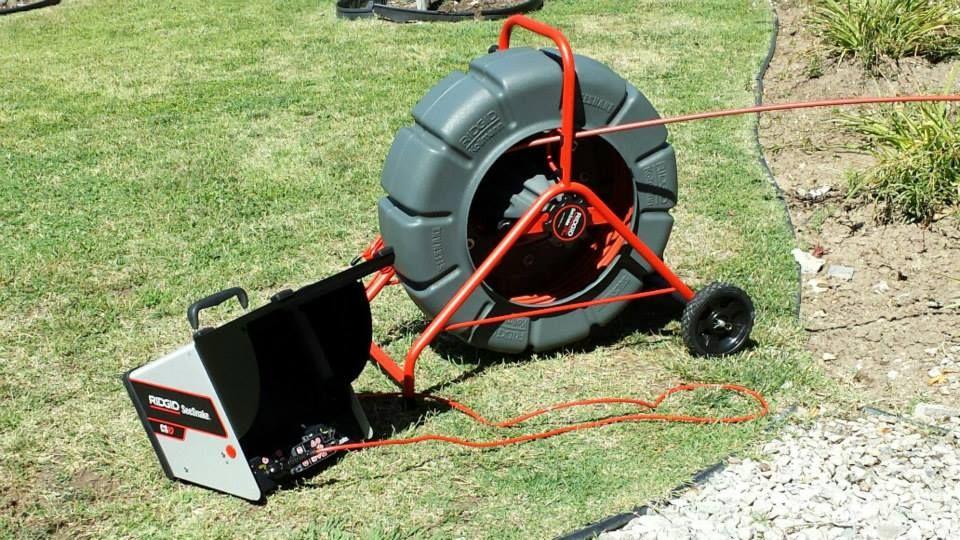
That is one of the best inspection dollars you can spend in this neighborhood, precisely because the housing stock spans a century. A standard home inspection does not put a camera in the sewer lateral. We run a self-leveling camera the full length of the line, identify the pipe material, note joint condition, root intrusion, bellies and any breaks, mark the depth and surface location of anything significant, and give you the footage. If the line needs work, you have documentation to negotiate with. If it is sound, you have removed the single largest unbudgeted expense an older property can hand you.
The city says the blockage is on my side. What does that actually mean?
In the City of Los Angeles the property owner is generally responsible for the house connection sewer, meaning the pipe running from the building all the way to the point where it ties into the public main, including the portion crossing the parkway and part of the street. So a crew can confirm the public main is flowing and still correctly tell you the problem is yours. That is normally the point where we get called. A camera run locates exactly where the trouble sits and how deep, so you are not paying to dig in the wrong place.
Do you work on commercial buildings and restaurants along Sepulveda Boulevard?
Yes. Commercial sewer work is a significant part of what we do here, particularly for food service near the medical center and along the Sepulveda and San Fernando Mission corridors. That includes grease trap and grease line maintenance, scheduled preventive jetting on kitchen laterals, camera inspection of commercial mains, and full sewer rehabilitation on older retail and industrial buildings. We schedule around business hours as a matter of course, including early morning starts, because a closed kitchen costs more than the repair does.
Will trenchless lining tear up my front yard or damage mature trees?
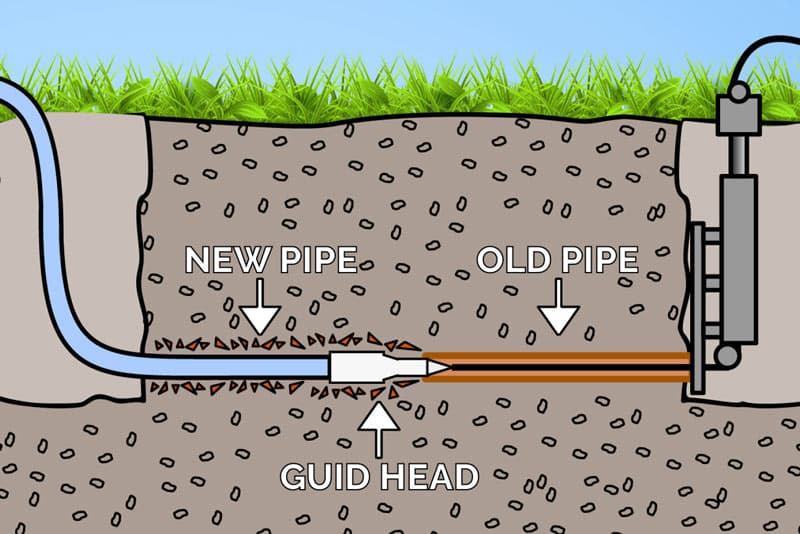
That is the reason trenchless exists. Cured-in-place lining installs a resin-saturated liner through the existing pipe from access points at each end, so instead of a trench running the length of the yard you are looking at a small excavation at one or both ends. Mature trees, established landscaping, driveways and walkways stay where they are. Not every line is a lining candidate, and we will say so if yours is not, but on an intact clay lateral with open joints and root intrusion it is usually the right answer.
Communities Bordering Mission Hills
We work the whole Valley. These are the neighborhoods immediately around Mission Hills and the ones we reach on the same daily route:
Local Sewer Specialists for Mission Hills
BBC Rooter & Plumbing, owner Babak Behzadi. Licensed CSLB #720343, open seven days.
Call 818-280-9135