_1773179633783-DiqUK4T2.png)
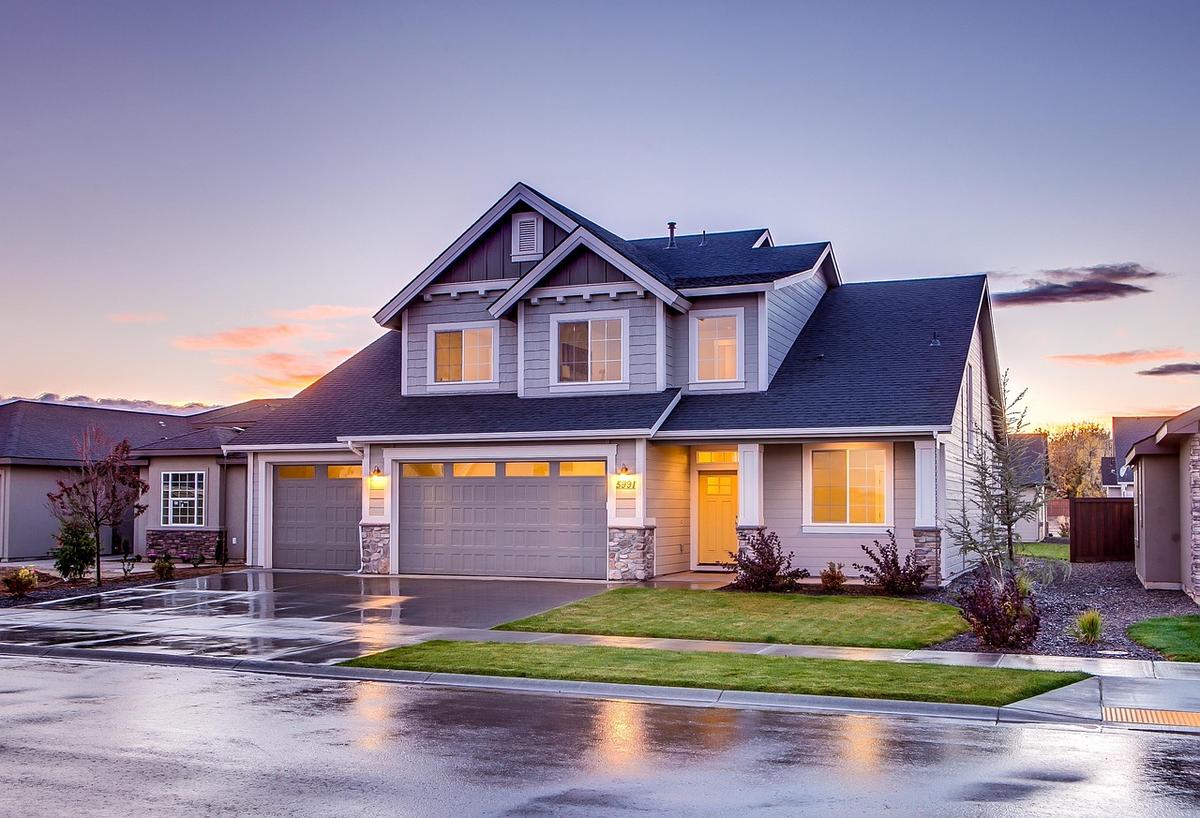
Most neighborhoods grew up over decades. Panorama City did not. It went from dairy pasture to a finished community of thousands of houses in roughly seven years, which means the sewer laterals under it were installed in a narrow window, out of the same materials, by the same trades, to the same standard. Seventy-odd years later they are reaching the end of their service lives on more or less the same schedule.
BBC Rooter & Plumbing is a sewer and underground-pipe specialist, and that uniformity makes Panorama City unusually predictable work. We know before the camera goes in what we are likely to find. If your line is backing up today, call 818-280-9135 — the office answers 6am to 6pm, seven days a week, with after-hours emergency coverage.
Built All at Once in 1948, Failing All at Once Now
Panorama City was developed beginning in the late 1940s by Fritz B. Burns, in partnership with industrialist Henry J. Kaiser, on the former Panorama Ranch. It is generally credited as the first large master-planned community in the San Fernando Valley and one of the earliest anywhere in Los Angeles. The model was straightforward and, at the time, radical: modest two- and three-bedroom houses of around a thousand square feet, on compact lots, built with assembly-line methods on land laid out with its own shopping district, schools and parks already planned in.
Van Nuys Boulevard became the commercial heart of it and stayed that way, anchored later by the Kaiser Permanente medical campus on Roscoe Boulevard. Many original buyers worked at the General Motors assembly plant a short drive away, which ran until 1992. The street grid that carries all this — Roscoe, Nordhoff, Parthenia, Titus, Chase, Woodman, Van Nuys Boulevard — is almost entirely flat, and the ZIP code that covers most of it is 91402.
For a sewer contractor the important consequence is this: on a typical Panorama City block, every original house went in within a couple of years of every other one. When one lateral on the block fails from age, the others are not far behind. Homeowners here often tell us that two or three neighbors have had sewer work done recently. That is not a coincidence and it is not bad luck. It is a construction cohort reaching the same milestone together.
What Postwar Tract Builders Actually Buried
Houses of this era in the Valley were drained with vitrified clay from the building out to the public main, joined in short sections with hub joints. Inside the footprint, cast iron carried the waste from the fixtures out through the foundation. Both materials have known aging behavior, and both are now well past the point where that behavior shows up.
Clay does not corrode and does not rot. It fails at the joints, which occur every two to three feet along the run and which were sealed with materials that shrink, crack and wash out over seven decades. Every one of those joints is an invitation to roots. Cast iron fails differently and more dramatically: the interior scales and tuberculates, the flow channel narrows, the bottom of the pipe corrodes through while the top still looks intact on camera, and eventually a section drops out entirely.
The third material worth naming is Orangeburg, a bituminized fiber conduit made of tar-saturated wood pulp that was widely used in Southern California tract construction from the late 1940s into the early 1970s. It was inexpensive and quick to install during a period of material shortages, which is exactly the period Panorama City was built in. Orangeburg does not crack — it deforms. Under decades of soil load the round bore ovalizes, then the layers separate, then the pipe collapses. It cannot be repaired and it cannot be lined; it gets replaced, usually by pipe bursting along the existing path.
Under-slab lines and how we reach them
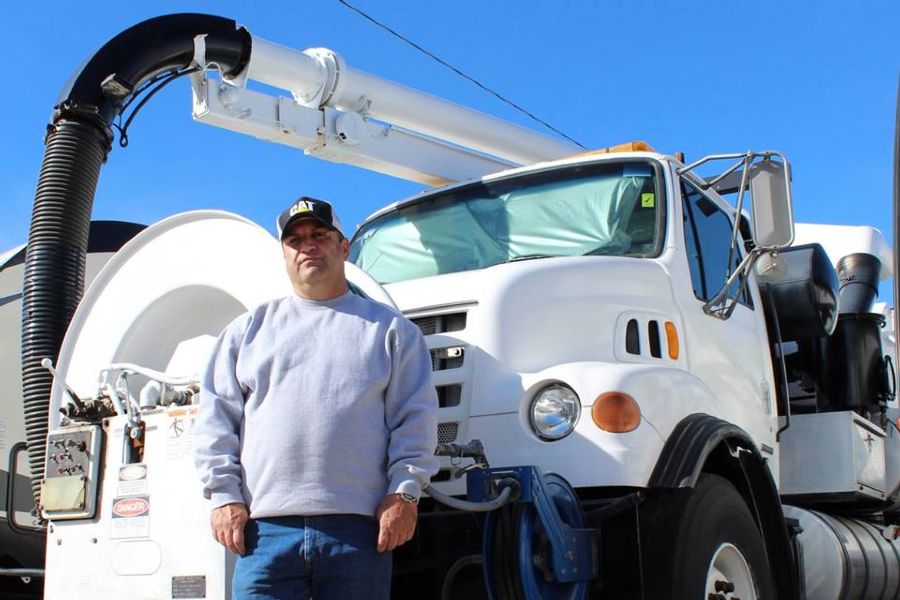
Later houses in the tract were built on slab, and when the cast iron under a slab gives out the repair is real underground pipe work: we camera and locate the failure precisely, then either tunnel to it from outside the footprint, open a targeted section of slab, or reline the run where the pipe geometry allows it. Precision on the locate is what keeps the concrete work small.
Every job begins with a camera inspection and you see the footage yourself before anything is quoted.
Small Lots, Short Laterals, and Where That Saves You Money
Here is the good news about being built on a compact postwar lot. The distance from the house to the public main in Panorama City is generally short — often thirty to fifty feet, sometimes less — and the ground is flat Valley alluvium rather than rock or steep fill. Sewer work is priced substantially by linear foot and by difficulty of access. A short, shallow, straight run on level sandy loam is close to the least expensive scenario in this trade.
Compare that with a hillside property in the south Valley where a lateral may travel a hundred and fifty feet down a graded slope. The same defect costs a multiple to fix there. So when a Panorama City camera inspection shows a line that needs full replacement, the number is usually less alarming than owners expect, and trenchless replacement frequently comes in close enough to open-cut that it is worth doing purely to keep the driveway and the front yard intact.
The soil helps and hurts. Sandy loam is easy to excavate and does not heave the way expansive clay does, so we see relatively few soil-movement breaks. But sandy soil migrates into a leaking joint and washes away downstream, which hollows out the bedding beneath the pipe. The line then sags into that void and a belly forms, and a bellied line holds standing water and collects solids no matter how many times it is cabled.
Apartment Infill Along Roscoe, Nordhoff and Van Nuys Boulevard
From the 1960s onward, a great deal of Panorama City redeveloped upward. Apartment buildings, fourplexes and courtyard complexes replaced or filled in around the original single-family stock, particularly along the major corridors. Today a large share of the community lives in multi-family housing, which changes the sewer picture considerably.
A four-inch lateral installed to serve one small house is now, in plenty of cases, serving eight, twelve or twenty units. The line never gets an idle period in which to dry out, so grease and solids accumulate steadily rather than intermittently. Wipes labeled flushable braid together and hang up on the first rough joint. And on many of these properties nobody knows where the cleanout is, because it was paved over during a parking lot addition twenty years ago.
Cohort failure across a block
When several homes on the same street need laterals in the same year, that is the original construction date showing itself. If your neighbors are digging, a camera inspection at your address is cheap insurance.
Overloaded original laterals
Multi-family buildings sitting on pipe sized for a single postwar house need scheduled hydrojetting, not emergency cabling. Interval depends on unit count and history.
Lost and paved-over cleanouts
We locate buried cleanouts and bring them to grade so the next stoppage is a quick service call instead of an hour of searching while sewage stands in a tenant unit.
For Landlords and Small Property Owners in 91402
Owners of duplexes, fourplexes and small apartment buildings here carry a specific risk: a sewer failure is not just a repair bill, it is displaced tenants, damaged flooring and a habitability problem. The economics strongly favor maintenance over reaction.
What we recommend is unspectacular. Get the building's line on video once so you have a baseline and know the material, depth and condition. Locate and raise the cleanouts. Then jet on an interval set by what the camera and the building's history actually show — annually for many small buildings, more often where a shared kitchen load or a known belly makes it necessary. If the video shows the line is at the end of its life, replace it on your schedule and your budget rather than on a Sunday night in January.
Telling a Lateral Problem From a Fixture Problem
Not every slow drain is a sewer problem, and knowing the difference saves a service call. The distinction is about how many fixtures are involved and where they sit.
- One fixture alone is slow and everything else drains normally — that is a local branch issue, not the main line
- The lowest fixtures in the house misbehave first — a shower pan or a tub filling when a toilet is flushed points at the main
- Water rises in the yard cleanout during heavy use, meaning the restriction is out past the house
- Multiple fixtures went bad within days of each other, which almost always means the shared line rather than a coincidence of clogs
- A backup pattern that repeats every few months, the fingerprint of roots or a belly rather than a one-time obstruction
- Sewer odor around the foundation or in a soft, sunken strip of the front lawn, which suggests the line is leaking into the soil
If any of the last five describe your situation, the next step is a camera inspection rather than another cabling. Cabling a failing line repeatedly is money spent on postponement.
Our Sewer Work in Panorama City
Underground pipe excavation, cast iron and clay replacement, under-slab drain repair, correction of bellied and offset lines, root intrusion removal, sewer gas source tracing and pre-purchase inspections are all part of the same specialty.
Get a Panorama City Crew Out Today
Camera inspection free with any repair. Written estimate before we begin.
Call 818-280-9135Panorama City Coverage Area
Our trucks run from Northridge and typically reach 91402 addresses within thirty to sixty minutes.
Jobs We Turn Down
We stay in our lane, and we would rather say so up front than send a truck for nothing. BBC Rooter does not work on water heaters or tankless units, faucets, toilets, sinks, garbage disposals or any fixture, does not repipe water supply lines or repair pinhole copper leaks, and does not handle water treatment equipment, gas piping or new construction plumbing. Sewer laterals, mains, buried pipe and the drains that feed them are the whole of what we do.
Questions From Panorama City Owners and Landlords
Three houses on my street have had sewer work done. Should I expect the same?
Very possibly. Panorama City was built in a short burst in the late 1940s and early 1950s, so the original laterals on a given block are all roughly the same age and material. When several fail in the same period that is the construction cohort aging out, not random misfortune. A camera inspection at your address costs a fraction of a repair and tells you whether you have years left or months.
My house sits on a slab. How do you fix a broken drain line underneath it?
First we camera the line and locate the defect from the surface with a sonde, so we know exactly where and how deep it is. From there the options are tunneling in from outside the foundation, opening a small targeted section of slab directly over the failure, or relining the run if the pipe geometry allows it. Accurate locating is what keeps concrete work to a minimum, and we always show you the footage before quoting.
Is Orangeburg pipe likely at a Panorama City address?
It is a real possibility. Orangeburg is a fiber conduit made from tar saturated wood pulp that was used heavily in Southern California tract construction from the late 1940s into the early 1970s, which covers exactly when this community was built. It fails by deforming and collapsing rather than cracking, and it cannot be repaired or lined. If the camera shows Orangeburg, replacement by pipe bursting is normally the practical answer.
Does a small lot mean cheaper sewer work?
Generally yes. Sewer pricing tracks linear footage, depth and access difficulty. Panorama City lots are compact and flat, so the run from the house to the public main is often only thirty to fifty feet through sandy soil that is easy to work in. That is close to the least expensive scenario in this trade, and it often makes trenchless replacement affordable enough to be worth choosing just to keep the driveway and yard intact.
I own a fourplex here. How often should the sewer line be jetted?
It depends on the unit count, the pipe condition and the building history rather than on a fixed rule. A small building with sound pipe and no history of trouble often does fine on an annual jetting. A building with a known belly, a heavy grease load or a line originally sized for one house may need it two or three times a year. We camera first and set an interval from what the video actually shows.
Do you inspect sewer lines for buyers in Panorama City?
Yes, and it is worth doing here. A standard home inspection does not put a camera down the sewer, and in a neighborhood of seventy five year old clay and possible Orangeburg that is the single largest hidden expense a buyer can inherit. We provide video and a plain description of the material, condition and depth so you know what you are taking on before closing.
Neighborhoods Around Panorama City
We cover the central and north Valley from the same Northridge yard. Nearby areas include:
A Sewer Company That Knows Panorama City Tract Plumbing
BBC Rooter & Plumbing — owner Babak Behzadi, CSLB #720343. Family-owned, dispatching seven days a week.
Call 818-280-9135