_1773179633783-DiqUK4T2.png)
BBC Rooter & Plumbing works Reseda out of our Northridge shop, roughly ten minutes north. We are a sewer and underground-pipe company — laterals, main lines, buried pipe, backups — and Reseda produces a steady volume of exactly that work because of how and when it was built.
If water is coming up somewhere it should not be, call 818-280-9135 now. If you are trying to figure out whether what you are seeing is serious, start with the list directly below.
Sewer Symptoms Reseda Callers Describe Most Often
These are the actual sentences people say to us on the phone from a Reseda address, and what each one usually turns out to mean once we get a camera in the line.
- "The shower fills up when the washer drains." Classic main line restriction. The washing machine dumps a large volume fast, the line cannot pass it, and it surfaces at the lowest opening in the house. This is rarely a fixture problem.
- "The toilet bubbles when I run the kitchen sink." Air is being displaced past a partial blockage. Something is choking the main line downstream of both fixtures.
- "It backs up every few months and the last guy cabled it." Cabling punches a hole through a root mass or grease plug and restores flow without removing the cause. A repeating interval is the tell that the pipe itself has a defect.
- "There is a soft, wet patch in the back yard and the grass there is greener." A leaking joint or crack is irrigating and fertilizing the lawn above it.
- "The whole house smells like sewer when it is warm out." Either a dry trap, a failed wax seal, or a broken pipe venting sewer gas into the crawlspace or soil. We can locate the source with a camera and a smoke or dye check.
- "The tenants in unit 3 flooded again." On a multi-unit Reseda property this is almost always the shared building lateral, not the individual unit.
Any one of these justifies a camera inspection before it becomes an after-hours emergency with sewage on a floor.
Reseda's 1940s and 1950s Tract Boom, and the Clay Left Behind
Reseda was farm country into the 1920s. The town took its present name in the early 1920s, and until the Second World War it was largely orchards, poultry ranches and open fields. What made Reseda the Reseda people live in now was the postwar housing wave: between roughly 1946 and 1960, developers filled the grid between Sherman Way, Victory, Vanowen, Saticoy and Roscoe with small, affordable, single-story stucco houses — two and three bedrooms, one bath, six to seven thousand square foot lots, garages at the back of the drive.
Those were working-family houses, built to a price. The sewer lateral that went in with them was four-inch vitrified clay in short sections, jointed roughly every two to three feet with mortar. Nobody expected those joints to be watertight forever. Seventy-plus years later, the pipe body itself is often still surprisingly sound — clay does not rust and does not rot — but the joints have moved, the mortar has washed out, and every one of those joints is a doorway.
There is a second layer on top of that. Reseda took heavy shaking in the January 1994 earthquake; the instrumented epicenter of that event was under Reseda itself. The same brittle clay joints that were already the weak point got pushed further out of alignment. When we scope a Reseda lateral today and find offsets repeating down a run, that history is usually the reason.
Why lining suits Reseda lots
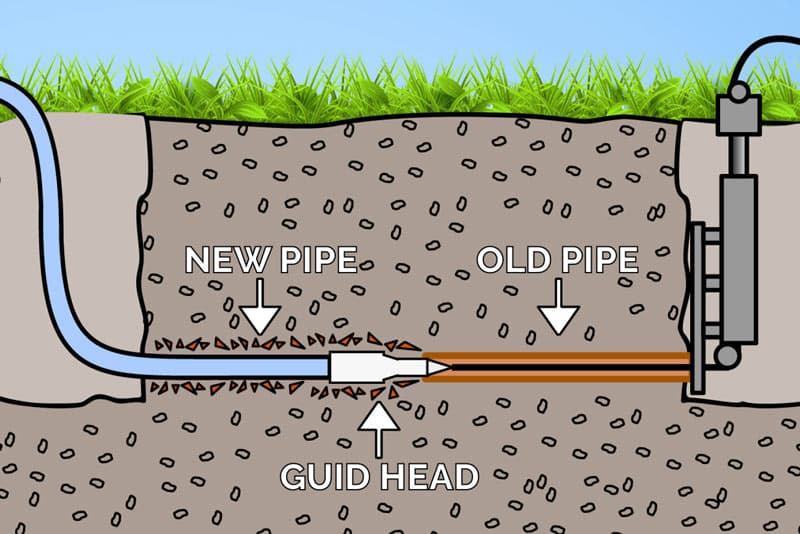
Reseda lots are narrow and the run from the house to the main is often short but crosses a concrete driveway, a walkway and a strip of mature planting. Open-cut trenching wrecks all three.
Cured-in-place lining rebuilds the pipe from the inside through the existing cleanout and a small pit, sealing every joint in the lined reach at once. On a joint-failure line, which is most of Reseda, that is exactly the right tool.
Small Apartment Buildings and Duplexes: Shared Laterals, Split Bills
Reseda has an unusually high density of small income property for a Valley neighborhood: duplexes, fourplexes, and the two-story 1955-to-1970 apartment buildings with parking tucked underneath that fill the blocks off Sherman Way, Vanowen and Victory. Almost all of them drain multiple units into a single building lateral out to the street.
No recovery window
Eight or twelve units share peak morning and evening load on one four-inch or six-inch line. A single-family house can limp along on a half-blocked pipe for months. A multi-unit building cannot, because the volume never lets the line drain down.
Wipes, grease and tenant turnover
Wipes marketed as flushable do not disperse. In a shared line they knit into a mat at the first rough joint or root. Add kitchen grease from a dozen households and the line narrows fast.
Missing or buried cleanouts
Many older Reseda buildings have a single cleanout that has been paved over, planted over, or was never installed. Locating and installing a proper two-way cleanout usually pays for itself on the second service call.
For owners and managers, the economics favor a schedule over emergencies. A planned hydrojetting pass on a known-problem building, booked at a time that suits the tenants, costs less than a Saturday-night backup, a restoration bill and a habitability complaint. We are happy to quote a maintenance interval based on what the camera shows rather than on a generic package.
Flat Ground, Long Runs: Why Reseda Lines Belly
Reseda sits on the floor of the Valley on deep alluvial fill — sand, silt and clay washed down over millennia from the mountains to the north and west. It is flat. Standing at Sherman Way and Reseda Boulevard, there is very little natural grade in any direction for a long way, and a gravity sewer needs grade to work.
A four-inch building lateral is meant to fall about a quarter of an inch per foot. On a flat lot, the installer had very little elevation to spend, so the line was often laid close to the minimum from the start. Then time goes to work: the trench backfill consolidates unevenly, irrigation and seasonal wetting and drying cycle the soil, a section settles an inch, and now there is a low spot — a belly — that holds standing water permanently.
On camera a belly is unmistakable. The picture goes underwater partway down the run and stays there. Water sitting in that dip drops out solids, paper collects, and the homeowner gets a slow drain that no amount of cabling permanently fixes. This is one of the few situations where we will tell you that lining is the wrong product: a liner follows the host pipe, so lining a bellied line gives you a smooth bellied line. Correcting grade means excavating that reach, re-bedding it properly and re-laying pipe at the right fall. It is a smaller job than people fear when the belly is short, and we mark its exact location and depth with the camera sonde before anyone breaks ground.
Sherman Way Storefronts and Food Service Grease
The Sherman Way commercial corridor through Reseda — small independent restaurants, markets, bakeries, taquerias and juice shops, plus the retail around the Reseda Boulevard intersection — runs on kitchen lines that were mostly never sized for the volume they now carry.
Fats, oils and grease leave a fryer or a sink warm and liquid, cool inside the building drain, and plate onto the pipe wall. Layer builds on layer until the interior diameter is a fraction of what it should be. Cable machines bore a channel through that; they do not remove it. High-pressure water jetting with the correct nozzle scours the wall back toward bare pipe, which is why we recommend jetting rather than cabling on any line carrying kitchen waste, and why interceptor and grease trap service has to be on a real calendar rather than done when something stops draining.
We work around service hours. Early morning before open and late evening after close are normal for us on Reseda food-service accounts, and we can provide the camera footage and written service records that a health inspection or a landlord may ask for.
How a Reseda Sewer Job Actually Runs, Start to Finish
- 1. The call. Tell us what is backing up, where, and how often. That conversation alone often narrows it to main line versus branch line before a truck moves.
- 2. Access. We find or establish access — the exterior cleanout, a roof vent, or a pulled toilet. On older Reseda houses with no cleanout at all, installing one is usually step one and pays for itself immediately.
- 3. Clear the immediate blockage if the property is in active backup, so the household or the tenants can use water again.
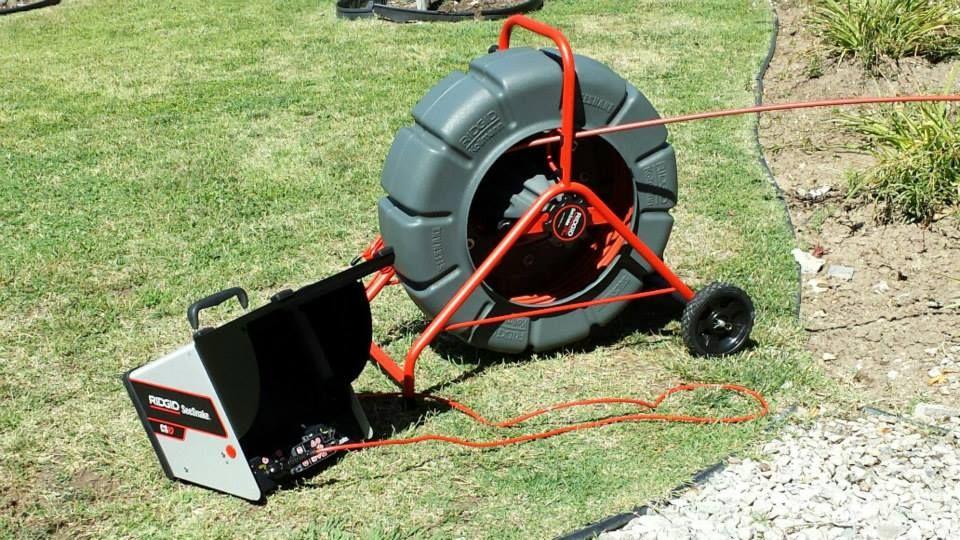
- 4. Camera and locate. Once flow is restored we scope the line, identify material, diameter, defects and depth, and mark defect positions on the surface with a sonde locator.
- 5. Written options. You get the footage and a written estimate covering the realistic choices, which may be maintenance jetting, a spot repair, a lined reach, or full replacement. We explain what each one does and does not solve.
- 6. Permits and utility marking. Replacement and excavation work is permitted through the City, and we file the required underground utility alert before any dig. This is not optional and it is on us, not you.
- 7. The work, then a post-repair scope. We re-run the camera when we are done so you can see the finished condition of your own pipe.
We also excavate and replace failed underground pipe, remove root intrusion, repair collapsed and offset laterals, replace clay, cast iron and Orangeburg, and diagnose sewer gas odors.
Outside our scope, and we will say so: water heaters and tankless units, faucets, toilets, sinks and disposals, water supply repiping, pinhole copper leaks, water softeners, gas piping and new-construction plumbing. We stay in the ground and in the sewer.
Backed Up in Reseda? Call Now
Seven days a week, 6am to 6pm. Written estimate before work starts, camera footage you keep.
Call 818-280-9135Reseda Service Map
We cover 91335 and 91337 end to end, from Roscoe down to Victory and from Lindley across to Etiwanda, including the residential grid either side of Sherman Way, the blocks around Reseda Park, and the multi-family pockets off Vanowen and Saticoy.
Reseda Sewer Questions, Answered
I own a fourplex in Reseda. How often should the building main line be jetted?
It depends on what the camera shows rather than on a calendar rule. A shared lateral in sound condition with no root entry may go two years between cleanings. A cast iron line with a scaled, rough invert, or a clay line with roots at several joints, may need service every six to twelve months to stay ahead of a backup. We scope the line first and recommend an interval based on the actual condition, and we would rather move you to a repair than sell you an endless cleaning schedule.
Can pipe lining fix a bellied sewer line under my Reseda back yard?
No, and anyone who tells you otherwise is selling you something. A cured-in-place liner takes the shape of the pipe it is installed into, so lining a sagging line produces a smooth sagging line that still holds standing water. Correcting a belly requires excavating that section, re-bedding the trench properly and re-laying the pipe at the correct fall. We locate the belly precisely with a camera sonde so the excavation is as small as it can be.
My 1952 Reseda house has no sewer cleanout. What happens then?
That is very common in houses of that era here. Without a cleanout we have to work through a roof vent or pull a toilet, which is slower and more limited, and a camera cannot always be steered well from those access points. In most cases we recommend installing a two-way cleanout near the foundation or at the property line. It is a modest one-time cost that makes every future inspection, cleaning and repair faster and cheaper.
Is a sewer backup covered by homeowners insurance in Reseda?
Standard homeowners and landlord policies in California generally exclude sewer and drain backup unless a specific backup endorsement was added, and the pipe repair itself is usually treated as maintenance rather than a covered loss even when the resulting water damage is covered. We are not insurance advisers, so check your policy. What we can do is give you dated camera footage, a written diagnosis and an itemized invoice, which is what carriers ask for.
Do you service Sherman Way restaurant grease lines outside business hours?
Yes. Early morning before opening and late evening after closing are normal scheduling for our food-service accounts in Reseda, because jetting a kitchen line during service is not practical for anyone. We can also set a recurring interval so the line is maintained rather than repeatedly rescued.
Where Else We Work in the Valley
Reseda sits in the middle of our service radius. These are the other communities our crews run daily:
A Reseda Sewer Crew That Shows Up
BBC Rooter & Plumbing — owner-operated, CSLB #720343, based ten minutes away in Northridge.
Call 818-280-9135