_1773179633783-DiqUK4T2.png)
parts of 91401 & 91436
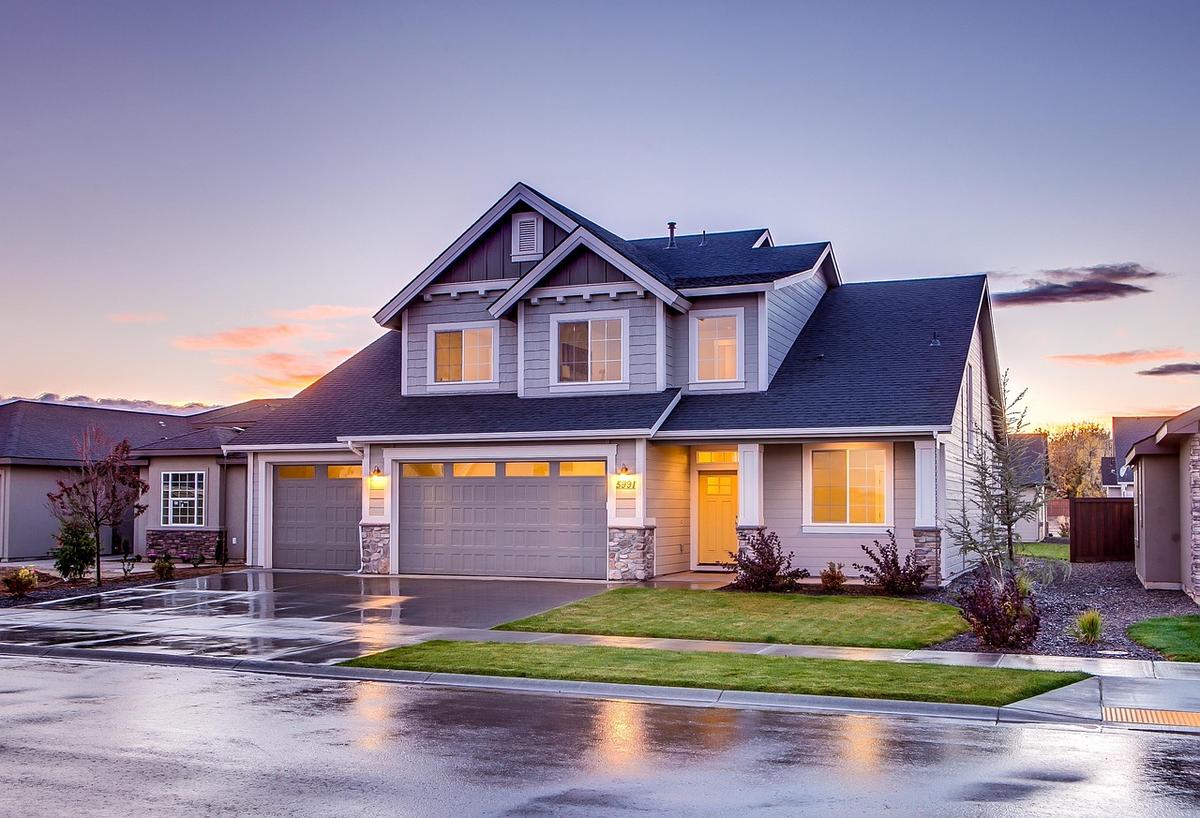
Sherman Oaks is two entirely different jobs for a sewer contractor, and Ventura Boulevard is the line between them. North of the Boulevard you have flat streets, generous lots, houses from the 1930s through the 1950s, and enormous shade trees whose roots have been hunting for clay joints for eighty years. South of it the ground tilts up into the Santa Monica Mountains, and every assumption about lateral length, grade, soil and equipment access changes.
BBC Rooter & Plumbing works both halves. We are a sewer and underground-pipe company — laterals, mains, camera diagnostics, hydrojetting, trenchless rehabilitation and excavation — and Sherman Oaks gives us the full range of what buried pipe can do wrong. If a line is backing up right now, call 818-280-9135; the office is open 6am to 6pm daily and the emergency line stays answered after hours.
Two Sewer Neighborhoods Divided by Ventura Boulevard
Moses Sherman, a streetcar magnate and a partner in the syndicate that opened up the southern Valley, put his name on the tract subdivided here in 1927. Ventura Boulevard, which follows an old route along the base of the mountains, became the commercial spine and it has never stopped being one. Annexation to Los Angeles and the postwar building boom filled the flats first, because flat land is cheap to develop. The hillsides waited for the grading equipment and the money, which arrived in force from the 1950s onward.
That sequence is written into the pipe. A house on Hesby Street or Dickens Street is likely on original vitrified clay laid before World War II, with a short run to a main under a flat, tree-lined street. A house on Woodcliff Road or off Longridge Avenue is likely on a much younger line that nonetheless sits in graded fill on a slope, with a lateral that may run a hundred and fifty feet downhill before it ever meets public pipe. Same ZIP code, opposite problems.
Hillside Laterals: Long Runs, Steep Grade, Ground That Moves
A sewer line is designed to be self-scouring. Around a quarter inch of fall per foot — roughly two percent — carries liquid and solids along together. Hillside Sherman Oaks routinely violates that in the other direction. On a lateral dropping down a canyon slope the water outruns the solids, the liquid arrives at the main and the paper and waste do not, and material accumulates at every change of direction. Homeowners find this counterintuitive: the steeper the run, the more often it clogs. We see it constantly on properties above Valley Vista Boulevard and in the streets climbing toward Mulholland Drive.
Ground movement is the second hillside issue. The north slope of the Santa Monicas here is largely Modelo Formation siltstone and shale, weak rock that weathers into unstable material, and a great many pads were cut and filled in the mid-century grading era. Fill settles. Slopes creep downhill a fraction of an inch a year. Rigid pipe crossing the boundary between cut and fill takes the strain at a single joint, and that joint offsets, shears or separates. When we camera a hillside line and find one clean break with sound pipe on both sides, that is almost always what happened.
Access is the third. Narrow winding streets, no side yard, retaining walls, terraced gardens, houses sitting well above or well below the roadway. This is precisely where trenchless methods earn their cost: lining a hillside lateral from an existing cleanout, or bursting it between two small pits, avoids trenching a switchbacked driveway and a hand-built stone terrace that would cost more to rebuild than the sewer work itself.
Long lines need a real camera and a locator
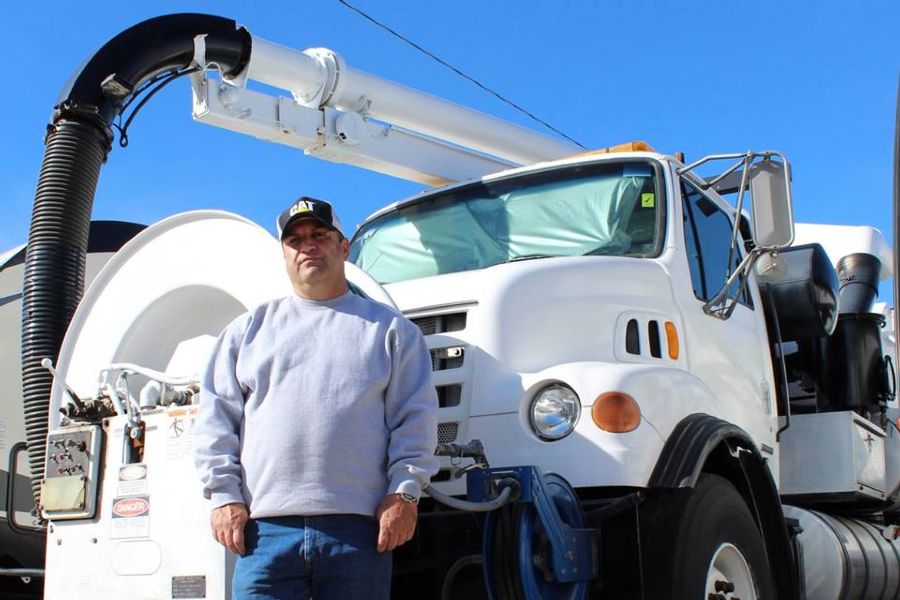
On a hundred-and-fifty-foot hillside lateral, knowing there is a defect is worthless without knowing exactly where it is and how deep. Our camera work pairs video with a sonde locator so we can mark the defect on the surface and give you a depth. On a slope, being wrong by fifteen feet is the difference between a modest pit and a demolished terrace.
We also camera before and after every repair, so you have documentation of what was wrong and proof of what was fixed.
The Flats: Liquidambar Roots and Prewar Clay
North of Ventura Boulevard, on Dickens, Hesby, Camarillo, Otsego, Moorpark and the streets running toward Riverside Drive, the housing stock skews older and the lots are deep. These blocks were planted decades ago with liquidambar, magnolia, jacaranda, ficus and coast live oak, and several of those species are famous among sewer contractors. Liquidambar in particular — the sweetgum whose surface roots buckle Sherman Oaks sidewalks — produces a dense, fibrous root mass that will find a hairline gap in a clay hub joint and grow into the bore until it fills it like a bottle brush.
The pipe those roots are attacking is typically vitrified clay in short jointed sections, sometimes with cast iron running under the slab or through the crawlspace. Clay is not the enemy; the joints are. Which is why cabling a rooted Sherman Oaks line is a maintenance service rather than a repair. It restores flow, and the roots return, because the doorway they came through is still open. Lining the run closes every doorway at once.
Root regrowth on a seasonal clock
Trees push root growth hardest when they need water. Homeowners on the older flat streets often report backups in late summer and again after the first real rain. That rhythm is diagnostic: it points at roots rather than at a hard obstruction.
Offsets at the cut and fill line
On hillside properties the failure is frequently one sheared joint where graded fill meets native ground. A camera locate pinpoints it, and a short spot repair or a burst of the affected run solves it without touching the rest of the line.
Grease plating from uphill kitchens
Where a residential block drains toward or past the Boulevard, restaurant grease can plate the inside of a public main and cause repeat trouble that has nothing to do with your own lateral. Camera evidence is what settles that question.
Ventura Boulevard Kitchens and Where Their Grease Ends Up
The stretch of Ventura Boulevard through Sherman Oaks carries one of the densest restaurant concentrations in the San Fernando Valley, from the Galleria area east past Van Nuys Boulevard. Every one of those kitchens produces fats, oils and grease. It leaves the building warm and liquid, then cools in the sewer and hardens onto the pipe wall in a layer that thickens month over month until the effective diameter of the line is a fraction of what it should be.
We provide grease interceptor service and scheduled kitchen-line hydrojetting for Boulevard operators, sized to the volume the kitchen actually does rather than to a generic calendar. A high-turnover restaurant may need attention every quarter; a small cafe with a single fryer often does not. For property managers of the mixed-use buildings along the corridor, we also map and camera the building lateral once so that everybody knows where the shared line runs before there is an emergency and a tenant dispute.
Condominium and Townhome Stacks Near the Interchange
The southeastern corner of Sherman Oaks, where the 101 meets the 405 near the Galleria, is dense with condominium and townhome buildings from the 1960s through the 1980s. These have a specific drainage architecture: individual unit branches feed a shared building drain, which feeds one lateral to the street. A blockage in that shared line shows up first in whichever unit sits lowest, which is rarely the unit that caused it.
Our approach for associations and property managers is unglamorous and effective. Locate and label the cleanouts. Camera the shared line once so there is a baseline record. Put the building on a jetting interval that matches its unit count and its history instead of waiting for the next 2am overflow. Whether the association or the individual owner is financially responsible for a given segment is a question for the governing documents, not for us — but the video and the locate we provide are usually what lets that get settled quickly.
Sewer Services at Sherman Oaks Addresses
All of this is done by our own crews, with our own trucks and equipment, on both sides of the Boulevard.
Also within scope: excavation and replacement of collapsed, bellied or offset lines, cast iron and clay removal, root intrusion abatement, sewer gas source tracing, pre-purchase sewer inspections and commercial sewer rehabilitation.
Sherman Oaks Sewer Trouble That Cannot Wait?
Free camera inspection with any repair. Written estimate before work begins.
Call 818-280-9135Signs a Sherman Oaks Line Is In Trouble
Sewer failure announces itself early. On a hillside property the early signals are easy to dismiss because the line has always been temperamental. Do not dismiss these:
- Backups that repeat on a seasonal rhythm — the signature of root intrusion rather than a single obstruction
- Slow drainage that worsens the further down the house you go, with the lowest fixture in the building always affected first
- A wet or unusually lush patch on a slope below the line of the lateral, which on a hillside can also be a slope-stability concern and should not be ignored
- Sewer odor at the base of a hillside driveway or near a downhill retaining wall
- Gurgling from a tub or shower when a toilet is flushed elsewhere in the house
- New cracking in hardscape along the path of the sewer, which can mean soil is washing into a leaking joint and leaving a void
If you are buying in Sherman Oaks, put a sewer camera inspection on the list alongside the general and geological reports. A hillside lateral replacement is a five-figure item, and it is not visible from the driveway.
Where We Work in Sherman Oaks
We dispatch out of Northridge and cover Sherman Oaks from Burbank Boulevard down through the Boulevard corridor and up into the hillside streets toward Mulholland.
Outside Our Scope
So nobody wastes a trip: BBC Rooter does not service water heaters or tankless units, does not install or repair faucets, toilets, sinks, garbage disposals or fixtures, does not repipe water supply lines or chase pinhole copper leaks, and does not take on water treatment equipment, gas piping or new construction plumbing. Our work is the drainage side of the property — sewer laterals, mains, buried pipe and the drains feeding them.
Sherman Oaks Sewer Questions, Answered Plainly
Our house is up in the hills off Mulholland. Can you get your equipment to it?
Yes. Hillside access is routine for us. Jetting hose and camera reels feed a long way from the truck, and where a street is too narrow or a house sits far above the roadway we stage smaller equipment and run line to it. Trenchless methods matter most on these properties precisely because they need only a cleanout or one or two small pits rather than an open trench across a terraced garden.
Why does my hillside line clog so often when it drains steeply downhill?
Because too much slope is its own problem. A drain line is designed to fall about a quarter inch per foot so that water and solids travel together. On a steep canyon lateral the water runs ahead and the solids are left behind, then they collect at bends and low spots. Jetting clears the accumulation, and on a chronic line we look at whether a section can be regraded or relined to even out the run.
Can a long hillside lateral be repaired without trenching the driveway?
In most cases yes. If the pipe is round and reasonably aligned we can cure a liner in place through an existing cleanout, which seals every joint along the run. If the pipe is crushed or badly offset we burst it, which needs a pit at each end but leaves everything between them alone. We only recommend open trenching when the camera shows the pipe cannot support either method.
Roots keep coming back in our home north of Ventura. What actually stops them?
Cabling shears the root mass off and flow returns, but the gap in the joint that let the roots in is still there, so they regrow. Jetting with a root cutting nozzle cleans more thoroughly and buys more time. The permanent answer is removing the joints, either by lining the run so it becomes one continuous seamless pipe or by replacing the affected section. Roots cannot enter a pipe with no openings.
We are a condominium association near the Galleria. Can you work with us?
We do a lot of this. The usual first step is to locate and label the cleanouts, run a camera through the shared building line, and give the board a written record with video and depths. From there we set a jetting interval matched to the building rather than reacting to overflows. Who pays for which segment is governed by your CC and Rs, but our documentation is normally what allows that to be resolved quickly.
Do you handle restaurants on Ventura Boulevard?
Yes. We service grease interceptors and jet kitchen waste lines for food service operators along the Boulevard, on a schedule matched to actual volume. We also camera building laterals in mixed use properties so the restaurant tenant and the residential units upstairs both know what they are sharing before a backup forces the conversation.
Communities Bordering Sherman Oaks
Our service radius runs the length of the Valley. Nearby areas we cover with the same crews:
Your Sherman Oaks Sewer Contractor
BBC Rooter & Plumbing — owner Babak Behzadi, CSLB #720343. Family-owned, seven days a week, hills and flats alike.
Call 818-280-9135