_1773179633783-DiqUK4T2.png)
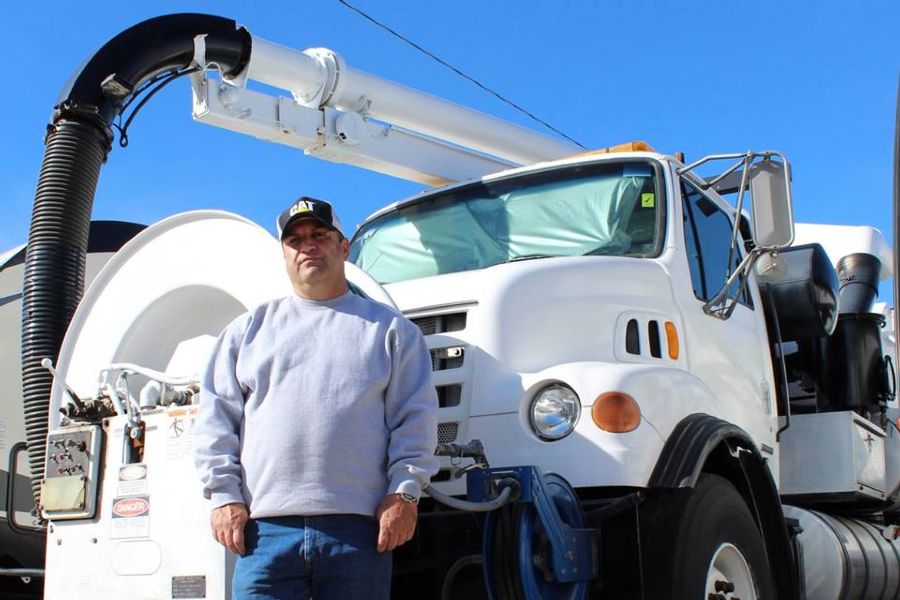
Canoga Park has the oldest bones in the west San Fernando Valley, and the sewer system reflects it. The town was laid out in 1912 as Owensmouth, timed to the arrival of the Los Angeles Aqueduct, and it was already a real place with a business district and a high school while most of what is now Woodland Hills and West Hills was still ranch land. Ninety-odd years of continuous building on top of that original grid is why a single Canoga Park block can hold pre-war clay, postwar cast iron, 1960s apartment plumbing and a modern restaurant grease line all draining to the same main.
BBC Rooter & Plumbing is a sewer and underground pipe contractor. We do not chase fixtures or appliances; we work on the buried lines that carry waste from a building to the city main, and Canoga Park keeps us busy on both the residential and the commercial side. Our yard is in Northridge and we are usually on site within the hour. For a stoppage that cannot wait, call 818-280-9135 any day of the week.
Sherman Way, Topanga Canyon and the Grease Problem
The stretch of Sherman Way running east from Topanga Canyon Boulevard through the old Owensmouth business district is one of the densest concentrations of small independent food service in the west Valley, and Topanga Canyon Boulevard adds strip-center restaurants, bakeries and markets on top of it. Every one of those kitchens discharges fats, oils and grease into a building line that was, in a great many cases, sized and installed for a completely different tenant decades ago.
Grease does not stay liquid. It leaves a fryer or a three-compartment sink hot, travels a short distance underground, cools against pipe that sits at soil temperature, and plates onto the wall in layers. Over a couple of years those layers narrow a four-inch line to the diameter of a garden hose. The building operator sees a floor sink backing up during dinner service and calls it an emergency, but the emergency was two years in the making.
Cabling a grease-plated line is close to useless, because a cable only bores a hole through the deposit. Hydrojetting is the correct tool: water at pressure with a rotating head strips the wall back to bare pipe and carries the material out rather than leaving it downstream. Paired with interceptor and grease trap service on a real schedule, it keeps a kitchen out of the emergency category entirely. We also camera commercial lines afterward, because grease frequently hides a cracked or root-invaded section that only becomes visible once the wall is clean.
Apartment Buildings and the Shared Lateral Question
Canoga Park carries a heavy multi-family load along Sherman Way, Vanowen Street, Saticoy Street and the side streets feeding them, much of it built in the 1960s and 1970s. Those buildings concentrate a great deal of drainage into one aging line. A twelve-unit building can put more daily volume through its lateral than a dozen single-family houses put through twelve separate ones, and it does it through pipe of the same age and material.
Two things follow from that. First, small defects escalate quickly: a partial obstruction that a single-family house would tolerate for a year will surface within weeks in an apartment building because the line never gets a quiet period to drain down. Second, diagnosis has to account for the layout. Older buildings frequently run several stacks into a single underground main, sometimes with a segment crossing under a parking area or a shared driveway, and the stoppage a tenant reports on the ground floor may be caused by something two buildings' worth of pipe away. We camera from the cleanout that matters rather than the one that is closest to the parking spot, and we locate and mark the alignment so an owner knows what is under the asphalt before anyone quotes an excavation.
Backed Up in Canoga Park? We Roll Today.
Residential, apartment and restaurant sewer lines. Camera included with repair work.
Call 818-280-9135Clay, Iron, and the Occasional Orangeburg Surprise
Because the neighborhood was built in waves rather than all at once, the material under a Canoga Park property is a function of the block, not the city. These are the three we meet most often and what each one does when it fails.
Vitrified clay from the Owensmouth years
The oldest properties near the original townsite drain through short lengths of glazed clay with a joint every few feet. The pipe barrel is typically still sound a century later. The joints are the whole story: mortar has gone, hairline gaps have opened, and roots from parkway ficus and Chinese elm have found every one of them.
Cast iron from the postwar tracts
The wave of building that filled in the blocks north and west of the old center left cast iron under thousands of houses. Iron rusts from the inside, the crown scales, the bottom channels away, and eventually a section breaks out and starts taking soil in. On a heavily used apartment line the same process runs faster.
Orangeburg where iron ran short
Some late-1940s and 1950s laterals here were laid in bituminized fiber pipe. It does not corrode, it deforms, collapsing slowly into an oval until the opening is gone. There is no repairing it and no lining it in that condition. When a camera shows an egg-shaped bore, the answer is replacement.
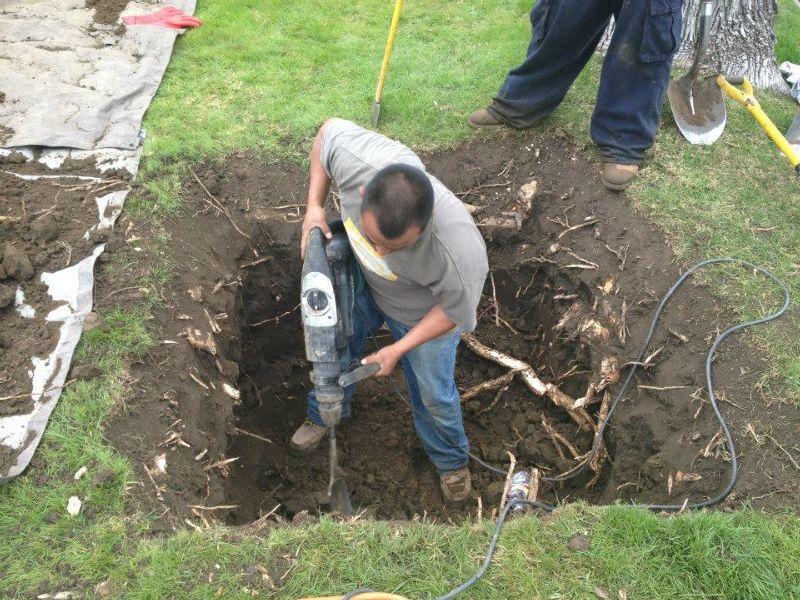
The camera decides, not the calendar
Two houses built the same year on the same street can be on different pipe, because builders substituted materials constantly. A scope with a locate settles material, depth, slope and defect footage in one visit.
It also tells us whether lining or bursting is realistic, which matters more on these lots than almost anywhere else we work.
Small Lots, Tight Access, and Why That Changes Everything
The original Owensmouth subdivision and the postwar infill around it produced narrow parcels with buildings sitting close to the side property lines. Side yards on plenty of these houses are barely wide enough to walk a wheelbarrow through, driveways are shared, and detached garages sit at the back of the lot with the sewer running past or under them. Bring a backhoe to a job like that and you are dismantling a fence, a gate and part of a neighbor's landscaping before the first shovel of dirt moves.
This is the single strongest argument for trenchless methods in Canoga Park. A cured-in-place liner is installed through an existing access point and cures into a jointless pipe inside the old one, so a clay lateral with root intrusion at every joint becomes a continuous line without opening the yard. Pipe bursting needs a launch pit and a receiving pit and nothing in between, which on a narrow lot can mean two small excavations instead of eighty feet of open trench. Neither method works on everything. Fully collapsed pipe, a badly bellied section that needs its grade rebuilt, and Orangeburg that has already ovaled all still require digging. We tell you which category your line is in after we have looked at it.
The Old Industrial Corridor
East Canoga Park along Canoga Avenue and De Soto Avenue carries a different building stock again: warehouses, light manufacturing and the legacy of the aerospace plants that operated on Canoga Avenue for decades. Underground drainage on those parcels tends to be large-diameter, old, deep, and poorly documented, with lines that were extended and re-routed every time a tenant changed. Our work there is usually a combination of camera inspection to build an accurate picture of what actually exists, jetting to restore capacity, and spot repair or lining on the sections that have failed. Commercial sewer rehabilitation of that kind is a normal part of our week, not an exception.
Our Canoga Park Service List
Everything below is in-house work. We are underground specialists and we stay in that lane:
What we do not touch, so nobody is left guessing: water heaters and tankless units, faucets, toilets, sinks, garbage disposals, water softeners and filtration, copper supply repiping, gas piping and new construction rough plumbing. Those are jobs for a general plumbing contractor. Buried drainage is ours.
Symptoms of an Aging Canoga Park Line
On older, flatter, heavily used pipe the warning signs tend to show up in a particular order. Watch for these before the line quits entirely:
- Waste appearing at a floor drain, a shower pan or a laundry standpipe when a toilet is flushed — the classic signal that the main line, not a fixture, is blocked
- A stoppage that returns faster each time — six months, then four, then two, which is a root mass or a grease deposit rebuilding on a shrinking opening
- Ground-floor tenants reporting slow drains while upper units are unaffected in a multi-unit building
- Cracked or lifted concrete in a walkway or driveway that follows the sewer alignment rather than a tree trunk
- Persistent drain flies or sewer odor in a rear yard, garage or utility area with no obvious source
- A kitchen line that needs jetting more than once a year, which usually means the underground section has lost diameter permanently
Any of those justifies a camera run. We show you the footage live, mark the defect on the surface, and hand you a written estimate with no pressure attached to it.
Coverage and Response Across the West Valley
Canoga Park is a straight run down De Soto or Topanga from our Northridge yard, and we are typically on a Canoga Park address within thirty to sixty minutes of a call. Commercial customers can schedule jetting and interceptor service outside service hours so a kitchen is not shut down mid-shift.
Canoga Park Sewer FAQ
My restaurant on Sherman Way keeps backing up during dinner service. What is the actual fix?
Almost always grease that has plated onto the inside of the underground kitchen line over a long period. Running a cable through it bores an opening that closes again within weeks. The real fix is hydrojetting to strip the wall back to bare pipe, a camera run afterward to confirm there is no crack or root intrusion hiding under the deposit, and then a maintenance interval so the line never rebuilds to that point. We can schedule jetting outside your service hours.
I own an apartment building here. Is the sewer under the parking lot my responsibility?
If it is on your property and it serves your building, yes. In the City of Los Angeles the owner is responsible for the private sewer line from the building all the way to the connection at the city main, including any portion running under a driveway, a parking area or a courtyard. That is why we locate and mark the alignment on the surface before quoting. An owner should know where that pipe runs before resurfacing a lot or adding parking structures over it.
A camera showed my pipe is oval instead of round. What does that mean?
It means the lateral is Orangeburg, a bituminized fiber pipe used in some 1940s and 1950s construction. It does not crack like clay or corrode like iron. It deforms under soil load, slowly flattening until the opening closes. There is no cleaning or lining that restores it, because the host pipe has lost its shape and its strength. Orangeburg gets replaced, and pipe bursting is usually the least invasive way to do it on a narrow lot.
My side yard is barely three feet wide. Can you still replace the sewer line?
Usually, yes, and that is exactly the situation trenchless methods were developed for. Lining is installed through an existing access point with no trench at all. Pipe bursting needs one small pit at each end of the run and leaves everything in between undisturbed. Where the pipe has fully collapsed or has a belly that has to be re-graded, some excavation is unavoidable, but even then we are usually opening a few feet rather than the whole side yard.
Roots keep coming back every year even though the line gets cleared. Why?
Because clearing removes the growth inside the pipe and leaves the root collar outside it untouched. The plant is not injured and the opening it entered through is still there, so it regrows on the same schedule. Cutting with a jetter head instead of a cable removes far more of the mass, but the permanent answer on jointed clay pipe is a cured-in-place liner that seals every joint. Once there is no opening, there is no re-entry, and the tree keeps growing where it is.
Do you handle both the house side and the commercial side of a mixed-use building?
Yes. Mixed-use is common along the Sherman Way and Topanga Canyon corridors, and those buildings often have residential stacks and a commercial kitchen line joining the same underground main. We camera the whole system so the ownership and the tenant both know which section is causing the problem, then clean or repair the section that needs it rather than billing for the entire run.
Where Else Our Trucks Run
BBC Rooter covers the whole San Fernando Valley from one Northridge yard. If you own property in another neighborhood, we are there too:
Canoga Park's Underground Pipe Crew
BBC Rooter & Plumbing — sewer and drain only, CSLB #720343, seven days a week.
Call 818-280-9135