_1773179633783-DiqUK4T2.png)
Bel Air is the most demanding residential sewer environment in Los Angeles, and the difficulty has almost nothing to do with the pipe itself. It is the geometry: acre-plus parcels carved into the south face of the Santa Monica Mountains, houses set hundreds of feet back and dozens of feet above the road, private drives with switchbacks, gates, guardhouses and motor courts, and a street network of narrow ridge roads with no shoulder to park a truck on.
We should be clear about our own address before anything else. BBC Rooter & Plumbing operates out of 8635 Yolanda Ave in Northridge. Bel Air is on the other side of the Sepulveda Pass and we have no office, yard or storefront in 90077. What arrives is a licensed crew with a camera, a jetter and trenchless equipment, seven days a week. Call 818-280-9135 and we will give you a real arrival window.
Access Is the First Question, Not the Last
On most jobs a contractor looks at the pipe and then works out logistics. In Bel Air the order reverses. Before we can say anything useful about a repair we need to know how a truck reaches the property, where a jetter can stage, whether a drive will take the weight of an excavator, and whether there is a flat area anywhere on the parcel large enough to work from. Estates along Nimes Road, Airole Way, Somera Road and the upper reaches of Bel Air Road routinely fail one or more of those tests.
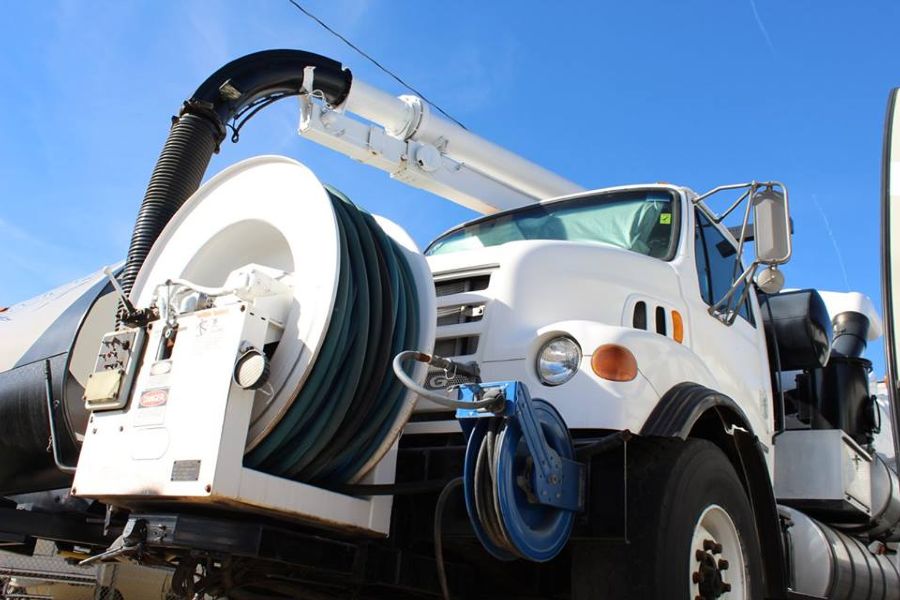
Cameras and jetters are the easy part, because both run from truck-mounted reels and we can push hose and cable a long way from a staging point at the gate or in a motor court. Excavation is where properties genuinely differ. A private drive with a tight switchback, a bridged section, a retaining wall or a soft shoulder may simply not accept a machine, and that constraint has to shape the repair method rather than be discovered halfway through.
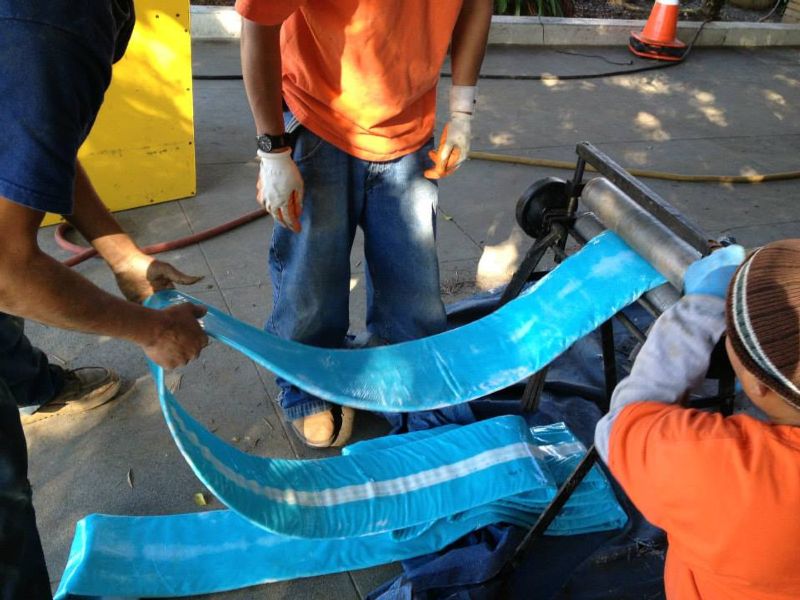
This is the practical reason we lean so heavily on trenchless work here. A cured in place liner needs a cleanout and one small access pit. Pipe bursting needs a pit at each end of the run. Both can be executed in places where a two-hundred-foot open trench down a hillside driveway is not physically or financially plausible.
What Alphonzo Bell Laid Out in 1923 Is Still Under Your Lawn
Bel Air was subdivided beginning in 1923 by Alphonzo Bell, who cut curving roads along the contours rather than a grid, planted the canyons heavily and set restrictions that produced very large parcels. The Bel-Air Country Club followed in 1927; the property on Stone Canyon Road that became the Hotel Bel-Air dates to the early 1920s. The East Gate at Sunset and Bel Air Road and the West Gate at Bellagio are still the entrances they were designed to be.
That original build-out means the oldest laterals here are 1920s and 1930s vitrified clay in short sections with mortared bell joints, laid before anyone imagined the loads and the landscaping that would sit on top of them a century later. Some of the highest properties predate the sewer mains reaching their road, and were on septic tanks and seepage pits until they were connected later, with the old system sometimes left in the ground rather than properly abandoned.
The second great construction wave came after the Bel Air fire of November 1961, which destroyed a large number of homes across these canyons. Rebuilding through the 1960s brought late cast iron, more clay and, in that period, bituminous fiber conduit. Everything replaced from the 1970s onward is ABS or PVC. On a single Bel Air property it is entirely normal to camera three different pipe materials from three different decades in one run.
Long Laterals With Serious Fall Behave Differently
A hundred and fifty to four hundred feet of sewer with thirty or more feet of drop across it is not just a longer version of a suburban lateral. Two specific things go wrong. First, on the steep sections liquid runs away from the solids, and wherever the grade flattens, at a bench in the drive or as the line approaches the road, the solids stop and accumulate. That deposit dams the pipe. It presents as a clog and it is really a profile problem, which is why cabling it gives such a short-lived result.
Second, length multiplies risk. More joints, more chances for differential settlement, more opportunity for a belly, and a run far beyond the reach of consumer-grade equipment. A great many Bel Air calls reach us after someone cleared the line and it failed again within days, which usually means the cable never got as far as the actual defect. A camera that counts footage as it travels is the only way to know what you are dealing with, and on these properties it is the cheapest money you will spend.
Spot repair versus full replacement
Length, depth and access drive cost on every job here, and estate properties tend to be unfavorable on all three. That makes the survey more valuable, not less. It is very common for a three-hundred-foot Bel Air lateral to need one or two spot repairs rather than a wholesale replacement.
We will not put a number on a Bel Air line before we have watched the footage with you and located the defects from the surface. The difference between replacing an entire run and rebuilding forty feet of it is enormous, and it is knowable before anyone digs.
Hillside Movement, Fill Pads and Retaining Walls
These canyons are cut into sedimentary rock that is prone to creep and slide, and much of the buildable ground is engineered fill held by retaining walls. Fill consolidates, slopes move slowly downhill, and walls get rebuilt. A trench compacted properly when the house was built can still have shifted decades later, and a rigid clay line does not tolerate that: joints pull apart into offsets, barrels crack, and sections sag into bellies where water stands.
Offsets matter for a second reason. A joint that has moved far enough will block a liner from passing, which changes the repair method. That is another argument for surveying the full run first rather than committing to an approach and finding out at the wrong moment.
Oaks Above Stone Canyon and the City Tree Rules
Bel Air sits inside the City of Los Angeles, and the city's Protected Tree Ordinance covers coast live oak, western sycamore, California black walnut and toyon. Those species are native to these canyons and they are everywhere along Stone Canyon, Roscomare, Chalon and Beverly Glen, alongside the eucalyptus and pine planted during the 1920s and 1930s build-out.
Oaks and sycamores seek water and a weeping clay joint is a beacon to them. Once a fine root enters the joint it thickens inside the bore, catches solids and forms a mat. Cutting the mat restores flow for a season while leaving the root in the wall of the pipe. Sealing the pipe is what actually ends the cycle, and lining or bursting does that without opening a protected root zone, which in the City of Los Angeles is a permitting problem nobody wants to take on over a sewer defect.
Failure Patterns We Log in 90077
Solids stranded at a grade break
Steep runs let water outpace the waste, and the deposit builds where the slope flattens near the road. The blockage is real, the cause is the profile of the line.
Offset joints from slope creep
Old clay pulled apart at the bell by decades of hillside movement and fill consolidation. Even a modest offset catches solids; a large one rules out lining that section.
Protected oak and sycamore intrusion
Native canyon roots entering failed joints along the driveway run. The tree is protected and generally does not need to be disturbed once the pipe is sealed.
Orphaned septic tanks and seepage pits
Upper properties connected to the sewer years after they were built sometimes still have the original tank or pit in the ground, unsealed. It is an odor source and a settlement risk under paving.
Multiple structures on one original run
Guest houses, pool pavilions, staff quarters, gate houses and screening rooms tied into a lateral sized for one household decades earlier.
Bellies under motor courts and bridges
Heavy paving, vehicle loading and bridged driveway sections compress the fill below and sag the pipe into a standing water low spot that has to be jetted or regraded.
What the Warning Signs Look Like on an Estate
Fixtures on a property this size are spread across wings, levels and outbuildings, so a failing main usually looks like several small unrelated faults before anyone connects them. Act on these:
- The lowest drain on the property goes first — typically a lower-level bath, a laundry room or a pool pavilion fixture while the main floor still runs clean
- Separate wings or outbuildings failing on the same day — the shared run below them is where the restriction is
- Trouble that arrives with the first heavy rain — saturated hillside pushing groundwater into a cracked line through its joints
- A depression appearing along the line of the driveway — soil migrating into a broken pipe, which on a slope can undermine paving in a single wet season
- Sewer odor near an old capped stub or a lower terrace — often an abandoned run or an unsealed former septic connection
- Clearing that lasts days rather than years — on a run this long it usually means the equipment never reached the defect
Sewer Failure at a Bel Air Estate? Give Us the Gate Code and We Will Come Look.
Camera survey, hydrojetting and trenchless crews for 90077, staged around whatever access the property allows. Written scope before anything is opened.
Call 818-280-9135Scope of Work for Bel Air Estates
All of it performed by our own crews, with equipment sized to the access:
Also in scope: sewer line replacement, underground pipe repair and excavation, collapsed, bellied and offset section repair, root intrusion removal, cast iron, clay and Orangeburg replacement, pre-purchase sewer inspections, sewer gas diagnosis, abandoned septic and seepage pit capping, and commercial sewer rehabilitation. Never in scope: water heaters, tankless units, faucets, toilets, sinks, disposals, fixtures, water supply repiping, pinhole copper leaks, water softeners, gas lines and new construction plumbing. We are a sewer contractor and we stay in that lane.
Bel Air Road, Roscomare, Chalon and the Drive From Northridge
We cover the whole of 90077: the East Gate streets off Sunset, Stone Canyon Road up past the reservoir, Bellagio and Chalon, Nimes, Somera and Airole, Roscomare and the Glenmont area above it, Casiano, Linda Flora and Moraga on the west side toward the 405, the gated community at Bel Air Crest, and the eastern edge along Beverly Glen up to Mulholland.
The drive is the 405 south through the Sepulveda Pass, exiting at Moraga or Sunset, about twenty miles from our Northridge shop. Early on a weekend that is thirty-five to fifty minutes; on a weekday with the pass congested it can run past an hour, and a long private drive behind a gate adds to it. We would rather give you an accurate window than a flattering one, and for an active backup we will tell you honestly whether someone closer can be there sooner.
Questions From Bel Air Owners and Estate Managers
The house sits a long way up a private drive behind a gate. Can you actually service it?
In nearly all cases yes, and it is the right question to ask any contractor first. Our camera and jetting equipment runs from truck-mounted reels, so the truck can stage at the gate or in a motor court while hose and cable reach the far end of the run. Excavation gear is the real constraint: a tight switchback, a bridged driveway section, a soft shoulder or a retaining wall can rule out bringing a machine to the house. That is exactly why we plan the access before we plan the repair, and why lining and bursting suit these properties so well.
How long is a typical lateral here, and why does that change the price so much?
Runs of one hundred fifty to four hundred feet are ordinary in these canyons, with substantial drop across them and a deep connection at the road. Length, depth and access are the three cost drivers on any sewer job and estate properties are unfavorable on all three. The useful news is that a long line rarely needs replacing end to end. It is very common to find that one or two sections are the problem, and the difference between forty feet of repair and a full replacement is very large. We will not quote until we have watched the footage with you.
Our house was rebuilt after the 1961 fire. What is likely to be under it?
A mixture, and that is worth knowing before you plan anything. The fire in November 1961 destroyed a great many homes across these canyons and the rebuilding ran through the 1960s, which means late cast iron, more vitrified clay, and in that period bituminous fiber conduit, the material everyone calls Orangeburg. Meanwhile the outer portion of the lateral toward the road is often still the original 1920s or 1930s clay, because nobody replaces what they cannot see. Finding three materials from three decades in one run is normal here.
We have protected oaks along the driveway. Does replacing the sewer put them at risk?
Not if it is done the right way. Coast live oak, western sycamore, California black walnut and toyon are protected in the City of Los Angeles, and trenching through a protected root zone is both a permitting problem and a genuine threat to the tree. Cured in place lining rebuilds the pipe from the inside with no trench at all, and pipe bursting uses two small access pits that we site deliberately outside the canopy. The tree stays, the permitting exercise never starts, and the joints the roots were entering get sealed permanently.
A retaining wall near our drive was rebuilt and now the line keeps blocking. Is that connected?
Quite possibly. Rigid clay pipe does not tolerate ground movement. Grading, wall reconstruction, fill consolidation and ordinary hillside creep all pull bell joints apart into offsets and crack pipe barrels, and even a small offset catches solids and starts a blockage cycle where none existed before. A camera survey shows an offset clearly, along with any section that has sagged into a belly holding standing water. If a stable line started failing after site work, that is the first thing we look for.
How long does it take you to get to Bel Air, honestly?
We are based in Northridge, about twenty miles away, and there is no Bel Air office behind that figure. The route is the 405 south over the Sepulveda Pass and off at Moraga or Sunset. Early on a weekend it is thirty five to fifty minutes. On a congested weekday afternoon it can be over an hour, and a long gated driveway adds more. We give real windows rather than optimistic ones, and if you have sewage surfacing right now we will tell you plainly whether a closer crew can beat us to the property.
Other Communities We Reach From Northridge
Bel Air is one of several hillside and Westside areas we serve out of the Valley. We also cover:
One Specialty, Seven Days a Week
BBC Rooter & Plumbing — owner Babak Behzadi, CSLB #720343, 8635 Yolanda Ave #6, Northridge CA 91324. Office hours 6am to 6pm daily.
Call 818-280-9135