_1773179633783-DiqUK4T2.png)
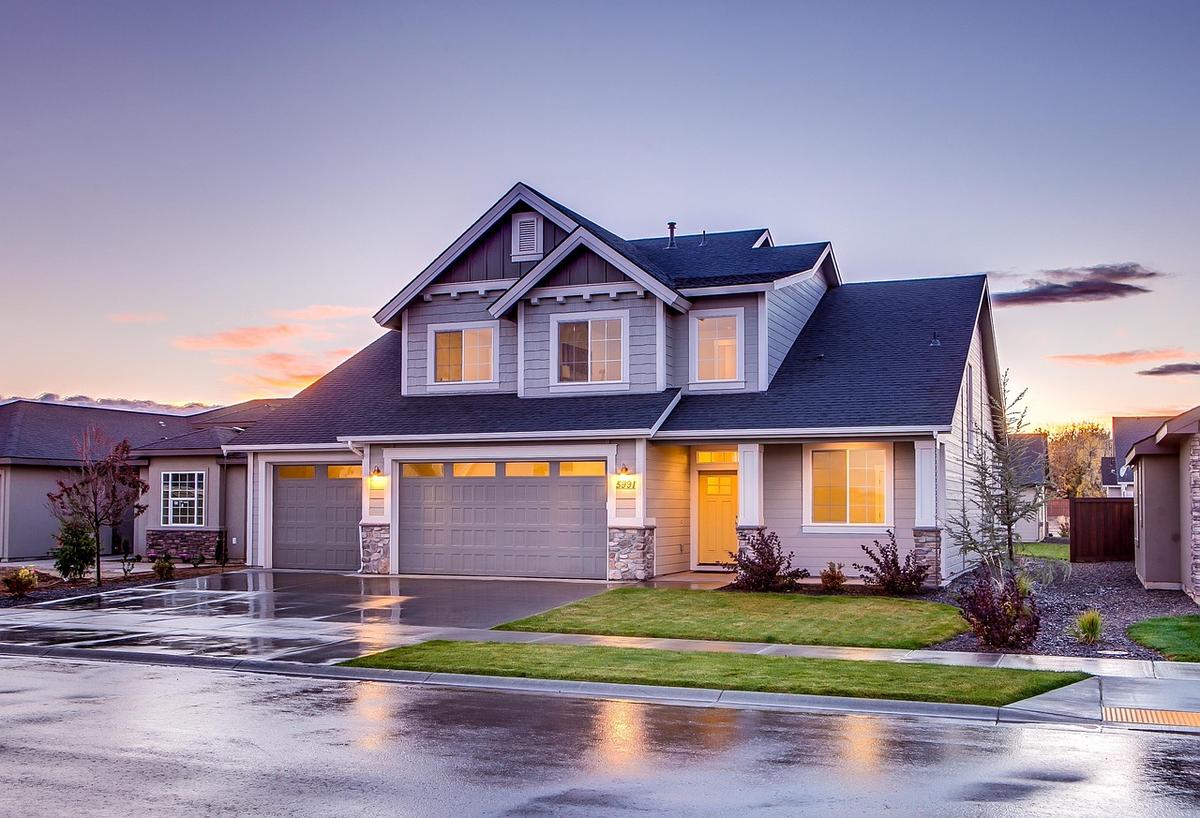
Beverly Hills is one of the few addresses we work where the pipe running down the middle of your street does not belong to the City of Los Angeles. The city incorporated on its own in 1914, refused annexation, and has operated its own public works department ever since. That single fact reshapes almost every sewer decision made on a Beverly Hills property, from who you call about a main-line surcharge to whose inspector signs off when a lateral gets replaced under the parkway.
We should be equally direct about where we come from. BBC Rooter & Plumbing is based at 8635 Yolanda Ave in Northridge. There is no Beverly Hills office, no storefront on Canon Drive, and we are not going to imply there is. What comes over the Sepulveda Pass is a licensed crew with a camera truck, a jetter and trenchless equipment, seven days a week. Call 818-280-9135 and we will tell you honestly when we can be at the gate.
Beverly Hills Runs Its Own Sewer System, and That Changes Your Job
The collection mains under Beverly Hills streets are municipal assets of the City of Beverly Hills, maintained by its own Public Works department, and excavation in the Beverly Hills right of way runs through Beverly Hills permitting and inspection rather than through LADBS or LA Sanitation. Property owners who have moved here from Brentwood or Bel-Air are often surprised by this, because those neighborhoods are City of Los Angeles and follow an entirely different process.
The ownership split itself follows the normal California pattern: the city maintains the main in the street, and the property owner owns and maintains the building sewer from the house out to the point of connection at that main. On a Beverly Hills lot, that owner-side portion is unusually long. It typically crosses a deep front setback, a motor court or circular drive, a parkway strip planted by the city, and a sidewalk before it ever reaches the main. Every foot of that is yours.
Because programs and responsibility lines can be amended, we tell owners to confirm the current rules with Beverly Hills Public Works before committing to a large excavation. What we can settle on the spot is the physical question: where the defect sits, how deep it is, and how much of the run is actually bad. A camera counts footage as it travels, and we locate and mark the trouble spot on the surface before anyone talks about a trench.
Three Beverly Hills, Three Different Ways a Lateral Dies
The Flats. The grid between Santa Monica Boulevard and Sunset, laid out in the 1900s and 1910s on the old Rancho Rodeo de las Aguas, is the most consistent housing stock in the city. Period-revival homes from the 1920s and 1930s, deep rectangular lots, alluvial sand and gravel washed down out of Benedict and Coldwater canyons. The original sewer material here is vitrified clay in short sections with mortared bell joints, transitioning to cast iron where the line enters the building. Clay does not rot, but its joints open, and open joints on a flat alluvial lot are a root buffet.
North of Sunset. Above Sunset the ground tilts up into the toe of the Santa Monica Mountains and the parcels get very large. Estates from the 1920s through the 1940s along Lexington, Benedict Canyon Drive, Foothill and Loma Vista sit far back behind gates, which means laterals that run two hundred feet or more before they reach the street, often with real fall across the run. Greystone Mansion, finished in 1928 on the Doheny property off Loma Vista, is a fair marker for how early and how large the estate build-out here was.
Trousdale Estates. The hillside tract developed on the former Doheny ranch land beginning in the mid-1950s is a distinct sewer environment again. Single-story post-and-beam houses on graded, cut-and-filled pads, laid out along Loma Vista, Doheny Road and the streets above. The pads were engineered, but engineered fill still settles, and the era brings its own materials: late cast iron, some bituminous fiber conduit better known as Orangeburg used in that period, and ABS on anything replaced after the 1970s.
South of Wilshire. The 90211 and 90212 blocks below Wilshire toward Olympic and Robertson are a different animal: smaller 1920s through 1940s lots, a much heavier concentration of duplexes and apartment buildings, and shared or undersized laterals carrying more fixtures than the original four-inch line was ever meant to serve.
Street Trees Here Are Municipal Policy, and the Roots Follow the Pipe
Beverly Hills is unusual in assigning street tree species by street, which is why a drive through the Flats reads as a catalog: Canary Island date palms, Mexican fan palms, magnolia, jacaranda, camphor and, in the commercial blocks, ficus. It produces a beautiful streetscape and a predictable underground problem, because the parkway strip those trees occupy is the exact strip your lateral crosses on its way to the main.
Ficus is the worst offender in the business triangle. Its roots are aggressive, shallow and opportunistic, and they are the reason ficus has a long history of lifting sidewalk panels in Los Angeles County. Palms are gentler on hardscape but throw a dense fibrous mat that will find a weeping clay joint and fill the pipe with a plug that looks like steel wool on camera. Magnolia and jacaranda contribute their own share on the residential streets.
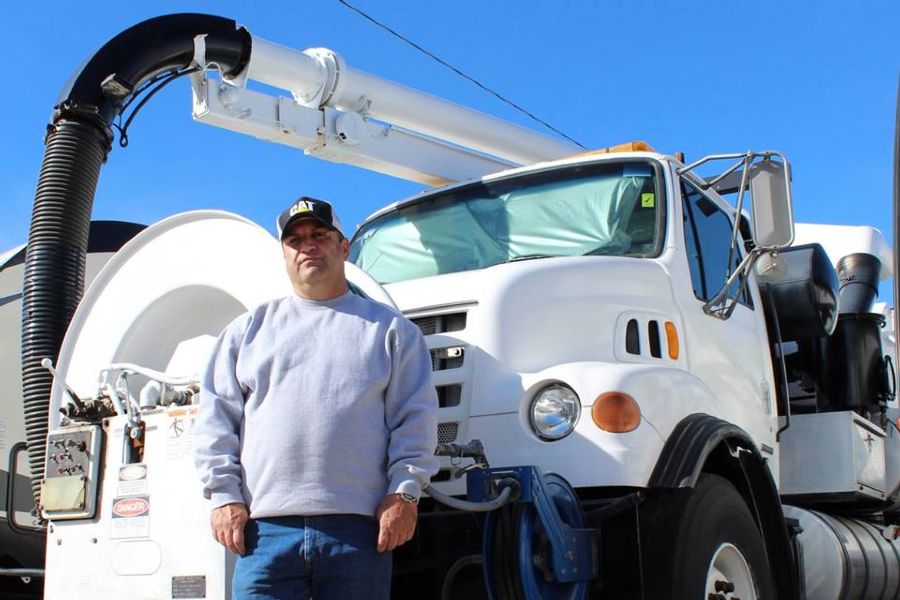
Why we push trenchless on these lots
The obstacles on a Beverly Hills property are expensive. Stamped motor courts, cobble driveways, mature ficus hedging, irrigation, lighting, pool decks and specimen planting sit directly over the line. Opening a trench through that costs far more to restore than the pipe work costs to perform.
Cured-in-place lining rebuilds the lateral from the inside and seals every joint the roots were entering, working from a cleanout and one small pit. Pipe bursting pulls a continuous new HDPE line along the old path with a pit at each end. Both leave the landscape and the hardscape intact, which on this side of town is usually the whole argument.
What Actually Goes Wrong Under a 90210 Property
Parkway root intrusion
Ficus, palm and magnolia roots entering failed clay joints in the twenty feet between the sidewalk and the city main. It is the single most common defect we camera in the Flats.
Long-run bellies under motor courts
Decades of vehicle load over a circular drive compress the backfill and sag the pipe beneath it. Solids settle in the low spot, the line surcharges, and no amount of cabling fixes a grade defect.
Corroded cast iron building drains
Pre-war houses and the 1950s and 1960s hillside builds have cast iron under the slab that has scaled and lost its invert. Cabling through a channeled iron drain buys weeks, not years.
Orangeburg sections
Bituminous fiber conduit used in mid-century work deforms into an oval and delaminates. When the camera shows a collapsing egg-shaped bore, the pipe is finished and lining is not an option for that section.
Guest houses and pool baths on one lateral
Main house, guest house, pool bath, staff quarters and a later addition all tied into an original four-inch run. The tie-in fittings are where solids hang, and the line is simply over capacity.
Restaurant grease in the triangle
Kitchen lines along Canon, Beverly and Rodeo carry heavy fats, oils and grease into building drains sized generations ago. Grease cools, hardens on the pipe wall and closes the bore from the outside in.
Reading the Symptoms When the House Is Large
Big houses hide main-line failures well, because the fixtures are spread across wings and floors and nobody assembles the pattern until several of them misbehave at once. These are the signs that point below grade rather than at a fixture:
- The lowest drain in the house floods first — a ground-floor powder room, a laundry sink or a pool bath surcharging while upstairs runs fine is the classic main-line signature
- Two separate wings acting up together — unrelated branches failing at the same time means the shared run downstream of both is restricted
- Gurgling in a floor drain when the washer discharges — a partially blocked main forcing air back through the nearest trap
- A soft spot or depression in the lawn, motor court or parkway — soil migrating into a broken pipe, which will eventually take the hardscape above it with it
- Sewer odor near a side yard or an old capped stub — often an abandoned line or an unsealed former connection
- The same clog every few months after cabling — a cable cuts a channel through an obstruction, it does not remove the root mat or grease shelf on the pipe wall
Sewage Backing Up at a Beverly Hills Property? Tell Us and We Roll.
Camera, jetter and trenchless crews dispatched from Northridge across 90210, 90211 and 90212 — written scope before any work begins.
Call 818-280-9135Sewer and Underground Pipe Work We Perform in Beverly Hills
Everything below is done by our own crews, residential and commercial:
Also in scope: sewer line replacement, underground pipe repair and excavation, collapsed, bellied and offset section repair, root intrusion removal, cast iron, clay and Orangeburg replacement, pre-purchase sewer inspections, sewer gas diagnosis, abandoned line capping and commercial sewer rehabilitation. Never in scope: water heaters, tankless units, faucets, toilets, sinks, disposals, fixtures, water supply repiping, pinhole copper leaks, water softeners, gas lines or new construction plumbing. If that is what you need, a full-service plumber is the right call and we will say so.
Rodeo Drive, Canon Drive and the Grease the Business Triangle Produces
The commercial core bounded by Wilshire, Santa Monica and Crescent carries a food service density that has very little to do with the residential streets around it. Restaurant rows on Canon and Beverly, hotel kitchens along Wilshire, and retail buildings on Rodeo Drive with tenant improvements stacked on decades of earlier plumbing all discharge into building drains that predate the current use of the space.
Grease is a physical problem, not a housekeeping one. It leaves the kitchen warm and liquid, cools in the first cold run of pipe, and plates onto the wall in layers until the four-inch line is passing two inches. Interceptors that are undersized for the current menu, or simply overdue, make it faster. We handle scheduled jetting, interceptor service and full commercial sewer rehabilitation, and we schedule around service hours as a matter of course.
Coverage Across the City, and the Honest Drive From Northridge
We work all three Beverly Hills ZIP codes: the Flats grid from Doheny across to Whittier and Sunset, the estate streets north of Sunset through Benedict Canyon and Coldwater Canyon Drive, Trousdale Estates above Loma Vista, the business triangle, and the denser blocks south of Wilshire toward Olympic and Pico. Beverly Gardens Park, Will Rogers Memorial Park, the Beverly Hills Hotel and the Electric Fountain at Wilshire and Santa Monica are all inside the footprint we cover daily.
Getting there means the 405 south over the Sepulveda Pass and across to Santa Monica Boulevard or Sunset. It is roughly twenty-two miles from our Northridge shop, which in practice means forty minutes on a quiet Sunday morning and well over an hour when the pass is stacked. We would rather quote you a real window than a flattering one, and for an active backup we will tell you on the phone whether we are the fastest option available to you.
What Beverly Hills Owners and Property Managers Ask Us
Is Beverly Hills on the City of Los Angeles sewer system?
No. Beverly Hills incorporated in 1914 and has never been annexed, so the sewer mains under its streets are owned and maintained by the City of Beverly Hills through its own Public Works department, and excavation in the public right of way goes through Beverly Hills permitting and inspection rather than the City of Los Angeles process. Owners who call LA Sanitation about a Beverly Hills main are calling the wrong agency. Because municipal programs change over time, confirm the current requirements with Beverly Hills Public Works before a large job.
Where does my responsibility for the sewer line stop and the city's begin?
The standard arrangement, in Beverly Hills as in most California cities, is that the property owner owns and maintains the building sewer from the house all the way to the point where it connects to the municipal main, and the city maintains the main itself. On a Beverly Hills lot that owner-side section is long, because it usually crosses a deep front setback, a driveway or motor court, the city parkway strip and the sidewalk before it reaches the street. A camera run counts the footage as it travels, so we can tell you exactly which side of that line your defect sits on.
Our driveway is stone and the front yard is fully landscaped. Does a sewer replacement have to destroy it?
In most cases, no. Cured in place lining rebuilds the existing lateral from the inside using a cleanout and one small access pit, and pipe bursting pulls a new continuous line along the old path with a pit at each end. Neither method opens a trench across the driveway or the planting. The one thing that rules trenchless out is a fully collapsed or badly offset section that the equipment cannot pass, and the camera tells us that before we quote anything.
We added a guest house and now the main line backs up. Is the pipe defective?
Often it is not defective at all, it is overloaded. A great many houses north of Santa Monica Boulevard run the main residence, a guest house, a pool bath, staff quarters and a later addition into one original four inch lateral that was sized for a single household. The line fills to capacity during heavy use and solids hang at the tie in fittings, which are usually rough saddle connections cut in years after the original work. The fix is a capacity and connection question rather than a clog, and the camera shows which it is.
We are in escrow on a 90210 property. What should the sewer inspection include?
The entire length of the lateral from the building to the connection at the city main, not the first thirty feet. On these lots the costly defects are usually out near the street where the run is deepest. You should get video of the full run, identification of the pipe material at each section, notes on joint condition, root intrusion, bellies and offsets, and a surface located depth for anything that needs repair. We provide that as a written report with the footage, which is what makes it useful in a negotiation.
How long does it actually take you to reach Beverly Hills?
We are based on Yolanda Avenue in Northridge and there is no Beverly Hills office, so every job here is a drive. It is about twenty two miles down the 405 over the Sepulveda Pass, which realistically means forty minutes early on a weekend and more than an hour when the pass is heavy. We will give you a real arrival window on the phone rather than a flattering one, and if you have raw sewage coming up right now we will also tell you if someone closer can beat us there.
Other Los Angeles Communities We Cover From Northridge
Beverly Hills is one of several Westside and greater Los Angeles areas we serve out of the Valley. The rest of the list:
Sewers, Drains and Buried Pipe. Nothing Else.
BBC Rooter & Plumbing — owner Babak Behzadi, CSLB #720343, 8635 Yolanda Ave #6, Northridge CA 91324. Open seven days, 6am to 6pm.
Call 818-280-9135