_1773179633783-DiqUK4T2.png)
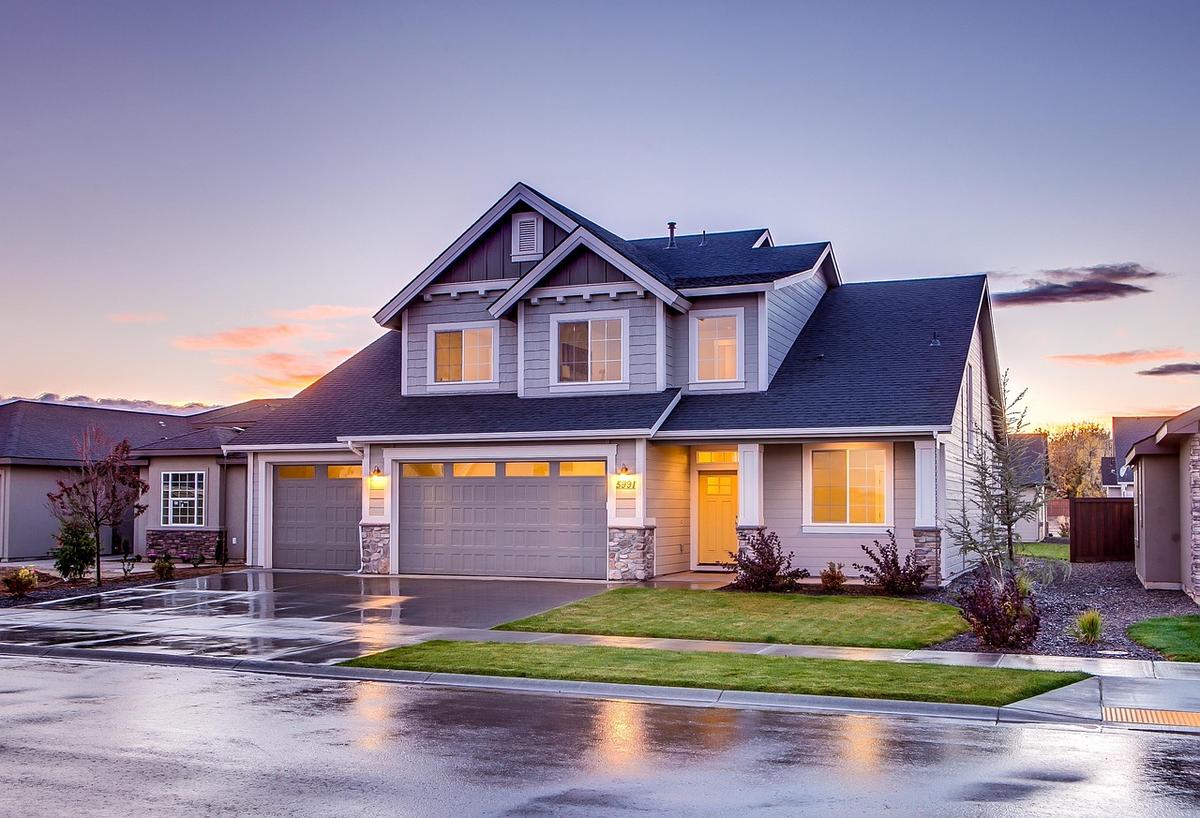
Pacific Palisades is a Los Angeles neighborhood built on one of the least cooperative pieces of geology in the county. The ground between the crest of the Santa Monica Mountains and the surf at Will Rogers State Beach is marine shale that was laid down flat, then tilted, then cut apart by canyons, then loaded with houses. It slides. It has been sliding since long before anyone put a sewer pipe in it, and a buried clay lateral does not bend.
BBC Rooter & Plumbing works one trade only: sewers, main drains and buried pipe, out of a shop on Yolanda Avenue in Northridge. We want to be direct about the geography — we do not have an office in the Palisades, and there is no storefront on Swarthmore with our name on it. What comes over the hill is a licensed crew, a camera truck, a jetter, and the excavation and no-dig equipment to fix whatever the camera finds. Nothing else is on that truck: no water heaters, no fixtures, no supply repiping. Call 818-280-9135.
Ground That Moves, and Pipe That Cannot
The bluffs along Pacific Coast Highway and the slopes above them are Monterey and Modelo Formation shale and siltstone, overlain in places by older marine terrace deposits and, in the canyons, by loose alluvium washed down from above. In several parts of the community the shale beds dip seaward, the textbook arrangement for a bedding-plane landslide. It is why the Via de las Olas bluff above PCH has moved repeatedly, why Castellammare has a documented slide history, and why Potrero Canyon spent decades being stabilized before it became a park.
For a sewer line the consequence is specific and unglamorous. Vitrified clay comes in short sections with a joint every few feet. When the soil around it creeps even an inch or two, the joints do not stretch, they offset. An offset joint catches paper and solids, opens a gap for roots, and lets groundwater in. On a slope that has been creeping slowly for eighty years you frequently see a lateral that is intact for its whole length except for one band of three or four joints, all stepped in the same direction, all at the same depth.
Graded pads add a second mechanism. Much of the Palisades Highlands and the mid-century hillside work below it sits on cut-and-fill benches. Where a lateral crosses from cut ground onto compacted fill, the fill keeps settling and the pipe sags or shears at the transition — almost exactly where the camera says it will.
From a 1922 Tent Colony to Hillside Estates: What Is Actually Buried Out There
The land came inside Los Angeles city limits in 1916, and the community itself began in 1922 as a Methodist Episcopal assembly colony camped in Temescal Canyon. Its first streets were laid out in alphabetical order — Albright, Bestor, Carey, Drummond, Embury, Fiske, Galloway, Haverford, Iliff. Those Alphabet Streets hold the oldest housing stock, on tight lots, and surviving original pipe there is short-section vitrified clay with mortar joints, picked up by cast iron under the house.
The Huntington Palisades followed on the mesa south of Sunset with larger, flatter parcels and deeper setbacks, which is a polite way of saying longer laterals. Marquez Knolls and the tracts west of Temescal filled in through the 1950s and 1960s, which is exactly the window when bituminized fiber conduit — Orangeburg — was going into the ground nationally, and we do still pull Orangeburg out of Palisades yards. It deforms into an oval, delaminates, and cannot be reliably lined once it has lost its shape. From the 1960s the Highlands climbed Santa Ynez Canyon on engineered pads with ABS and PVC: better pipe on worse ground.
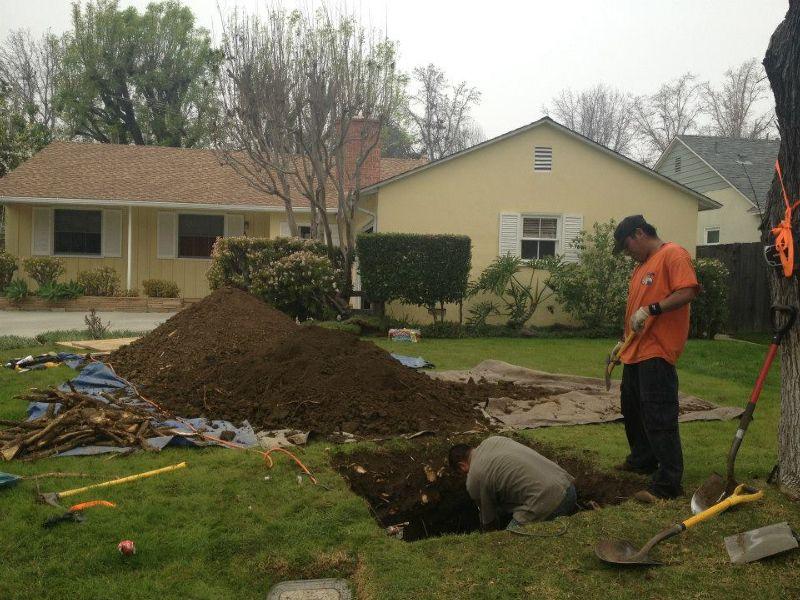
Four eras, four failure modes
A 1920s Alphabet Streets house fails at clay joints near the parkway tree. A 1930s Huntington house fails somewhere in a hundred and fifty feet of pipe you cannot reach with a hand cable. A 1950s mesa tract fails because the Orangeburg has gone oval. A Highlands house from the 1970s fails at a fill transition or where a pad has settled, even though the ABS itself is fine.
A camera survey with surface locating costs a fraction of one unnecessary trench. It is the first thing we do on every Palisades property.
The Canopy Is Beautiful and It Is In Your Pipe
Western sycamore is native to Rustic Canyon, Temescal Canyon and the drainages behind the Village, and it grows where the water is — which in a dry summer means a leaking sewer joint. Blue gum eucalyptus went into this stretch of coast by the thousands more than a century ago and has one of the most aggressive water-seeking root systems in Southern California.
Mature native sycamores, coast live oaks, California black walnuts and bays all carry protection under the Los Angeles Protected Tree Ordinance. That matters, because the instinctive fix — open a trench through the root zone — is often the one thing you are least free to do. This is where no-dig rehabilitation earns its keep. Lining rebuilds the pipe from within and closes off every opening the roots had been exploiting, without cutting the canopy. Bursting draws a seamless HDPE run along the old path from two modest pits, which we place clear of the protected root zone, the driveway and any hillside wall you would rather not disturb.
Rebuilding After the January 2025 Fire: Camera the Lateral Before You Pour
The January 2025 Palisades Fire changed ground conditions across large parts of the community. On a rebuild lot the practical question is not whether the pipe burned — buried pipe generally does not. The damage we find is mechanical, and it comes from everything that happened afterward.
Debris removal is done with tracked excavators, grapple trucks and loaders working over the same shallow front-yard corridor the lateral runs through, and clay pipe two or three feet down does not survive that reliably. Risers and cleanout stacks exposed at the slab edge melt or deform. Open cleanouts take in ash, char and fines, which set up in a low spot like grout. On hillside lots the loss of vegetation moved soil across slopes stable for decades.
So the advice is simple: camera and locate the existing lateral before the foundation goes in, not after. Plan check will generally require the existing connection to be verified or properly capped anyway, and a survey done while the lot is open is far cheaper than the same work through a finished driveway.
City Sewer Rules in 90272, and Where Your Responsibility Ends
Pacific Palisades is City of Los Angeles, not an independent city, so the mains under Sunset Boulevard, Temescal Canyon Road, Bienveneda, Marquez and the Alphabet Streets are LA Sanitation infrastructure, and the flow ultimately makes its way into the coastal interceptor system serving the Hyperion plant at Playa del Rey. Permits, plan check and inspection for sewer work run through the City, and excavation in the public right of way requires the City permit path rather than a neighboring agency's.
The division of responsibility is the standard California one: the City maintains the main in the street, and the property owner owns the building sewer — the lateral — from the house to the point it joins that main. On a Palisades lot that private section is often most of the pipe, because the house sits far back, far above, or both. Programs and boundaries change, so confirm current specifics with the City before a large job. What we can tell you the same day is where the defect sits and how deep, because we count footage and mark it on the surface.
What Actually Fails on Palisades Property
Stepped joint offsets from slope creep
A band of joints all displaced in the same direction at the same depth. Not a clog, not roots originally — soil movement. Lining or bursting restores a continuous pipe that creep cannot pull apart joint by joint.
Shear at a cut-and-fill transition
Where the lateral crosses from native cut ground onto compacted fill, decades of differential settlement sag or break the line at a predictable, locatable point.
Sycamore and eucalyptus intrusion
Canyon-adjacent lots see heavy root loading into any joint that weeps. Cabling shaves the mat and buys months; sealing the pipe is what ends it.
Collapsed Orangeburg on the 1950s mesa tracts
Bituminized fiber pipe that has gone oval or delaminated cannot be cleaned back to service and generally cannot be lined. It gets replaced, usually by bursting.
Wet-season infiltration on bluff and canyon lots
Backups that appear only after storms mean groundwater is entering the pipe through cracks. On saturated slopes that added volume alone will overwhelm a partly restricted line.
Post-fire crushing and ash packing
Heavy equipment over shallow front-yard pipe, deformed risers, and fine ash consolidating in bellies. Common on rebuild lots and easy to miss until the house is occupied again.
Hillside Warning Signs You Should Not Ride Out
The patterns worth a phone call:
- Backups that follow the rain — problems in wet weeks that vanish in dry ones point to a line that is open to saturated soil
- The lowest fixture floods first — a ground-floor guest bath, a laundry, or a pool bath on a split-level lot is the pressure relief point for the whole main
- Two separate wings acting up together — independent branches misbehaving at the same time means the shared line downstream is the problem
- A dip, soft spot or fresh crack in a driveway or lawn — ground washing into a fractured line, which on a grade will undercut paving faster than you expect
- Sewer smell in a side yard or around an old capped stub — usually an orphaned line, or a connection nobody ever properly sealed
- The same drain cleared three times in a year — on a long Palisades lateral this usually means the cable never reached the real defect
One step comes first in all of these: get the camera in, find the fault, mark it on the surface, and only then talk about repair. Our technician runs the video with you watching, and the written scope reaches you before any tool touches the ground.
Sewage Backing Up in the Palisades? We Roll Today.
Crews with camera, jetter and no-dig equipment covering all of 90272, every day of the week. The estimate is in writing first.
Call 818-280-9135Sewer and Underground Pipe Work We Perform in Pacific Palisades
Everything below is done by our own crews, residential and commercial:
Also handled: open-cut excavation and buried pipe repair, replacement of crushed, sagging and displaced runs, root cutting, odor and sewer gas tracing, escrow inspection reports, clay, cast iron and Orangeburg replacement, capping of orphaned lines and old seepage pits, and commercial rehabilitation. Never our trade, on any job: fixtures of any kind, toilets, sinks, faucets and disposals; water heaters and tankless systems; supply repiping and pinhole copper; softeners; gas piping; new construction plumbing. Ask and we will hand you a referral rather than improvise.
Where We Work: The Village, the Huntington, Rustic Canyon and Castellammare
We cover all of 90272: the Alphabet Streets and the Village core around Sunset and Swarthmore, the Huntington Palisades mesa, Rustic Canyon and Latimer Road, the Riviera edge along Chautauqua, Temescal Canyon and the streets off Bienveneda and Marquez, Santa Ynez Canyon and the Highlands up Palisades Drive, and the bluff properties along Castellammare and Los Liones down to Pacific Coast Highway.
Getting Over the Hill From Our Northridge Shop
Our yard is at 8635 Yolanda Avenue in Northridge, and the Palisades is a real drive from there. A crew runs the 405 south to Sunset and comes west, or takes Topanga Canyon Boulevard over to Pacific Coast Highway when the freeway is stopped. Forty-five minutes on a quiet weekend morning; seventy-five to eighty on a weekday afternoon, longer if PCH is restricted. We would rather give you an honest window than promise twenty minutes. Open seven days, 6am to 6pm, emergency line after hours.
Straight Answers for Palisades Property Owners
Our block burned in January 2025 and we are rebuilding. Does the sewer lateral have to be replaced?
Not automatically, but it does have to be looked at. Buried pipe rarely burns. What damages it is the debris removal afterward, when tracked excavators and grapple trucks work directly over a shallow front yard line, plus melted risers at the slab edge and fine ash packing into any low spot. Camera and locate the line while the lot is open, before the foundation goes in, because plan check will generally require the existing connection to be verified or capped anyway.
The house sits a hundred and forty feet above Sunset. Can the line be fixed without tearing out the driveway?
In most cases yes. Lining is done through an existing cleanout: a resin tube is drawn into the old pipe, inflated and cured, and nothing above the line is opened at all. Bursting is the alternative when the host pipe is too far gone to line, and it needs two modest pits that we place clear of the driveway, the retaining walls and any protected tree.
Is Pacific Palisades on the City of Los Angeles sewer system or does it have its own?
It is City of Los Angeles. Pacific Palisades is a neighborhood of Los Angeles, not an independent city, so the mains under Sunset, Temescal Canyon, Bienveneda and the Alphabet Streets are LA Sanitation infrastructure and the permit path runs through the City. The usual split applies: the City maintains the main, you own the building sewer from the house to where it meets that main.
Why do we keep getting roots when there is no tree in our yard?
Because roots travel a long way toward water, and a leaking sewer joint is the best water source in a dry Palisades summer. Sycamore, eucalyptus and ficus roots routinely cross a street, a driveway and a property line to reach a joint that weeps. Cabling shaves the mat and buys a few months. Sealing the pipe removes the entry point and ends the cycle.
We are in escrow in the Huntington Palisades. What should a sewer inspection cover?
All of it, house to street, and not merely the first thirty feet. On these mesa lots the costly problems tend to sit out by the curb where a short look never reaches. Ask for continuous video across the full run, the material identified, joint condition and any root, offset or standing-water section called out, plus a surface mark and depth on every defect worth repairing. That belongs in a written report you can put on the table during negotiation.
What is a realistic arrival time in the Palisades from your Northridge shop?
Typically forty five minutes to eighty minutes depending on the hour. We run the 405 south to Sunset and come west, or take Topanga Canyon Boulevard over to Pacific Coast Highway when the freeway is stopped. We do not keep an office in the Palisades and will not pretend otherwise. What we bring is a stocked truck with cameras, a jetter and trenchless equipment, seven days a week, 6am to 6pm, emergency line after hours.
Other Westside and Valley Communities We Serve
The Palisades is one of several coastal and Westside areas we cover from Northridge, alongside the San Fernando Valley work that is our home ground:
One Trade, Done Properly
Owned and run by Babak Behzadi. License CSLB #720343. Shop at 8635 Yolanda Ave #6 in Northridge, open every day, 6am to 6pm.
Call 818-280-9135