_1773179633783-DiqUK4T2.png)
Sewer pipe in Santa Monica does not age at the same rate as sewer pipe eight miles inland. Marine air carries chloride, the groundwater table sits high and turns brackish near the beach, and a cast iron building drain that would still be serviceable in Reseda after seventy years can be scaled shut and perforated here. Add a housing stock that is mostly older than 1950 and a lot of it built as multi-family, and you get a very particular set of underground problems.
BBC Rooter & Plumbing works on sewers, main drains and underground pipe, and nothing else. We are based at 8635 Yolanda Ave in Northridge, which is on the far side of the Santa Monica Mountains from you. There is no Santa Monica office and no yard on Lincoln, and we are not going to suggest otherwise. What we send is a licensed crew with a camera, a jetter and trenchless equipment, seven days a week. 818-280-9135.
Salt Air and a High Water Table Age This Pipe Faster
Two coastal conditions do most of the damage. The first is corrosion. Chloride-laden air and moist, sometimes brackish soil attack ferrous pipe from the outside while sewer gases attack it from the inside, so cast iron building drains and stacks near the beach commonly fail from both directions. Once the invert of a cast iron drain is gone, the pipe is a channel with a scale ceiling over it, and cabling through it accomplishes very little.
The second is water where it does not belong. Across the low blocks of Ocean Park, the Pico corridor and the streets that drain toward the old Centinela alignment, groundwater sits close to the surface and rises further in a wet winter. Vitrified clay laterals with open joints then sit below that water table, and the pipe fills with clean groundwater it was never asked to carry. Owners describe it as backing up when it rains, which is accurate but incomplete: the rain is not the clog, it is the extra volume revealing a clog the line had been coping with.
Infiltration is worth taking seriously because it does not stop at your property. Groundwater entering private laterals across a neighborhood adds up in the municipal collection system, which is why a cracked lateral is a maintenance issue rather than a cosmetic one. On camera it is unmistakable: water running into the pipe through a joint or fracture from outside the bore.
An Independent City Since 1886, With Its Own Mains and Its Own Permits
Santa Monica incorporated in 1886 and has remained a separate municipality inside Los Angeles County ever since, entirely surrounded by the City of Los Angeles but not part of it. The sewer collection mains beneath Santa Monica streets belong to the City of Santa Monica and are maintained by its own Public Works organization, and work in the Santa Monica right of way runs through Santa Monica permitting and inspection. Flow is conveyed onward for regional treatment, but the pipe in your street and the permit on your job are the city's.
Responsibility divides the usual way. The city keeps the main; the property owner owns and maintains the building sewer from the structure out to the point where it joins that main, including the portion under the parkway and sidewalk. On a typical Santa Monica lot the owner-side run is short compared with an estate on the other side of the hill, but it is also older, shallower and far more likely to sit under a rear alley, a detached garage or a second unit.
Because city programs and cost responsibility rules are revised from time to time, confirm the current position with Santa Monica Public Works before you commit to a substantial excavation. Our job is the physical half of the question, and we answer that with footage rather than opinion.
North of Montana to Ocean Park: What Was Built, and With What
North of Montana, 90402. Spanish Colonial Revival, Tudor and Colonial houses built mostly through the 1920s and 1930s on generous rectangular lots running back from streets like Georgina, Alta and Marguerita, with the bluff and Palisades Park to the west. Original drainage is vitrified clay to the street with cast iron inside the building line. Many of these homes have been remodeled two or three times without anyone touching the buried line.
Wilshire-Montana, 90403. The densest concentration of pre-war and mid-century courtyard apartment buildings in the city, layered over what were originally single-family blocks. Montana Avenue runs through the middle of it as a retail and restaurant street. Underground you find original clay laterals now serving eight, twelve or twenty units, plus 1950s and 1960s cast iron building drains under slab.
Ocean Park and Sunset Park, 90405. The oldest small-lot housing in Santa Monica, including early 1900s and 1920s bungalows and craftsman cottages on the Ocean Park grid near Main Street, then the 1940s build-out of Sunset Park south of Ocean Park Boulevard toward Clover Park and the airport. Small lots, rear alleys, detached garages, many with an added unit. Low ground and shallow groundwater across much of it.
Mid-City and Pico, 90404. A working mix of older bungalows, apartment buildings and commercial frontage along Pico, Colorado and Broadway, with the Memorial Park and Virginia Avenue Park neighborhoods in between. Materials here span everything: clay, cast iron, bituminous fiber conduit from post-war work, and ABS on anything replaced since the 1970s.
Why lining fits the coastal blocks
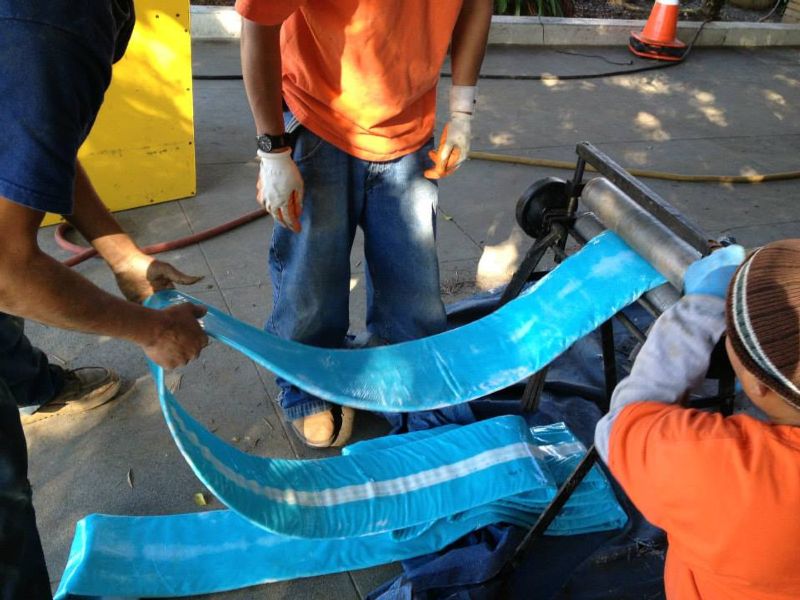
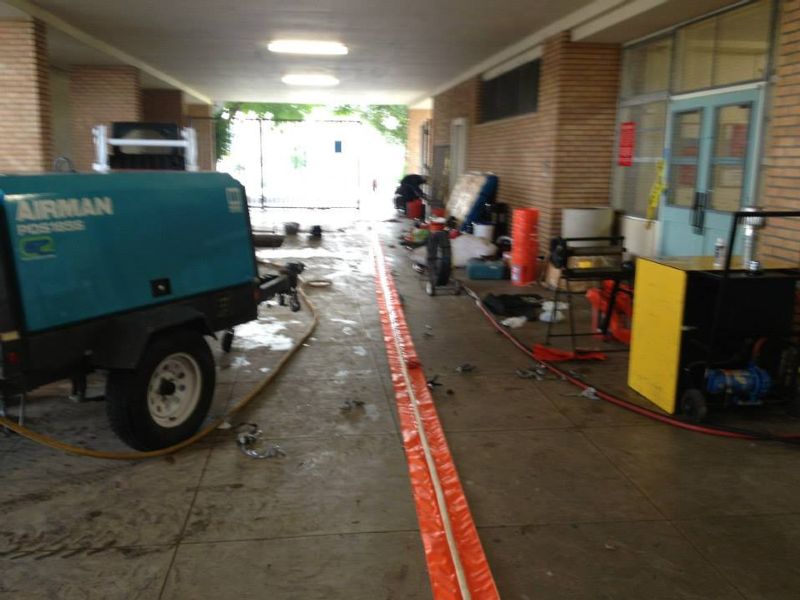
Santa Monica lots are tight, the street trees are mature and often civic assets, and a lot of the buried run passes under a driveway, an alley apron or a second dwelling unit. Trenching that is disruptive out of proportion to the pipe involved.
A cured in place liner is also a corrosion answer, not just a root answer. The new resin pipe formed inside the old host is inert to chloride and to sewer gas, and it seals the joints that groundwater was entering. On a corroded cast iron drain under a slab, that is frequently the difference between a two-day job and jackhammering the floor of an occupied building.
The Defects We Camera Between the Beach and Centinela
Cast iron corroded through at the invert
The floor of the pipe rusts away first, leaving a scale-lined channel that catches paper and grease. Common in slab-on-grade buildings from the 1950s and 1960s within a mile of the water.
Groundwater infiltration through clay joints
Open bell joints below a winter water table admit clean groundwater, filling the lateral and pushing a marginal line into surcharge. Visible on camera as water entering the bore from outside.
Ficus and fig roots in downtown lines
Ficus street trees around the downtown grid and the very large figs on the Ocean Avenue frontage throw dense, opportunistic roots that find any weeping joint in a lateral crossing the parkway.
Overloaded shared apartment laterals
An original four inch clay run built for one bungalow now serving a whole building. It is not always broken, it is undersized, and every added unit made it worse.
Alley and garage-line bellies
Rear alley access, added units and repeated regrading over decades leave sags in the buried line where standing water and solids collect between cleanings.
Grease saturation on restaurant corridors
Main Street, Montana Avenue and the downtown blocks put a heavy fats, oils and grease load into building drains that were laid for retail or residential use, not for commercial kitchens.
Which Symptoms Point Below the Slab
The tell in Santa Monica is usually seasonality or simultaneity. Watch for these:
- Backups that track the rain and clear in dry weeks — the strongest single indicator of a lateral that is open to groundwater
- Every unit in the building slowing down at once — separate stacks misbehaving together points at the shared run downstream, not at any one apartment
- Rust-colored water or grit in a floor drain — scale shedding from a cast iron drain that has lost its invert
- The lowest fixture floods first — a garage floor drain, a laundry sink or a ground-floor shower overflowing while upper units run normally
- Sewer odor in a crawl space or along an alley — a broken line or an abandoned connection venting where it should not
- Clogs that return on a schedule — a cable makes a hole through the obstruction, hydrojetting removes it, and if you need one twice a year you have a structural problem
Sewage Backing Up in Santa Monica? Call Before It Reaches the Floor.
Camera, jetting and trenchless crews dispatched from Northridge across 90401 to 90405 — written scope before we cut anything.
Call 818-280-9135Our Santa Monica Sewer and Underground Services
Performed in house, for houses, apartment buildings and commercial tenants alike:
Also in scope: sewer line replacement, underground pipe repair and excavation, collapsed, bellied and offset section repair, root intrusion removal, cast iron, clay and Orangeburg replacement, pre-purchase sewer inspections, sewer gas diagnosis and commercial sewer rehabilitation. We do not install or repair water heaters, tankless units, faucets, toilets, sinks, disposals, fixtures, water supply repiping, pinhole copper leaks, water softeners, gas lines or new construction plumbing. Those are real trades, they are simply not ours.
Main Street, Montana Avenue and the Downtown Kitchens
Santa Monica carries a restaurant density that few cities its size do, concentrated on the Ocean Park stretch of Main Street, along Montana Avenue, through the downtown blocks around the Third Street Promenade and Colorado Avenue, and in the Ocean Avenue hotels. A great many of those kitchens occupy buildings that were never designed for food service, discharging into drains laid for a shop or a residence.
Grease behaves the same way everywhere: it leaves warm, cools in the first long cold run, and plates on the pipe wall in layers until the bore is a fraction of its original diameter. Undersized or overdue interceptors accelerate it. We run scheduled jetting and interceptor maintenance so that kitchens stop discovering the problem at seven on a Friday evening, and we handle full commercial sewer rehabilitation when the building drain itself is finished.
Ocean Avenue to Centinela, and the Real Drive From Northridge
We cover the whole city: the bluff streets and North of Montana blocks above San Vicente, the Wilshire and Montana apartment corridor, downtown and the Promenade, Mid-City and the Pico neighborhood, Ocean Park and Main Street, and Sunset Park out to the airport and the Centinela boundary. Pier, Palisades Park and Clover Park addresses included.
The drive is honest work: south on the 405 through the Sepulveda Pass and west on the 10, or over Sepulveda and down through the canyon, roughly twenty-six miles either way. That is forty-five minutes early on a weekend morning and it can be an hour and a half at the wrong time of day. We will give you a real window when you call, and if you have sewage on the floor right now we will say plainly whether we are your fastest option.
Questions Santa Monica Owners Put to Us
Does Santa Monica have its own sewer system, or is it part of Los Angeles?
Santa Monica has its own. The city incorporated in 1886 and has never been annexed, so although it is surrounded by the City of Los Angeles it is a separate municipality with its own Public Works organization maintaining the sewer mains under its streets, and its own permitting and inspection for work in the public right of way. Wastewater is conveyed onward for regional treatment, but the main in front of your building and the permit on your job belong to Santa Monica. Confirm current requirements with the city before a large excavation, since municipal programs get revised.
Who owns the sewer lateral at a Santa Monica property?
In the standard arrangement the property owner owns and maintains the building sewer from the structure to the point where it connects to the city main, and the city maintains the main itself. That owner-side portion includes the length under your yard, your driveway, the parkway strip and the sidewalk, which surprises people because it looks like public ground. On the small Santa Monica lot it is often a short run, but it can also detour under an alley apron, a detached garage or an added unit. The camera counts footage as it travels, so we can show you precisely where your section ends.
Why do our drains only back up in the winter?
Because the pipe is open to the soil and the water table rises. Across the low ground in Ocean Park, the Pico corridor and the streets draining east, groundwater sits close to the surface and climbs in a wet season. A lateral with cracked or open joints below that level takes in clean groundwater and carries volume it was never designed for, which pushes a partially restricted line into backup. The rain is not creating the blockage, it is exposing one. A camera run during or just after wet weather usually shows the water entering the pipe on video.
Our 1958 building keeps having cast iron failures. Is the ocean the reason?
It is a large part of it. Ferrous pipe near the coast is attacked from the outside by chloride-laden air and damp, sometimes brackish soil, and from the inside by sewer gas and moisture. The floor of the pipe, the invert, goes first, and once it is gone the drain is really a channel under a ceiling of scale. Cabling that reopens a path for a few weeks without removing anything. Jetting will clean it properly, and where the wall is too far gone, lining the drain from the inside avoids opening the slab of an occupied building.
Every unit in our fourplex slows down at the same time. Where do we start?
With the shared line, not with the units. When separate stacks misbehave together, the restriction is downstream of all of them in the common building drain or the lateral. Older Santa Monica multi-family buildings frequently sit on an original four inch clay run laid for a single bungalow, and each added unit made the same pipe carry more. We camera from the main cleanout out to the city connection, identify whether it is a capacity problem, a grease and scale problem or a structural defect, and price only what the footage justifies.
Do you service restaurants on Main Street and Montana Avenue?
Yes. Commercial kitchens are a large part of our Santa Monica work and they are almost entirely a grease problem: interceptors that are undersized for the current menu or overdue for service, branch lines coated with hardened fats, and older building drains that were never laid for food service. We run scheduled hydrojetting and interceptor maintenance, handle emergency clearing, and take on full commercial sewer rehabilitation when the drain itself has failed. We schedule around your service hours as a matter of routine.
The Rest of Our Westside and Valley Coverage
Santa Monica is one of the coastal and Westside communities we drive to from the Valley. We also work:
A Sewer Contractor, Not a General Plumber
BBC Rooter & Plumbing — owner Babak Behzadi, CSLB #720343, 8635 Yolanda Ave #6, Northridge CA 91324. Seven days a week, 6am to 6pm.
Call 818-280-9135