_1773179633783-DiqUK4T2.png)
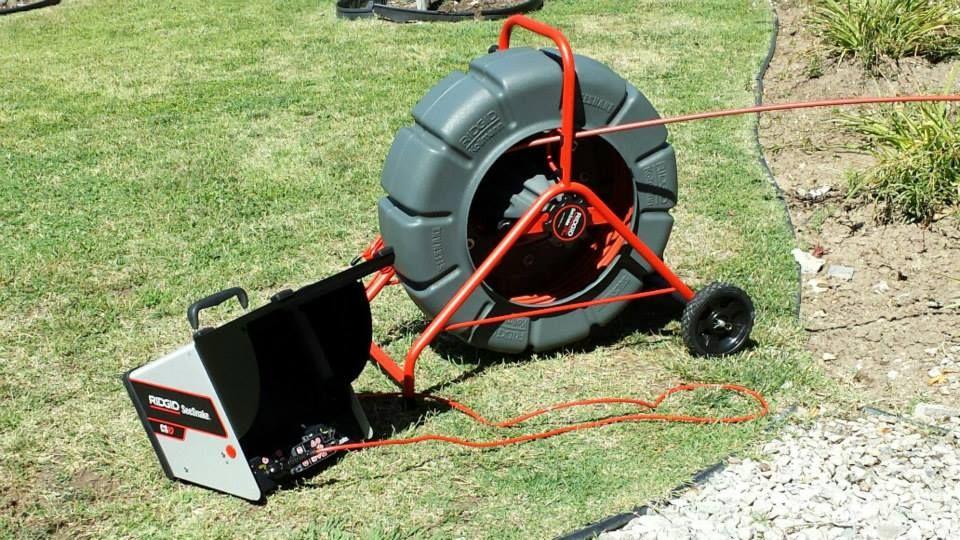
Hidden Hills is the smallest and most unusual place we work. It is a gated city of roughly one and a half square miles at the far western edge of the Valley, pressed up against Calabasas, with no stores, no offices, no gas stations and no through traffic. Every parcel inside the fence is a house on a large lot, and almost every sewer problem behind that fence traces back to the same root cause: the pipe has a very long way to travel.
We are a sewer and underground pipe contractor based at 8635 Yolanda Avenue in Northridge. We do not keep a shop or a satellite office in Hidden Hills, and no honest contractor could. What we do keep is a truck that carries enough camera cable and enough jetter hose to reach the end of a two-hundred-foot lateral, and a crew that understands the gate is part of the job. Direct line: 818-280-9135.
Getting Through the Gate Is the First Half of the Service Call
Nothing about a Hidden Hills appointment works the way it does on a public street. The perimeter is fenced, the entrances are staffed, and a service truck does not simply drive in because a homeowner is expecting it. Access is arranged by the resident with the community association in advance, the vehicle and the company are logged at the entry, and the crew is expected to arrive at the gate rather than at the driveway.
We handle this by front-loading it. When we book work here, we ask for the resident name and address exactly as the association has it, we confirm that our company has been cleared for the day and window, and we give you the truck description so nobody is standing at the entrance sorting it out while a laundry room floods. If the association restricts contractor entry hours, which gated communities commonly do, tell us and we schedule inside that window instead of guessing.
The same logic applies to the work. Because the association governs what happens in the private street right of way, a job that trenches outside the immediate house pad needs association awareness before the shovel moves, on top of whatever permit the city requires.
A Residential-Only City, Incorporated in 1961, With Streets It Owns Itself
Hidden Hills was laid out beginning in 1950 by the developer A. E. Hanson, who planned it around horses rather than around cars, and it incorporated as its own city in October of 1961. It has stayed almost exactly what it was designed to be. There is no commercial zoning inside the city, so there is no restaurant row, no strip center and no industrial waste of any kind. The entire sewer load in this city is domestic.
Two more structural facts matter to anyone digging here. First, the streets are private. They are maintained by the Hidden Hills Community Association, not by the City of Los Angeles and not by Los Angeles County, which means the encroachment-permit process a plumber follows in a normal city does not map cleanly onto this one. Second, wastewater service in this corner of the county is provided by the Las Virgenes Municipal Water District, the same agency that serves Calabasas, Agoura Hills and Westlake Village and treats flow at the Tapia reclamation facility. The City of Hidden Hills handles building permits. Because a small city contracts out much of its plan check and inspection work, and because agency boundaries do get revised, we tell every client to confirm the current process with the city and the district before a large project is committed.
Acre Lots Mean Laterals Two and Three Times Longer Than Normal
On a typical Valley tract lot, the building sewer runs perhaps forty to sixty feet from the house to the main. In Hidden Hills, houses sit far back behind circular drives, motor courts and lawn, and the same pipe can run one hundred fifty, two hundred, occasionally three hundred feet before it reaches the connection. Everything about that length works against you.
- More joints. Vitrified clay comes in short lengths. Triple the run and you triple the number of bell-and-spigot seams available for roots to enter and for soil movement to pull apart.
- Less margin on grade. A long gravity run has to hold consistent fall across its whole length. A settlement of an inch and a half in the middle of a sixty-foot line is a nuisance. The same inch and a half in the middle of a two-hundred-foot line is a permanent water trap.
- Fewer access points. Many of these properties have one cleanout, at the house. That forces every cable, camera and jet hose to work the entire distance from one end, which is slower and less effective than working from both ends. Adding a two-way cleanout near the property line is one of the highest-value small jobs on a property like this.
- More branch connections. Guest houses, pool houses, barns, staff quarters and wash areas were added over decades by different plumbers, each tying into the main run somewhere along its length. Every one of those tie-ins is a potential defect, and on camera we regularly find sanitary tees installed on their backs, hard ninety-degree bends where sweeps belonged, and intrusions from a saddle fitting that was never properly cut in.
Horses, Arenas and Ground That Gets Packed Solid
Equestrian zoning is not decoration in Hidden Hills. Bridle trails run alongside the streets in place of sidewalks, there are community riding facilities, and a large share of properties keep horses in paddocks, barns and arenas on site. That changes the ground over the pipe in ways worth knowing about.
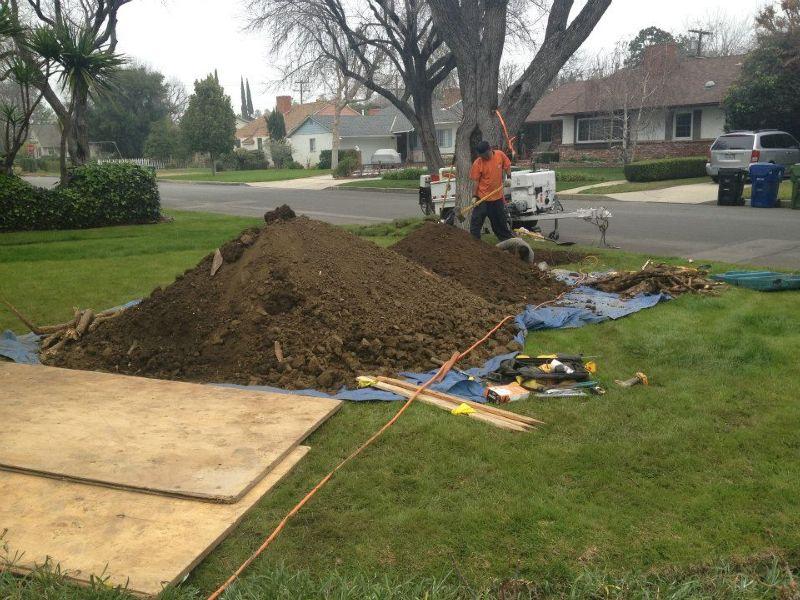
Compaction, loading and access
Arena surfaces and trail alignments take constant hoof and equipment loading. Where a shallow lateral crosses under one of them, that repeated point loading is a genuine stress on old clay.
The soil itself is Simi Hills material: sandstone and shale-derived ground with pockets of expansive clay across the flatter areas. Expansive soil swells when it takes on winter water and shrinks back in a dry summer, and it does that year after year. A long, shallow, rigid clay lateral sitting in that soil is being slowly flexed for its entire service life, which is precisely why offset joints and mid-run bellies are the two defects we find most often on original Hidden Hills laterals.
Protected Oaks and Roots You Are Not Free to Cut
Coast live oaks and valley oaks are the defining trees on these properties, and mature oaks in this part of Los Angeles County carry legal protection. Cutting significant roots inside the protected zone around a specimen oak is generally not something a plumber can decide to do on a Tuesday morning. It can require an arborist, a permit and a documented plan, and getting it wrong is expensive in a way that has nothing to do with plumbing.
That single constraint is why the trenchless conversation matters more here than almost anywhere else we work. Roots enter a sewer through openings that already exist, so the permanent fix is to eliminate the opening rather than to remove the tree. Cured-in-place lining does that from entirely inside the pipe. A resin-saturated liner is pulled through the host pipe, inflated and cured into a seamless jointless sleeve, and nothing in the surrounding soil is touched at all. The oak keeps its root system and the sewer stops feeding it.
Pipe bursting is the other option, and its limitation here is worth stating: bursting fractures the old pipe outward into the soil, so it is not a no-disturbance method under a protected canopy. It still beats a two-hundred-foot trench, but it deserves an arborist conversation first.
Drains Backing Up Behind the Gate? Let Us Get Cleared and Rolling.
Give us the address and the gate details and we will handle the rest. Seven days a week from Northridge.
Call 818-280-9135What Goes Wrong on Long Valley Road, Round Meadow and Spring Valley
Root intrusion at mid-run joints
Far from the house, well past where a homeowner would ever suspect a problem, and usually under lawn or a mature canopy. The camera footage counter is what turns this into a locatable point instead of a guess.
Bellies from expansive clay
Seasonal swelling and shrinking pulls a long shallow run out of true. Water stands in the sag, solids settle out of it, and the same stretch of pipe blocks repeatedly no matter how often it is cabled.
Bad tie-ins from added structures
Pool houses, barns and guest units connected over the years without proper wyes or sweeps. Flow from the addition hits the main run at the wrong angle and builds a deposit right at the fitting.
Original clay left behind a remodel
The house was gutted and replumbed in ABS, and the work stopped at the foundation line. The seventy-year-old clay carrying it all to the main was never touched.
Orangeburg in the original run
Properties built in the fiber-conduit era can still have it. It does not crack, it flattens, and once the cross-section closes there is nothing to clean and nothing to line.
Grease from a very busy kitchen
No commercial zoning here, but a large household kitchen running constantly puts real fat down a line with too little slope to carry it. It congeals in the flat middle third of the run.
The Underground Services We Bring Through the Gate
What we will not take on
This company does buried pipe and nothing else. Water heaters, tankless systems, fixtures and faucets, toilets, sinks, disposals, water supply repiping, pinhole leaks in copper, softeners and filtration, gas piping and new construction rough plumbing are all outside our lane. On an estate property you almost certainly already have a general plumbing contractor for that work, and if you do not, we will say so instead of stretching to cover it.
Symptoms That Justify a Call Before the Weekend
- Several fixtures degrading at once. One slow lavatory is a fixture problem. A slow lavatory plus a gurgling toilet plus a tub that holds water is the long run outside.
- The guest house or pool house acts up first. The branch farthest from the house often shows a main-run problem earliest, because it has the least fall to work with.
- Sewage odor along the driveway or lawn during a dry stretch, which points at a joint leaking into soil rather than at a trap that dried out.
- Repeat service on the same line. If the same lateral has been cabled twice in a year, the third visit should be a camera, not another cable.
Twenty-Five Minutes From Our Yard, Which Genuinely Matters Here
Northridge to the Hidden Hills gates is a short run for us: west across the Valley on Roscoe or Nordhoff and down Valley Circle, or the 118 to the 101 depending on traffic. Twenty to thirty-five minutes covers it most of the day. That proximity is the practical reason we can be useful in a city this small, because a crew that is close can absorb the extra fifteen minutes that gate clearance and a long driveway add without blowing up the rest of the day.
We cover the whole city inside the fence, including Long Valley Road, Round Meadow Road, Spring Valley Road and the lanes off them, and we work the surrounding Calabasas and West Hills addresses on the same runs.
What Hidden Hills Homeowners and Estate Managers Ask
How does your truck get through the gate?
You clear us in advance with the community association, the same way you would clear any contractor, and we give you the company name and vehicle information to pass along. We then arrive at the entry rather than at your driveway and wait to be logged in. If the association limits the hours commercial vehicles may enter, tell us that when you book and we will schedule inside the window. Handling this before the appointment is the difference between a crew working at nine and a crew sitting at the gate at nine.
My house sits two hundred feet back from the street. Is that whole line mine?
In the normal arrangement, yes. The property owner owns and maintains the building sewer from the house all the way to the point where it joins the public or district main, and on a Hidden Hills lot that stretch is unusually long. It is worth understanding that a defect ninety feet out under your own lawn is entirely your pipe, and that the length is exactly why we push for a two-way cleanout near the property line. Confirm the specific responsibility line for your parcel with the City of Hidden Hills and the wastewater district before a major repair.
Which agency actually handles sewer service and permits here?
Hidden Hills is its own incorporated city, so it is not part of the City of Los Angeles system and its permits do not come from Los Angeles. Wastewater service in this corner of the county is provided by the Las Virgenes Municipal Water District, and the city handles building permits, typically through contracted plan check and inspection. On top of that, the streets are private and maintained by the community association, so work outside the house pad involves the association as well. We suggest confirming all three with a phone call before committing to a large job.
Our sewer runs under protected oaks. Can it be replaced without trenching?
Usually yes, and that is normally the reason to go trenchless in the first place. Cured-in-place lining rebuilds the pipe from the inside, so nothing in the root zone is excavated or cut and the tree is unaffected. That is the preferred method under a protected canopy. Pipe bursting is the alternative when the host pipe is too damaged to line, but because it displaces the broken pipe outward into the soil it is not a zero-disturbance method and deserves an arborist opinion first. The camera determines which of the two the pipe can actually accept.
We remodeled and replumbed the whole house. Why does the sewer still back up?
Because most remodels stop at the foundation. New ABS inside the walls and under the new slab is genuinely new plumbing, but the run from the building out to the main is usually left exactly as it was, and on a property built in the 1950s or 1960s that means original vitrified clay or, in some cases, Orangeburg fiber conduit. The interior work does nothing for either one. If your remodel did not include a scope of the outside run, that is the first thing to check.
How far are you from Hidden Hills, and how fast can you get here?
Our shop is at 8635 Yolanda Avenue in Northridge, roughly twenty to thirty-five minutes away depending on traffic and which route across the west Valley is moving. We hold no office, yard or storefront inside Hidden Hills and would not claim one. What arrives is a licensed crew under CSLB number 720343 with a camera truck and a jetter, seven days a week, office hours 6am to 6pm and the emergency line answered outside them.
The Rest of Our Coverage Area
Hidden Hills sits at the western end of a service area that runs back across the Valley and out to the coast:
Get Your Hidden Hills Lateral Scoped End to End
Owner Babak Behzadi. CSLB #720343, licensed and insured, open every day 6am to 6pm.
Call 818-280-9135