
Municipal Sewer Jetting & Line Cleaning
Scheduled and emergency cleaning of sewer mains, laterals, storm drains and grease lines for cities, school districts, agencies and their prime contractors. Jetting with root-cutting heads, and camera verification that the line is actually clean.
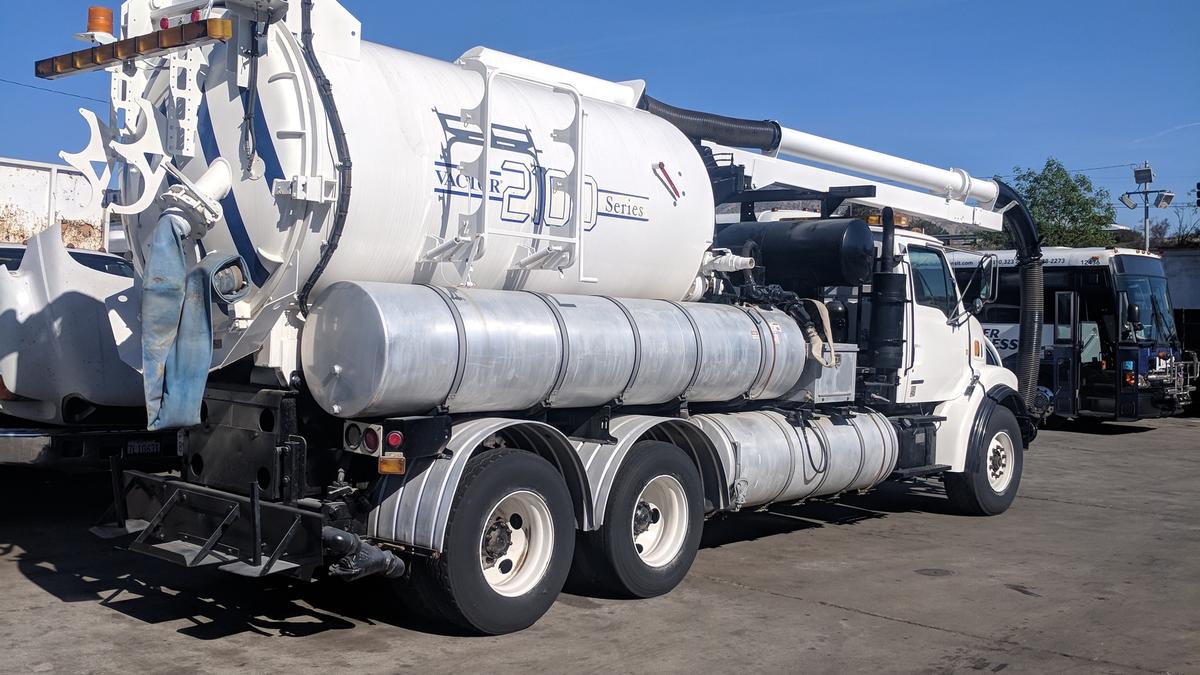
Ours, not rented, so cleaning and inspection happen on the same visit instead of on two invoices.
Cleaning is not the same as clearing
Clearing means a blockage is gone and water moves again. A cable punches through and the call ends. Cleaning means the pipe wall is scoured back to bare pipe so the bore is fully restored.
A cleared line is still coated. Grease, scale and root stubs on the walls catch the next thing that comes past, and the interval to the next failure is short. A properly jetted line has nothing left for the next blockage to build on. A maintenance interval built on jetting stretches further than one built on rodding, even though each visit costs more.
What we clean
- Sanitary sewer mains. manhole to manhole, on a maintenance interval or after a failure
- Laterals and building sewers at agency-owned sites
- Grease lines and interceptors serving cafeterias, kitchens and concession facilities
- Storm drains and area drains, including pre-season clearing before the first real rain
- Root cutting in mains and laterals using jetting heads built for it
- Pre-inspection cleaning ahead of a CCTV condition survey
Why cleaning belongs with the camera
Splitting cleaning and inspection into separate contracts wastes money, because each one needs the other.
A camera cannot grade a pipe it cannot see. Send an inspection crew into a grease-loaded main and you get a survey full of "obscured" entries. You paid for footage that tells your engineers nothing. So cleaning has to come first.
And cleaning without a camera afterwards is unverified. You have an invoice saying a line was cleaned and no evidence of what condition it is in. Before-and-after video on the same footage marks settles it, and on a contract where somebody else did the cleaning it is how you find out whether you got what you paid for.
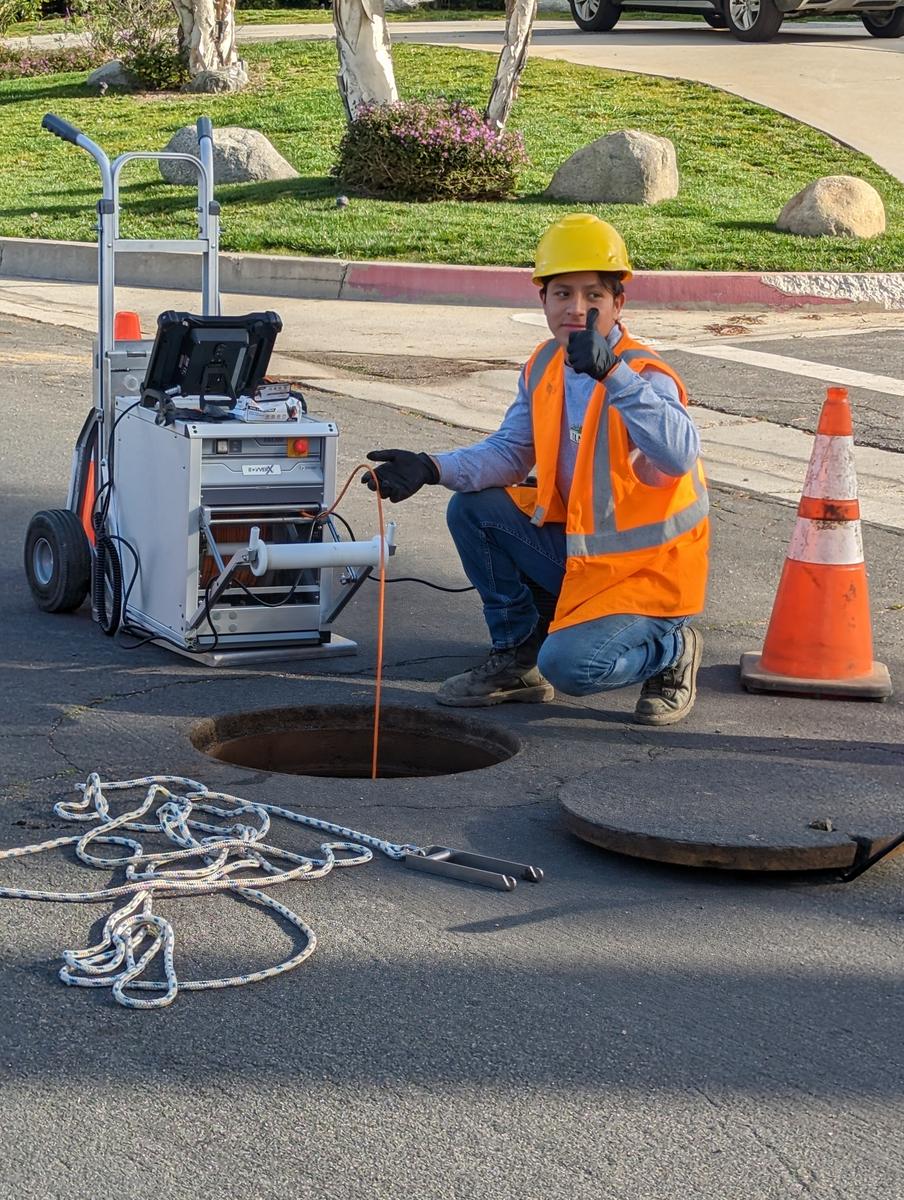
We run both off the same truck, so a line gets cleaned and surveyed in one mobilisation. Full inspection detail on the CCTV sewer inspection page.
Building a maintenance interval that is worth paying for
Most agencies clean on a fixed cycle applied evenly across the system. That is simple to administer and it is also why some lines get cleaned that did not need it while the one that floods gets missed.
A better interval is built from condition. Survey the system once, grade it, and sort lines into three groups:
- Known problem lines. grease-loaded kitchen runs, root-prone segments under mature trees, flat runs with a belly. These earn a short interval and justify it.
- Ordinary lines in sound condition. A long interval, or survey-driven rather than calendar-driven.
- Lines that are not a cleaning problem at all. structurally failed pipe. Cleaning these is money spent delaying a capital decision, and the grading is what surfaces them.
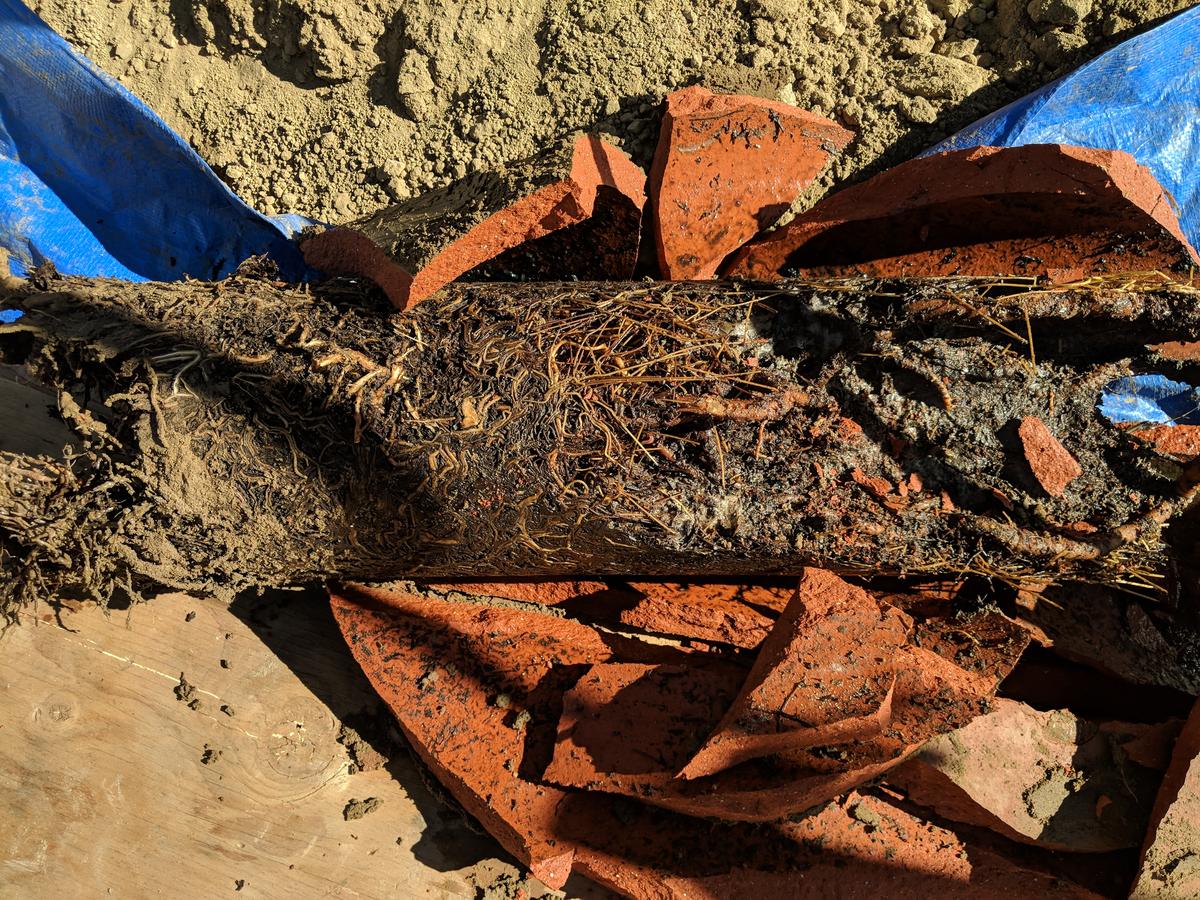
The third group is where the savings are. It is common for an agency to be on a rodding cycle for a line that needs replacing, paying every year for a symptom.
Storm drains before the rain
Storm and area drains sit unused for most of a Los Angeles year, quietly filling with silt, leaf litter and debris, and then get asked to perform at full capacity in a single afternoon. Clearing them is seasonal work that has to happen before the first real storm, not after, and after is when everybody calls at once. If your agency has storm drains on the inventory, get them on the autumn schedule.
On-site conduct
- Traffic control to the agency's standard where work is in a street or right of way
- No confined space entry by design. the hose and camera go down, people do not. If a scope requires entry we say so up front.
- Occupied sites. night, weekend and school-break scheduling around students, staff and the public
- Debris hauled off and disposed of properly, not left in a pile by the manhole
- Covers reseated, surfaces washed down, site left as found
Request a quote
- Phone
- 818-280-9135, 24-hour emergency line
- bbcrooter@gmail.com
- Send with your request
- Footage and diameters, access points or manhole numbers, what the lines carry, whether a camera run is in scope, and the hours the work has to happen in.
- License
- CSLB #720343 · DIR registered for public works · NASSCO PACP certified · LA County LSBE
Common questions
Do you clean and inspect in the same visit?
Yes, and on a dirty line that is the only sensible order. Jetting and camera equipment travel together, so you pay one mobilisation instead of two.
How often should a main be cleaned?
It depends entirely on what it carries. Cafeteria and restaurant grease lines need a short interval; ordinary sanitary mains in sound pipe need far less than most fixed cycles assume. A condition survey is what tells you, rather than a rule of thumb.
Can you jet a line that might be fragile?
We camera first where there is any doubt. High-pressure water in a pipe already cracked or with a collapsed section can make things worse, and a contractor who jets blind on old clay eventually finds that out on your system.
Do you provide before-and-after video?
Yes, on request and as standard where cleaning verification is in scope. Same segment, same footage marks.
Can you respond to an emergency blockage?
Yes, at any hour. From the Northridge yard most Valley and Los Angeles sites are a short run.
Do you handle the debris?
Yes. Material is removed from site and disposed of properly.
Back to Municipal & Public Works · CCTV inspection · public works repair