
CCTV Sewer Camera Inspection in Northridge, the San Fernando Valley & Los Angeles
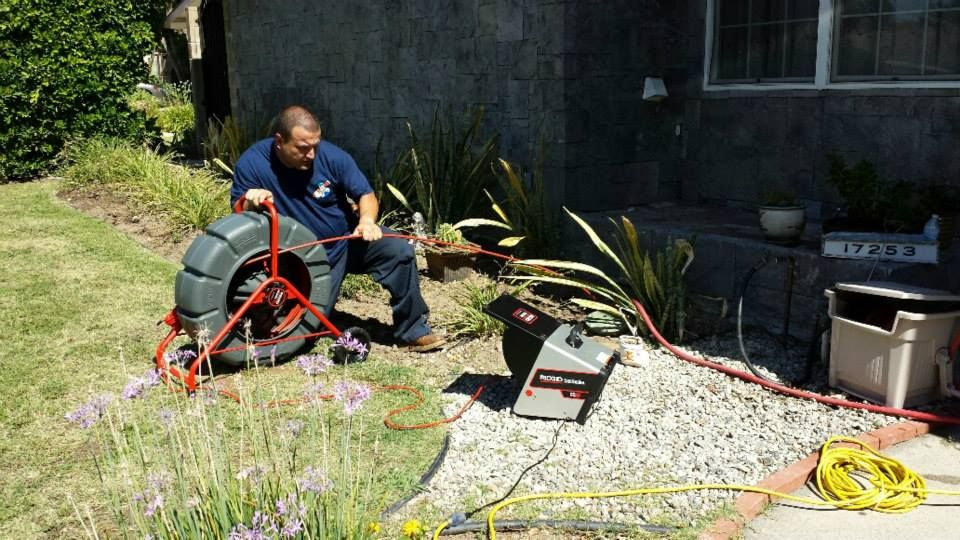
A CCTV sewer camera inspection, also called video pipe inspection (VPI) or a sewer scope, sends a waterproof closed-circuit television camera through your sewer line to see exactly what is happening inside the pipe. It is the single most important diagnostic tool in sewer work, it shows the pipe material, condition, location and depth of damage, and whether the line needs cleaning, repair, or replacement.
BBC Rooter & Plumbing performs sewer camera inspections across Northridge, Granada Hills, Chatsworth, Porter Ranch, Woodland Hills, Encino, Van Nuys, and every community in the San Fernando Valley.
When You Need a Sewer Camera Inspection
There are several situations where a camera inspection is the right first step:
- Recurring sewer backups or slow drains: If you have had your sewer line snaked more than once in the past year, a camera inspection reveals the underlying cause, whether it is root intrusion, a belly in the line, pipe deterioration, or a partial collapse.
- Buying a home: A pre-purchase sewer scope is essential for any San Fernando Valley home, especially those built before 1980. Standard home inspections do not include the sewer lateral, and a failing sewer line can cost $5,000 to $20,000 to replace.
- Sewage odors: Sewer gas inside or around your home often indicates a crack or separation in the line. The camera locates it precisely.
- Before any sewer repair: We never recommend repair work without camera verification first. The footage determines which repair method, hydrojetting, trenchless lining, or excavation, is the right fit.
- After a repair or lining: A post-repair camera pass confirms the work was completed correctly and the line is flowing freely.
What the Camera Reveals
Our sewer cameras transmit real-time color video from inside the pipe. The camera head also includes a locating transmitter, so we can mark the pipe path and depth from above ground, critical information if any digging or lining is needed later.
During the inspection, we identify and document:
- Pipe material (clay, cast iron, Orangeburg, ABS, PVC) and diameter
- Root intrusion, where roots have entered and how extensive the growth is
- Cracks, fractures, and pipe separation at joints
- Offset joints, where ground shifting has misaligned pipe sections
- Bellies, low spots where water and waste pool instead of flowing
- Corrosion and mineral scale buildup (especially in cast iron lines)
- Partial or full collapse
- Previous repair patches or partial linings
What the Camera Sees in Each Era of Valley Pipe
The San Fernando Valley was built out in waves, and every wave left a different pipe in the ground. Knowing which one is under your yard before the camera goes in tells us what to look for and how far it is likely to get.
- Vitrified clay, roughly the 1920s through the late 1950s. Laid in short sections of two to three feet, mortared together at every joint. On video those joints read as dark rings the whole length of the run, and roots enter at the rings because the rings are the only opening. Older blocks in Van Nuys, Sherman Oaks and Reseda are frequently still on original clay.
- Cast iron, roughly the 1950s into the 1970s. The camera picks up a rough, rust colored interior where the inside wall has corroded and scaled over. The pipe loses working diameter from the inside while the outside still looks intact. Postwar tracts in Northridge, Granada Hills and Chatsworth are full of it.
- Orangeburg, a postwar cost saver. Bituminous fiber pipe, made from wood pulp bound with tar. On camera it does not crack so much as deform, going oval or blistering inward until the channel closes. Once it has started to collapse, lining is usually off the table. We wrote up the whole failure pattern in our guide to Orangeburg pipe problems in the San Fernando Valley.
- ABS and PVC, 1980s onward. Generally sound, and when these lines do fail the cause is almost always something done to them. A connection assembled badly, a section crushed by later construction or a belly from bedding that was never compacted properly.
Ground movement sits in its own category and shows up as separated or stepped joints regardless of material. Settling, expansive soil and the 1994 Northridge earthquake all left that signature in Valley laterals, and we cover how it reads on camera and what it costs to correct in our sewer line repair and replacement guide.
When the House Has No Cleanout
A camera needs a way into the line. The clean way in is a cleanout, a capped pipe stub sticking up at grade near the foundation or out by the property line. A great many Valley houses built before the 1960s never got one.
When there is no cleanout, there are three ways in, and they are not equal:
- Through a pulled toilet. We lift the toilet and run the camera down the closet flange. It adds labor to the visit and the toilet goes back on a fresh wax ring.
- Through a roof vent. Workable, but the camera has to negotiate two or three changes of direction before it ever reaches the lateral, which costs reach and picture quality.
- Install a two way cleanout first. More money on day one. It pays for itself the first time anyone has to service that line, and it is what we suggest to any homeowner who has already had the line snaked twice.
Before you call, walk the side of the house and the strip near the sidewalk and look for a capped pipe at ground level. Telling us whether one exists changes both the price and how long the appointment takes.
Pre-Purchase Sewer Scoping
If you are buying a home in the San Fernando Valley, a sewer scope should be on your inspection checklist alongside the general home inspection, termite inspection, and roof inspection. Most of the Valley housing stock was built with clay or cast iron sewer laterals between the 1940s and 1970s. Many of those original pipes are now 50 to 80 years old and past their design lifespan.
A pre-purchase sewer inspection puts a number on the risk before you sign. If the camera reveals a damaged sewer line, you can request the seller repair it before closing, negotiate a price reduction, or walk away from a property with a hidden five-figure liability.
BBC Rooter provides a recorded video and written condition summary for every pre-purchase inspection. Real estate agents and escrow officers throughout the Valley work with us regularly.
For Northridge homeowners: we've published a detailed walkthrough of what every Northridge homeowner should know about sewer line inspections, when to scope, what the report covers, and how to interpret common findings.
What Happens After the Inspection
We walk you through the video footage on-site and explain what we are seeing in plain language. Based on the findings, we will recommend one of several paths:
- Line is clear: No action needed. You have documentation of a healthy sewer lateral.
- Roots or buildup present: Hydrojetting clears the line and restores full flow.
- Structural damage (cracks, offset joints, moderate corrosion): Trenchless pipe lining (CIPP) repairs the pipe from the inside without excavation.
- Severe collapse or deterioration: Pipe bursting or targeted excavation replaces the damaged section.
If repair is needed, we provide a written estimate on the spot. The camera inspection fee is waived when you proceed with the repair.
CCTV Video Pipe Inspection, How It Works
Professional CCTV pipe inspection uses two kinds of equipment depending on the line. For building laterals and residential sewer lines, a push camera with a self-leveling color head travels from a cleanout to the city connection. For longer mains and larger-diameter pipe, a robotic crawler (ours is an Envirosight ROVVER X) drives through the line carrying a pan-and-tilt camera that can look directly into joints, taps, and defects. Every inspection produces two deliverables: the recorded video of the full pipe run and a written condition report documenting pipe material, defects found (root intrusion, cracks, offsets, bellies, corrosion), and their measured footage locations, so any contractor, engineer, or buyer can see exactly where the problems are without re-scoping the line.
The camera head carries a locating transmitter (sonde), so we mark the pipe path and defect locations from above ground. That turns video findings into a map: where to spot-repair, where to line, and where digging is, and is not, needed.
Commercial & Multi-Unit CCTV Sewer Inspections
Homeowners are only part of this work. BBC Rooter performs video pipe inspections for property managers, HOAs, apartment buildings, and restaurants across the San Fernando Valley and greater Los Angeles:
- Annual condition assessments for multi-unit buildings, catch root intrusion and grease buildup before a holiday-weekend backup.
- Pre-lining and pre-repair surveys, before you approve a trenchless lining bid, independent CCTV footage verifies the pipe actually needs it and that lining is feasible.
- Restaurant drain and grease line inspections paired with hydrojetting, documented before/after footage for your files.
- Documentation for insurance claims and disputes, time-stamped video evidence of pipe condition, with footage locations in a written report.
Need recurring inspections across multiple properties? Call us about scheduled CCTV assessment for your portfolio, one specialist crew, consistent reports, direct pricing.
Two of the most common findings on Valley camera inspections are bellies and offset joints. Learn how to tell them apart — and why the difference changes the repair bill — in our guide to bellied sewer lines vs offset joints.
Property managers, HOA boards and facility teams often need more than a homeowner-grade scope. If you are specifying an inspection, crawler versus push camera, pre-clean requirements, defect coding, sonde locates and what the deliverable should contain, see our contractor-level guide to CCTV pipe inspection in the San Fernando Valley.
Camera Inspection for Cities, Agencies and Contractors
The same crew and cameras also work for public agencies. We run manhole-to-manhole video on sewer mains for the City of Los Angeles, LA County agencies, school districts and the prime contractors who hold their on-call contracts. On that work every defect is coded to the NASSCO PACP standard, with its footage mark and clock position, and every pipe segment gets a grade from 1 to 5 for structure and a separate grade for flow. Agency engineers use those grades to decide which pipe gets replaced this budget year.
- City and county staff: see municipal CCTV sewer inspection for deliverables and pricing factors, and the pages for City of Los Angeles work and LA County agencies.
- Prime contractors bidding an as-needed sewer or CCTV contract without a pipe trade licence: see sewer and CCTV subcontracting.
- General contractors and property managers who need the building sewer filmed before a remodel or a purchase: see commercial sewer contractor.
What a Camera Inspection Will Not Tell You
Every diagnostic tool has a boundary, and this one has several. Ask about them before you pay for a scope.
- It cannot measure how much pipe wall is left. Corroded cast iron can present a passable channel on video and still be close to paper thin. The camera reads the surface it can see, not the metal behind it.
- It cannot see past a full blockage. If the line is packed solid, that is where the picture ends. The line has to be cleared and then scoped again. A scope sold as a finished inspection while the pipe is still stopped up is a partial inspection.
- It does not produce a hydraulic grade. Video shows where water is standing. It does not measure fall across the run, so the depth of a belly is read off the water line as an estimate rather than surveyed.
- It says nothing about the soil. Expansive clay, uncompacted fill and root pressure from a mature ficus or liquidambar explain why a line moved. None of that is visible from inside the pipe.
- It cannot date a failure. The footage shows condition on the day it was shot. Anyone telling you a line has four years left is guessing.
What the camera does well is replace guesswork with a located, recorded finding that the next person who reads the file can act on.
Reading the Report
A condition report is only useful if it means the same thing to whoever reads it next, whether that is a buyer, an agent, an engineer or another contractor. We keep structural findings separate from service findings, because they are separate problems with separate price tags.
- Structural findings describe the pipe itself. Cracks, fractures, deformation, separated or offset joints, holes and collapse. These are repaired by lining, spot repair or replacement.
- Service findings describe what is inside the pipe. Roots, grease, mineral scale, debris and standing water. These are cleared by rooter service or hydrojetting.
- Every finding carries a footage mark and a severity. Roots at 63 feet is actionable. Roots somewhere in the back yard is not.
The report also records pipe material, diameter, how far the camera travelled and, if it stopped early, why. That last line matters more than people expect. A recommendation to replace an entire lateral, written off a scope that only ever reached 30 feet, is not supported by the footage.
Telling a Real Inspection From a Sales Call
Sewer scoping has a reputation problem in Los Angeles, most of it earned by outfits who use the camera as a prop. Here is what you should walk away holding:
- The recorded video, handed to you as a file or a link. Not a phone screen you were shown once in the driveway.
- Footage marks on the findings, so anyone can go straight to the defect later.
- Confirmation that the line was clear enough to inspect, or a plain statement that it was not.
- How far the camera got, and whether it reached the city connection.
- Pipe material and diameter in writing.
- A repair recommendation whose scope matches the footage that actually exists.
If a scope cost you money and produced none of that, what you bought was a sales visit. We hand over the video and the written summary on every inspection, including the ones where the answer is that your line is fine and you owe us nothing further.
Schedule a CCTV Sewer Camera Inspection
Find out exactly what is going on in your sewer line. We provide recorded video and a written condition report.
Call 818-280-9135Frequently Asked Questions
Is there a sewer inspection camera service near me in the San Fernando Valley?
If you are in the San Fernando Valley, yes. BBC Rooter runs its camera trucks out of Northridge (8635 Yolanda Ave), so Northridge, Reseda, Winnetka, Chatsworth, Granada Hills, Northridge-adjacent Porter Ranch and Van Nuys are typically a 20–40 minute drive, and Encino, Tarzana, Woodland Hills, Sherman Oaks and Canoga Park usually same day. We answer the phone at 818-280-9135 seven days a week, 6am–6pm, not an after-hours call center. Because we are local, the technician who scopes your line is the same one who can tell you on the spot whether it needs a spot repair, a liner, or nothing at all.
How much does a sewer camera inspection cost?
Standalone inspections in the San Fernando Valley typically cost $150 to $350 depending on access and line length. The inspection is free when you proceed with a repair through BBC Rooter.
Should I get a sewer inspection before buying a house?
Yes, especially for homes built before 1980. Sewer line replacement can cost $5,000 to $20,000, and standard home inspections do not cover the sewer lateral. A camera inspection either confirms the line is healthy or gives you documented grounds to renegotiate before you close.
What problems can a sewer camera find?
Root intrusion, cracks, pipe separation, offset joints, bellies, corrosion, scale buildup, collapsed sections, and previous repair work. The inspection also identifies pipe material, diameter, depth, and exact location.
Do you provide the video recording?
Yes. Every inspection includes a recorded video. For pre-purchase inspections, we also provide a written condition summary you can share with your real estate agent or use in negotiations.
Can a sewer camera tell how much life my pipe has left?
No. The camera documents condition on the day of the inspection. It cannot measure remaining wall thickness, and corroded cast iron in particular can look serviceable on video while being very thin. We will tell you what the footage supports and where it stops short of an answer.
What if my house does not have a cleanout?
We can still inspect the line. The camera goes in through a pulled toilet or a roof vent, both of which add time and reduce reach. Many pre-1960s Valley homes have no cleanout, and installing a two way cleanout is usually worth it if the line has needed service more than once.
Does the line need to be cleared before the camera goes in?
If it is fully blocked, yes. The camera cannot see past a solid obstruction, so we clear the line first and then run the inspection to find the cause. Beware of any inspection presented as complete while the pipe is still stopped up.
Related Services
- Hydrojetting, high-pressure cleaning when the camera shows roots or buildup
- Trenchless Sewer Repair, no-dig pipe lining or bursting when structural repair is needed
- Drain Cleaning & Rooter Service, clearing clogs in main and branch drain lines